
- Introduction
- 1. The value of Accounting and Financial Management in Healthcare
- 2. A Tale of Two: Shareholder Wealth and Healthcare Strategic Goals
- 3. Analysis of Investment and Project Evaluation
- a) Investment Appraisal through Payback Period Net Present Value and Internal Rate of Return
- b) Each Investment Appraisal Method Merits and evaluation results discussion and advise to the company regarding the selection of the project for undertaking
- 4. Balanced Scorecard in a Hospital
- a) Strategy Outlining
- b) Series of Metrics Development
- c) The way strategy goals are met through KPIs
- d) Challenges evaluation and risk in the organization within the Balanced Scorecard and the challenges to achieving the goals
- 5. Lease/Buy System Investment
- a) Costs of Present Value of Purchasing or leasing the machine
- b) Cost of Debt Preference Shares and Ordinary Shares
- c) Evaluation of Important Factors through which decision of healthcare company is influenced to raise finance through equity and debt
Introduction
Financial management plays a vital role in healthcare by helping hospitals control costs, allocate resources, and maintain quality patient care. This assignment explores investment appraisal methods, the Balanced Scorecard, and financing decisions to evaluate the financial and strategic performance of healthcare organisations.
At Native Assignment Help, students can explore healthcare finance assignment samples to understand investment appraisal, hospital budgeting, and strategic financial management. Our Assignment Helper UK service provides guidance on applying financial theories, evaluating projects, and structuring evidence-based academic discussions. This sample can help you understand how to organise financial analysis and explain key findings clearly.
1. The value of Accounting and Financial Management in Healthcare
In a hospital, so much should be handled such as paying staff, purchasing medicine and upkeeping equipment. Financial management and accounting assist the hospital to be able to trace all its money. This involves monitoring the amount of money that is received and the amount that is spent. Government may fund money in the government hospitals. Money in case of private hospitals is frequently provided through insurance or patients (Kourtis et al. 2021). Accounting tells the managers whether they have sufficient money or whether they are over spending. It assists them in preparing the budget and ensuring that the hospital does not experience shortage of funds.
Financial management and accounting are important in the long run and strategic functioning of healthcare institutions. Both in the case of public hospitals and in the case of private hospitals, this financial system is used to keep track of incomes sources, i.e. insurance reimbursements, government grants and out-of-pocket payments, and it is used to keep track of expenditures made on clinical supplies, salaries and maintenance costs of facilities. This constant observation makes it transparent and helps identify the wastage or wastage prior to affecting the service delivery.
Finances management are also useful in making intelligent decisions. An example can be that the hospital may wish to purchase new machine or a new wing. The budget department performs the task of determining whether the hospital can finance it. Otherwise, they can search for loans or government support (Rahmasari et al. 2023). They also report in order to indicate the performance of the hospital. Such reports enable the hospital to set up better future plans. Good accounting will ensure that the patient care does not run into the money issues. It assists in adherence to regulations and regulations about healthcare expenditure as well. Financial management is, therefore, the heart of the hospital, which makes everything operating as usual and gives the hospital chance to develop the hospital without any problems.
Financial management is even more than a simple budgeting tool; it helps with evidence-based decision-making. To illustrate, when the hospital administration is planning its expansion or deciding to make an investment in the expensive medical equipment, financial information will help it evaluate the possibility, where the funds should go and what kind of profit can be expected. In addition, financial statements, including the income statement and balance sheet, provide beneficial information to the health of the organization in terms of its operations and allow predicting future performance.
Financial reporting plays an important role in strategic planning. Hospitals are also expected to conform to systems of regulations that in some cases demand careful accounting of expenditure of funds, particularly in the case of medical establishments in the public sector where the government is subsidizing the use of taxpayer’s money. Financial controls are also conducive to accountability among the various departments, and the occurrence of financial limitations not being allowed to affect the provision of clinical services.
Moreover, the maintenance of finances guarantees the correspondence of healthcare services and the monetary objectives. Regardless of whether want to be cost-effective, expand the services, or increase the quality, accounting tools, such as variance analysis and cost-benefit analysis allow managers to examine various situations and make the best decision. Finally, a sound financial system does not only serve as a supportive tool it forms a vital aspect of quality patient care and accomplishment of organizational objectives in an intricate and resource-starved industry.
2. A Tale of Two: Shareholder Wealth and Healthcare Strategic Goals
At normal companies, the aim is to get the owners rich. This is referred to as wealth maximization by the shareholders. However, a hospital is not like that. Hospitals are interested in serving people and not in earning money. The government acts like the owner in a public hospital. The aim has been to serve the community. This implies one provides care to all including those who are unable to pay. In case the hospital does not earn more than attempt, poor people will be left without assistance.
Patients should be the center even when in the privately administered hospitals. They should not cause pain in the patient care in the process of making money. To give an example, when a hospital spends too little, likely there is a scarce number of nurses (Tulli, 2023). This aggravates care. Moreover, when only money is given attention, there are chances that there can be unfair pricing. Individuals might not be able to spend money to seek treatment. Ethics also have to be followed by hospitals. This involves doing what is right and what is not making money. Case in point, in the event of any emergency, priority should be given to care; then there is money.
The hospitals are forced to strike a tide between making money and benefiting individuals. This is a challenge. However, in final analysis, the hospitals need to keep in mind that they are present to attend to humans. Thus, the maximization of shareholder wealth cannot be the optimal target of hospitals. It is more important to the health of the patient and community well-being.
Within the conventional corporate settings, shareholder wealth maximization is commonly the main goal, which comes about with the definition of returns on investment and profit earning (Chaudhry et al. 2025). Nevertheless, the given principle has no faultless translation to healthcare organizations, in which caring about patients and wellbeing of society are the major concerns (Nafari & Rezaei, 2022). The shareholders of the public hospitals are the taxpayers and none of them is to obtain the benefit of financial gain, at the end of the matter it is the provision of high quality, accessible and equity of healthcare services as the required benefit.
Strategic objectives should not stop at revenue generation even in an area such as privately run health care where there is a profit motive (Mitosis, Lamnisos & Talias, 2021). The ethical responsibilities seek to ensure that the focus is on the needs and safety of the patients. The measures to cut costs by disrespecting the workforce or lowering the quality of care or restricting means to give care to low-income individuals undermine healthcare ethics.
The goal of maximizing shareholder wealth in healthcare, thus, has to be counter-weighted with the values of offering service to the people and practice of clinical excellence. Hospitals need to make economically viable decisions; however, they should not do it at the cost of their humanitarian obligation. Long-term implications of strategies in the society, equality in provisions and regulatory demands of strategies should be thought out (Moses et al. 2021). After all, operational viability requires financial performance, but what defines overall success of a healthcare organization is its disability in transforming lives, which is usually lost in the shareholder-centered paradigm.
3. Analysis of Investment and Project Evaluation
a) Investment Appraisal through Payback Period Net Present Value and Internal Rate of Return
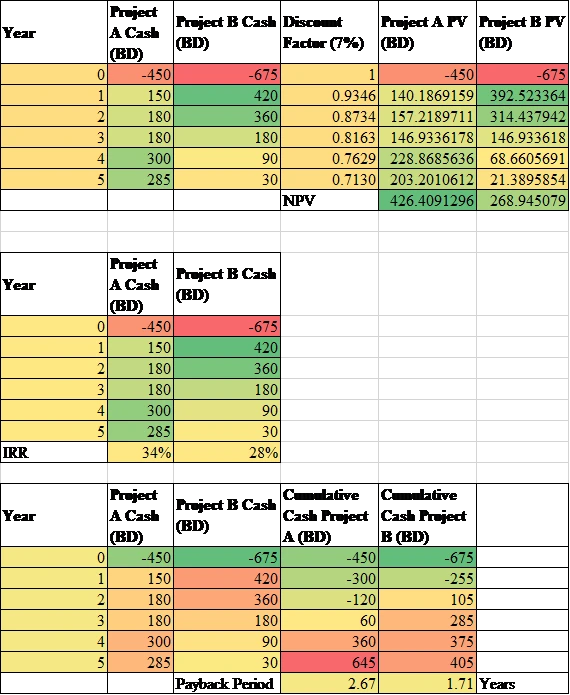
Figure 1: Investment Appraisal through Payback Period Net Present Value and Internal Rate of Return
b) Each Investment Appraisal Method Merits and evaluation results discussion and advise to the company regarding the selection of the project for undertaking
Gulf Sovereign Fund is considering two projects with respect to hospitals. These are Project A and B. The fund is wondering about the better project. Decision is made in this regard, by thinking of three approaches: Payback Period, Net Present Value (NPV) and Internal Rate of Return (IRR).
The payback period informs of the speed at which the amount invested is discharged by the project.
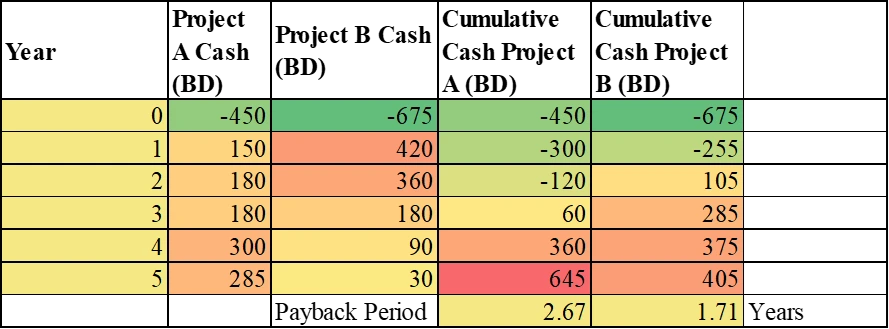
Figure 2: Payback Period
The payback period of project A is 2.67 years. Project B does it within a shorter time, i.e. 1.71 years. Thus, in this case the better one is Project B.
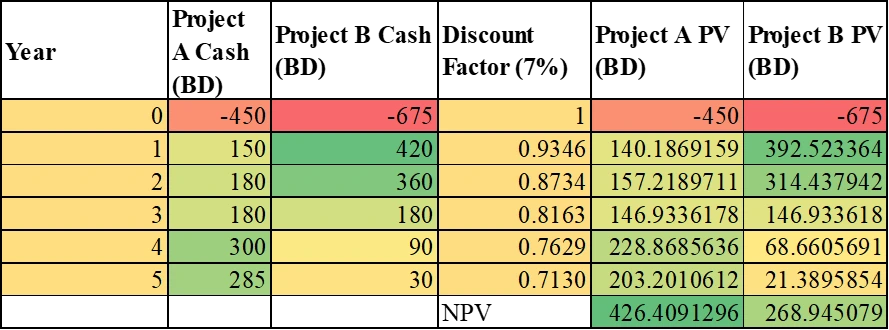
Figure 3: NPV
Then, NPV is verified. This will show the amount earned at the end of it all taking into consideration the time value of money (Cheung, Yiu & Xiong, 2021). In Project A, the NPV = BD 426.41 million. In case of Project B, the NPV is BD 268.95 million. The higher the NPV the better and Project A appears better in the total profit.
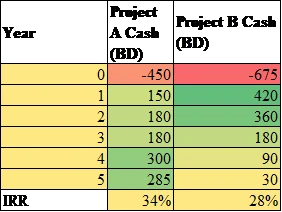
Figure 4: IRR
Examination of IRR is done in this regard. This informs regarding the interest rate, which the project yields. The IRR should be high. Project A has IRR of 34% whereas project B has IRR of 28%. Thus, Project B performs better in this part.
The payback period informs regarding on the speed at which the money will be refunded on the investment on the project. Project A would payback in 2.67 years (Sun et al. 2023). Project B does it quicker, it takes 1.71 years. Project B therefore, is superior.
Then looked at NPV. This will tell how much profit will be given after giving time value of money. In case of Project A, the NPV of the project is BD 42641.00 million. In the case of Project B, the NPV will be BD 268.95 million. The greater the NPV the better, so Project A seems more appealing in terms of a total profit.
Then looked at IRR. This informs on the interest rate that the project yields. A larger IRR is favorable. Project A yields IRR of 34 percent and Project B yields IRR of 28 percent. Under this part, therefore, Project B is superior.
Overall, both of the projects are good in their ways. The total profit is higher in Project A. However, Project B is more responsive in the sense of returns and provide higher rate of return. Project B can be more appropriate in the short run. Project A could be superior in the terms of long-term returns.
Both the projects necessitate the use of a lot of money initial to either degrees hence it is extremely crucial to make an excellent selection (Vernooij, 2021). The fund should ensure that it recoups more than it invests. Every project generates revenue annually, however, in varying sums. Considering all the figures will assist in knowing the performances of the projects.
Project B makes a ton within the first two years, and this allows the firm to recoup the money within the same period. This can be helpful when the company wishes to invest in another thing in future. Short payback period can be utilized during an uncertain time.
Project A offers higher rates of money; however, it takes more time to return it. Project A is the one to choose in case the company can afford to wait longer and desire a higher amount of total value. Therefore, it is left to see whether the fund is eager to have quick capital or greater returns in the future.
Such investment tools as the NPV, IRR, and payback period can be quite useful when it comes to comparing the projects. They are able to enable the company to forego guesses and make intelligent decisions based on facts and numbers (Yanto et al. 2021). The outcome is an improvement and safer expenditure of huge sums of money.
In general, both the projects are good. Project A has more in total profit. Project B on the other hand is quicker in cash flows and rate of return. Project B can be more appropriate toward short-term objectives. Project A can be more desirable in terms of the long-term returns.
4. Balanced Scorecard in a Hospital
a) Strategy Outlining
The four ways of checking hospital performance using the balanced scorecard are in form of a tool. They include finance, customer service, internal processes, and learning.
One, the hospital has an outlined goal. This is aimed at delivering safe, quick and quality care to all patients. Afterwards established KPIs.
When worked in one of the previous government hospitals, the most important strategic objective was to improve the quality and efficiency of delivering patient care and control costs of operation (Habib et al. 2022). This was because the hospital wanted to decrease waiting times, enhance patient outcome, and have a spirit of non-stop improvements among the employees.
b) Series of Metrics Development
In the case of finance, verification is done regarding the cost per patient and the revenue. When the price is cheap and the services are of quality, then it is fine. To the customers, the survey is done about patient satisfaction. When patients are content and provide positive feedback then the hospital is successful. Wait time and staff speed are checked in the case of internal processes. When individuals receive prompt care, the procedure goes on without hitches. To learn, staff training is referred. When personnel receives something new, enhances skills, then the hospital will develop.
In order to do this, the organization has been using the Balanced Scorecard (BSC) strategy and measures in four perspectives that include:
Financial: Cost/patient receiving treatment; percentage expenditure of the budget
Customer: Satisfaction rating on the quality of patients; 30-day readmission rates
Internal Processes: Mean admission-treatment interval; proportion of diagnostic test that were completed within target intervals
Learning and Growth: Hours spent in Staff training; staff turnover rate; scores of engagement survey
Such KPIs guide the hospital on where it should work on.
c) The way strategy goals are met through KPIs
The KPIS that were selected were in connection with the strategic priorities of the hospital. They monitored the cost per patient in order to retain their financial sustainability without discrimination to quality care. The rates of patient readmission and other measures of satisfaction became valuable in indicating how best the services were delivered and their continuity (Abdulah & Perot, 2022). KPIs in internal processes facilitated smooth delivery of care in a timely manner since this is essential in both emergency and planned care. Learning and growth indicators mark the value of organizational resilience and staff development through learning and growth.
d) Challenges evaluation and risk in the organization within the Balanced Scorecard and the challenges to achieving the goals
However, it is laborious. Being measured is an aspect that some employees will dislike. It can be long before some data is collected. In addition, human emotions might not be given attention when it comes to numbers.
The hospital should also be cautious and utilize the scorecard in a just manner. Making this tool useful includes training and good communication. The application of Balanced Scorecard brought a number of issues. The process of data collection in multiple departments necessitated digitalization and the collaboration of staff that was not sufficient in the beginning.
Certain KPIs especially those that were to measure patient satisfaction were prone to variation and were difficult to benchmark. The pressure of money also set a rift between quality and cost management. The poor effectiveness of the Balanced Scorecard in the initial stages can be attributed to resistance to change and lack of its proper training (Call, Smithwick & Sullivan, 2021). In a bid to reduce these risks the hospital was forced to invest in IT systems, bring clinical leaders on board and promote a culture where measuring was seen as an instrument to aid improvement rather than as a method of punishment.
In a brief statement, the Balanced Scorecard has been a useful tool that could be used to guide alignment of the hospital strategic goals and performance outcome.
5. Lease/Buy System Investment
a) Costs of Present Value of Purchasing or leasing the machine

Figure 5: Lease vs Buy System Investment
UAE Public Hospital Trust requires a new system. It may purchase it or rent it. The purchase price is AED 1,250,000 and annual maintenance AED 50,000. The rental is AED 265,000 annually, in 6 years.
Present Value (PV) is what crosschecked to see which is cheaper. PV explains how much will be the money in the future.
For buying:
PV of maintenance = 50,000 4.485= AED 224, 250
Total PV = 1,250,000 + 224,250 = AED 1,474,250
For leasing:
PV = 265,000(4.485) (1.09) = AED 1,295,758
Leasing is less costly at a value of AED 179,000. Leasing is therefore superior when the hospital does not have much cash or needs flexibility.
b) Cost of Debt Preference Shares and Ordinary Shares
Next considered the process of raising money. These are through cost of debt, preference share and through ordinary shares.
The cost of debt is the cheapest. In this regard, interest is charged and pay back the money (Jia et al. 2021). Next is preference shares. Fixed returns is obtained. Ordinary shares comes at the highest cost. Profit and share is done and controls are lost in this regard.
c) Evaluation of Important Factors through which decision of healthcare company is influenced to raise finance through equity and debt
The hospitals select on the risk. Then they prefer debt when they desire a control. They can opt to use equity in case they require a lot of money. Finally, hospitals have to maintain a balance between cost, control and risk. It aims at being intelligent in getting money and maintaining patient care.
In some cases, it is also determined by the need of the system by the hospital when it is required. In case there is an urgent need of the system, and the cash is not sufficient, it is possible to have it earlier with the help of leasing (Bae, 2022). This prevents delay on patient services.
Maintenance can as well be incorporated into the leasing so that the hospital has minimized costs to run. This will result in less surprises and more planning. The problem is that purchasing is additional expenses in the future.
Nonetheless, purchase will offer the hospital ownership. Once they pay up, the system belongs to them permanently (Ghasemi, Nejad & Aghaei, 2021). They are required to give it back or pay at a higher price in the case of leasing.
The hospital should consider the duration they want to apply the system. Buying can prove cheaper in terms of long-term costs in case of a very long time usage of it. In case they will upgrade in a few years, they should use leasing.
The increase of money is also based on the safety and steadiness of the hospital income. When stable income is experienced, it is easy to take borrowings (Masis et al. 2021). Equity can be expensive where income is not constant, in which case investors demand more returns.
Finally, the hospital needs to align the finance technique with the objectives, budget and schedule. This makes them make the right decisions without damaging their services to patients.
Reference List
Journals
Abdulah, D. M., & Perot, K. A. (2022). Barriers and benefits of adopting electronic health records (EHRs) in public hospitals. Health Problems of Civilization, 16(1), 93-107, retrieved from, https://www.termedia.pl/Journal/-99/pdf-46422-10?filename=Deldar%20Morad%20Abdulah_Electronic%20Health%20Records.pdf [Retrieved on 15.6.2025]
Bae, S. H. (2022). Noneconomic and economic impacts of nurse turnover in hospitals: a systematic review. International Nursing Review, 69(3), 392-404, retrieved from, https://onlinelibrary.wiley.com/doi/pdf/10.1111/inr.12769 [Retrieved on 15.6.2025]
Call, S., Smithwick, J., & Sullivan, K. (2021). A ratio model for benchmarking and forecasting hospital facility operating expenses in Washington State: plant, property, and equipment as a key metric. Journal of Facility Management Education and Research, 5(1), 22-27, retrieved from, https://meridian.allenpress.com/jfmer/article-pdf/5/1/22/3127403/i2474-6630-5-1-22.pdf [Retrieved on 15.6.2025]
Chaudhry, S. M., Chen, X. H., Ahmed, R., & Nasir, M. A. (2025). Risk modelling of ESG (environmental, social, and governance), healthcare, and financial sectors. Risk Analysis, 45(3), 477-495, retrieved from, https://onlinelibrary.wiley.com/doi/pdf/10.1111/risa.14195 [Retrieved on 15.6.2025]
Cheung, K. S., Yiu, C. Y., & Xiong, C. (2021). Housing market in the time of pandemic: a price gradient analysis from the COVID-19 epicentre in China. Journal of Risk and Financial Management, 14(3), 108, retrieved from, https://www.mdpi.com/1911-8074/14/3/108/pdf [Retrieved on 15.6.2025]
Ghasemi, M., Nejad, M. G., & Aghaei, I. (2021). Knowledge management orientation and operational performance relationship in medical tourism (overview of the model performance in the COVID-19 pandemic and post-pandemic era). Health Services Management Research, 34(4), 208-222, retrieved from, https://www.researchgate.net/profile/Matina-Ghasemi/publication/346631047_Knowledge_management_orientation_and_operational_performance_relationship_in_medical_tourism_overview_of_the_model_performance_in_the_COVID-19_pandemic_and_post-pandemic_era/links/62d67cccc53fbf53501733af/Knowledge-management-orientation-and-operational-performance-relationship-in-medical-tourism-overview-of-the-model-performance-in-the-COVID-19-pandemic-and-post-pandemic-era.pdf [Retrieved on 15.6.2025]
Habib, A., Ranasinghe, D., Wu, J. Y., Biswas, P. K., & Ahmad, F. (2022). Real earnings management: A review of the international literature. Accounting & Finance, 62(4), 4279-4344, retrieved from, https://onlinelibrary.wiley.com/doi/pdf/10.1111/acfi.12968 [Retrieved on 15.6.2025]
Jia, Z., Wen, X., Lin, X., Lin, Y., Li, X., Li, G., & Yuan, Z. (2021). Working hours, job burnout, and subjective well-being of hospital administrators: an empirical study based on China’s tertiary public hospitals. International Journal of Environmental Research and Public Health, 18(9), 4539, retrieved from, https://pmc.ncbi.nlm.nih.gov/articles/PMC8123124/pdf/ijerph-18-04539.pdf [Retrieved on 15.6.2025]
Kourtis, M., Curtis, P., Hanias, M., & Kourtis, E. (2021). A strategic financial management evaluation of private hospitals’ effectiveness and efficiency for sustainable financing: a research study, retrieved from, https://www.um.edu.mt/library/oar/bitstream/123456789/81025/1/A_strategic_financial_management_evaluation_of_private_hospitals_effectiveness_and_efficiency_for_sustainable_financing.pdf [Retrieved on 15.6.2025]
Masis, L., Gichaga, A., Zerayacob, T., Lu, C., & Perry, H. B. (2021). Community health workers at the dawn of a new era: 4. Programme financing. Health research policy and systems, 19, 1-17, retrieved from, https://link.springer.com/content/pdf/10.1186/s12961-021-00751-9.pdf [Retrieved on 15.6.2025]
Mitosis, K. D., Lamnisos, D., & Talias, M. A. (2021). Talent management in healthcare: A systematic qualitative review. Sustainability, 13(8), 4469, retrieved from, https://www.mdpi.com/2071-1050/13/8/4469/pdf [Retrieved on 15.6.2025]
Moses, M. W., Korir, J., Zeng, W., Musiega, A., Oyasi, J., Lu, R., ... & Di Giorgio, L. (2021). Performance assessment of the county healthcare systems in Kenya: a mixed-methods analysis. BMJ global health, 6(6), e004707, retrieved from, https://gh.bmj.com/content/bmjgh/6/6/e004707.full.pdf [Retrieved on 15.6.2025]
Nafari, E., & Rezaei, B. (2022). Relationship between human resources strategies and organizational performance based on the balanced scorecard in a public hospital in Iran: a cross-sectional study. BMC Health Services Research, 22(1), 363, retrieved from, https://link.springer.com/content/pdf/10.1186/s12913-022-07767-z.pdf [Retrieved on 15.6.2025]
Rahmasari, S., Nismal, H., Setyawan, Y., Putri, D., & Rahmah, A. N. (2023). Strategic Planning for Hospital Management Information System (SIMRS) Dental and Oral Hospital (RSGM) Universitas Andalas (Unand) Indonesia. Bioscientia Medicina: Journal of Biomedicine and Translational Research, 7(10), 3620-3627, retrieved from, https://www.bioscmed.com/index.php/bsm/article/download/868/1034 [Retrieved on 15.6.2025]
Sun, M., Ye, Y., Zhang, G., Xue, Y., & Shang, X. (2023). Measuring the efficiency of public hospitals: A multistage data envelopment analysis in Fujian Province, China. Frontiers in Public Health, 11, 1091811, retrieved from, https://www.frontiersin.org/journals/public-health/articles/10.3389/fpubh.2023.1091811/pdf [Retrieved on 15.6.2025]
Tulli, S. K. C. (2023). Enhancing Marketing, Sales, Innovation, and Financial Management Through Machine Learning. International Journal of Modern Computing, 6(1), 41-52, retrieved from, https://yuktabpublisher.com/index.php/IJMC/article/download/115/109 [Retrieved on 15.6.2025]
Vernooij, E. (2021). Infrastructural instability, value, and laboratory work in a public hospital in Sierra Leone. Medicine Anthropology Theory, 8(2), 1-24, retrieved from, https://www.research.ed.ac.uk/files/242337932/VernoojMAT2021InfrastructuralInstabilityValueAndLaboratoryWork.pdf [Retrieved on 15.6.2025]
Yanto, H., Ismail, N., Kiswanto, K., Rahim, N. M., & Baroroh, N. (2021). The roles of peers and social media in building financial literacy among the millennial generation: A case of indonesian economics and business students. Cogent Social Sciences, 7(1), 1947579, retrieved from, https://www.tandfonline.com/doi/pdf/10.1080/23311886.2021.1947579 [Retrieved on 15.6.2025]
Go Through the Best and FREE Samples Written by Our Academic Experts!
Native Assignment Help. (2026). Retrieved from:
https://www.nativeassignmenthelp.co.uk/msc-financial-management-for-hospitals-assignment-54351
Native Assignment Help, (2026),
https://www.nativeassignmenthelp.co.uk/msc-financial-management-for-hospitals-assignment-54351
Native Assignment Help (2026) [Online]. Retrieved from:
https://www.nativeassignmenthelp.co.uk/msc-financial-management-for-hospitals-assignment-54351
Native Assignment Help. (Native Assignment Help, 2026)
https://www.nativeassignmenthelp.co.uk/msc-financial-management-for-hospitals-assignment-54351
- FreeDownload - 42 TimesIntroduction to Research Skills Assignment Example
Introduction to Research Skills Assignment {{TEXT2}} Introduction to...View or download
- FreeDownload - 42 TimesManaging Food and Beverage Operations Assignment Sample
Managing Food and Beverage Operations Assignment...View or download
- FreeDownload - 40 TimesGlobal Business Strategy Assignment Sample
Global Business Strategy Assignment Sample 1. Strategic Overview of the...View or download
- FreeDownload - 42 TimesStar Schema Design Of Hospitals Assignment Sample
Star Schema Design Of Hospitals Introduction-Star Schema Design Of...View or download
- FreeDownload - 42 TimesFinancial Analysis Of Mark & Spencer Case Study
Financial Analysis Of Mark & Spencer Introduction - Financial...View or download
- FreeDownload - 43 TimesCloud Computing Development Assignment Sample
Introduction - Cloud Computing Development Abstract The primary purpose...View or download
-
100% Confidential
Your personal details and order information are kept completely private with our strict confidentiality policy.
-
On-Time Delivery
Receive your assignment exactly within the promised deadline—no delays, ever.
-
Native British Writers
Get your work crafted by highly-skilled native UK writers with strong academic expertise.
-
A+ Quality Assignments
We deliver top-notch, well-researched, and perfectly structured assignments to help you secure the highest grades.