
Introduction
Trauma-Informed Care (TIC) is one of the dominant frameworks in the sphere of mental health practices, especially in inpatient treatment centres, where most patients bring a complicated history of trauma. TIC understands the universality of trauma on mental health and intends to create the conditions that would support healing, safety, and empowerment (Emsley et al., 2022). Trauma is an extremely visible issue among psychiatric inpatients, at that some studies show that more than 90% of the service users have experienced at least some sort of trauma in their lives (Steen et al., 2022). As a result, the TIC philosophy is now widely anticipated to be incorporated into mental health systems in order to achieve improved patient care and patient recovery.
Native Assignment Help supports students in developing well-structured healthcare assignments on trauma-informed care, mental health recovery and evidence-based clinical practices. Our Assignment Helper UK service helps students understand complex healthcare concepts, organise academic research and improve critical analysis in systematic literature reviews. We also provide guidance on academic structure, research methodology and referencing to help students enhance the quality of their assignments.
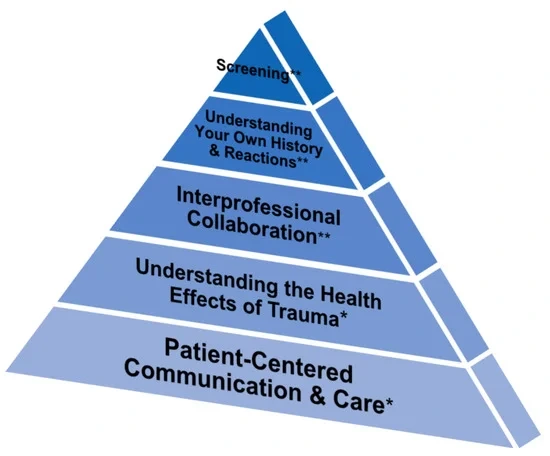
Figure 1: Trauma-Informed Care in Clinical Settings
There has been a mixed development concerning the incorporation of TIC into the mental health services in the UK. A large variation in policy level and gaps in implementation plans were deemed at the NHS level by Emsley et al. (2022), with healthcare professionals documented as saying that they lack coherent national guidance. Although there is an increasing policy level endorsement, the practitioners felt that there is insufficient training, a lack of time to dedicate to the practice, and more comprehensible operational definitions of trauma-informed practices.
Empirical evidence has helped to establish the relevance of TIC to increase positive patient recovery. According to Matte-Landry and Collin-Vezina (2022), there was a dramatic decrease in the restriction of restraints (52%) and seclusions (41%) after introducing the trauma-informed training to the youth residential care. The poorer mental health outcomes have been linked to these practices, which tend to be retraumatizing to the patient. Their degradation signifies the transition to more humane and therapeutic patterns of care that do not humiliate the patient with the traumatic past.
In a parallel case of forensic mental health, healthcare professionals shared their experiences as TIC enhances therapeutic relationships and patient trust, due to which recovery and engagement processes are more successful (Seitanidou et al., 2024). Employees indicated that TIC also contributed to a decrease in aggression and critical incidents, which further confirms that it affects inpatient settings. Mental care providers in NHS institutions also brought out the paradigm-shifting effect of TIC on their respective work. As observed by Worawichayawongsa et al. (2025) employees reported higher levels of sympathy, communication, and fewer burnout symptoms post-TIC training. Nevertheless, the lack of resources and the opposition to cultural change, and so on, were constant themes that served as hindrances to sustainable implementation. As developed by Xia et al. (2024) a validated psychometric instrument to assess the trauma-informed nursing practice, which permitted standard assessment of the TIC adherence and its relationship to patient outcomes.
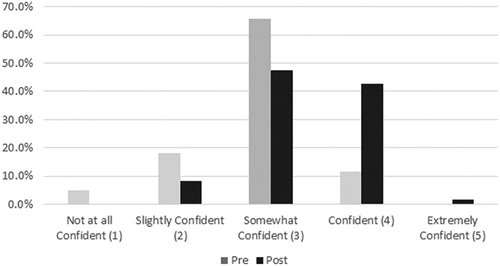
Figure 2: Effectiveness of trauma-informed care
In addition, trauma-informed approaches have been linked with systemic gains on a wider level. In a comparative research of hospital-based detection, Bradley (2024) concluded that the introduction of trauma-informed investigation teams resulted in a 38 percent rise in abuse discovery, a 24 percent decrease in repeat victimization, and a 19 percent fall in recidivism. Such results confirm the benefits of TIC to save health and societal expenditures in the long term.
Aim
The study focuses on measuring the effectiveness of trauma-informed care on the outcomes of patient recovery in inpatient mental healthcare settings.
Objectives
- To assess the impact of trauma-informed care on outcomes of patient recovery in inpatient mental health facilities.
- To explore the major issues in the transformation of mental health professionals into trauma-informed care in inpatient care.
- To develop recommendations regarding improving trauma-informed care practices in an inpatient mental health setting to improve patient outcomes.
Methodology
This article has used a secondary systematic review approach to determine the effects of the use of trauma-informed care (TIC) on patient recovery in inpatient mental facilities. A structured synopsis of eight primary research studies was conducted to review the literature based on each primary research study that was selected, with its reputation in reliable academic databases such as Google Scholar, PubMed, Science Direct, and Scopus. A well-defined inclusion and exclusion criterion was also used to inform the search process in order to select only adequate and relevant studies.
It included the following inclusion criteria: the studies had to (1) be published in 2019-2025, (2) be written in English, (3) have full-text access, and (4) be open access as it would guarantee transparency and replicability. They excluded those journals that did not fulfil the following criteria and abstracts, commentaries, editorials, or journals published in other languages. Many combinations of the following keywords were used in the search of the database: trauma-informed care, inpatient mental health, recovery outcomes, patient experience, mental health services, implementation, and barriers.
Each of the studies that were chosen was publicly available, cited, and assessed for credibility and ethical integrity. The research was careful not to commit plagiarism, misreporting of information, or selective reporting. Also, the review followed the academic integrity principles, and data synthesis was transparent, which is to achieve an objective and truthful assessment of evidence on the practices of TIC implementation and its influence on patient recovery outcomes.
Discussion
The studies that were examined in this systematic review provide some consistent and contrasting results on the adoption and outcome of Trauma-Informed Care (TIC) in different healthcare facilities, mostly in inpatient mental health units.
A theme shared between studies is that TIC is positively effective on patient outcomes, especially reducing restrictive practices. The literature supports the changes in patient safety and emotional well-being as Matte-Landry and Collin-Veinza (2022) reported a 52 percent decrease in restraints, and a 41% decrease in seclusions in TIC-trained to youth residential settings. Equally, Seitanidou et al. (2024) confirmed that, in a forensic inpatient context, TIC improved therapeutic relationships and diminished occurrences of aggression, in support of the idea that trauma-sensitive engagement leads to safer, more collaborative ones.
Nevertheless, discrepancies arise concerning the target of interventions and the population samples. As an example, Bradley (2024) tested TIC in the context of a hospital investigation team and saw that TIC resulted in a 26% reduction in repeat victimisation and a 19 percent reduction in recidivism, which highlights systemic and preventive results that are not necessarily clinical care-focused. On the contrary, Parry et al. (2021) discuss children in residential care, emphasizing the use of restorative parenting strategies, which, based on TIC, are more effective in enhancing attachment and decreasing behavioural disturbances, effectively applying TIC even to such fields as development and relationships.
The challenge of implementation was persistently identified in different settings. According to Emsley et al. (2022) and Worawichayawongsa et al. (2025), lack of training, poor guidelines, and opposition to cultural change have been a form of barrier among the NHS professionals. The findings were also reflected in Xia et al.'s (2024) work, where the authors also mentioned that there were no standardised tools to measure the TIC fidelity, leading them to create a dedicated questionnaire designed to assess various aspects of TIC in a group of nurses. One more area of distinction consists of methodological issues and the extent of TIC integration. Steen et al. (2022) highlighted the inconsistency in the educational approaches to teaching TIC, noting that education about TIC is increasing, but fails to correlate with clinical education in a consistent way. Meanwhile, researchers such as Seitanidou et al. (2024) and Worawichayawongsa et al. (2025) supported those more experienced in studies that delivered qualitative results on staff experience to further enrich the meaning of the cultural and emotional impact of TIC.
References
Bradley, K., 2024. Do Trauma-Informed Investigation Teams in One Hospital Increase Detection, Reduce Repeat Victimisation, and Reduce Recidivism: A Comparative Study.https://www.crim.cam.ac.uk/files/pol-2220_thesis_katherine_bradley.pdf
Emsley, E., Smith, J., Martin, D. and Lewis, N.V., 2022. Trauma-informed care in the UK: where are we? A qualitative study of health policies and professional perspectives. BMC Health Services Research, 22(1), p.1164.https://link.springer.com/content/pdf/10.1186/s12913-022-08461-w.pdf
Matte-Landry, A. and Collin-Vézina, D., 2022. Patterns of change in restraints, seclusions and time-outs over the implementation of trauma-informed staff training programs in residential care for children and youth. Residential Treatment for Children & Youth, 39(2), pp.154-178.https://www.researchgate.net/profile/Alexandra-Matte-Landry/publication/351822107_Patterns_of_Change_in_Restraints_Seclusions_and_Time-outs_over_the_Implementation_of_Trauma-informed_Staff_Training_Programs_in_Residential_Care_for_Children_and_Youth/links/6294b0ee88c32b037b5d429d/Patterns-of-Change-in-Restraints-Seclusions-and-Time-outs-over-the-Implementation-of-Trauma-informed-Staff-Training-Programs-in-Residential-Care-for-Children-and-Youth.pdf
Parry, S.L., Williams, T. and Burbidge, C., 2021, December. Restorative parenting: Delivering trauma-informed residential care for children in care. In Child & Youth Care Forum (pp. 1-22). Springer US.https://link.springer.com/content/pdf/10.1007/s10566-021-09610-8.pdf
Seitanidou, D., Melegkovits, E.A., Kenneally, L., Elliott, S. and Alves-Costa, F., 2024. Trauma-informed care practices in a forensic setting: Exploring health care professionals’ perceptions and experiences. International Journal of Forensic Mental Health, 23(4), pp.349-361.https://journals.sagepub.com/doi/pdf/10.1080/14999013.2024.2347238
Steen, M., Raynor, J., Baldwin, C.D. and Jee, S.H., 2022. Child adversity and trauma-informed care teaching interventions: A systematic review. Pediatrics, 149(3), p.e2021051174.https://onlinelibrary.wiley.com/doi/pdfdirect/10.1111/inm.13070
Worawichayawongsa, P., Ollis, S. and Kyriakopoulos, A., 2025. Mental health staff’s experiences of implementing trauma-informed care in the NHS. Mental Health Review Journal.https://research.tees.ac.uk/files/93830050/85989136.pdf
Xia, W., Wang, Y., Wu, X. and Yang, X., 2024. Development of a Questionnaire for Measuring Trauma-Informed Care of Nurses Working with Traumatically Injured Patients. Journal of Multidisciplinary Healthcare, pp.367-378.https://www.tandfonline.com/doi/pdf/10.2147/jmdh.s437341
Go Through the Best and FREE Samples Written by Our Academic Experts!
Native Assignment Help. (2026). Retrieved from:
https://www.nativeassignmenthelp.co.uk/trauma-informed-care-in-inpatient-mental-health-settings-54197
Native Assignment Help, (2026),
https://www.nativeassignmenthelp.co.uk/trauma-informed-care-in-inpatient-mental-health-settings-54197
Native Assignment Help (2026) [Online]. Retrieved from:
https://www.nativeassignmenthelp.co.uk/trauma-informed-care-in-inpatient-mental-health-settings-54197
Native Assignment Help. (Native Assignment Help, 2026)
https://www.nativeassignmenthelp.co.uk/trauma-informed-care-in-inpatient-mental-health-settings-54197
- FreeDownload - 39 TimesUnit 503 Wider Professional Practice and Development in Education and Training
Wider Professional Practice and Development in Education and...View or download
- FreeDownload - 40 TimesBMP6003 International HRM Assignment Sample
Introduction - BMP6003 International HRM Organisations achieve a...View or download
- FreeDownload - 44 TimesStrategic Analysis of Domino's Pizza Assignment Sample
Entrepreneurship And Innovation Management 1. Introduction - Entrepreneurship...View or download
- FreeDownload - 43 TimesConformity and Obedience Assignment Sample
Conformity and Obedience Assignment 1. Conformity and...View or download
- FreeDownload - 39 TimesCase Study Budgetary Management Assignment Sample
Assignment 2: Case Study Budgetary Management Ash Lodge Nursing Care...View or download
- FreeDownload - 36 TimesVirtual Visiting in ICU: Benefits and Ethical Issues Assignment
Introduction Virtual visiting has appeared as an important assistant to...View or download
-
100% Confidential
Your personal details and order information are kept completely private with our strict confidentiality policy.
-
On-Time Delivery
Receive your assignment exactly within the promised deadline—no delays, ever.
-
Native British Writers
Get your work crafted by highly-skilled native UK writers with strong academic expertise.
-
A+ Quality Assignments
We deliver top-notch, well-researched, and perfectly structured assignments to help you secure the highest grades.