
- Why Employee Retention Has Become a Business Priority in 2026
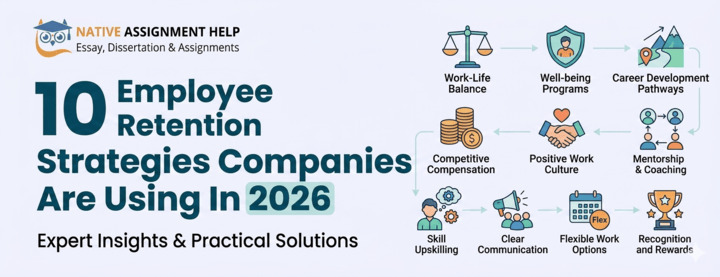
- 10 Employee Retention Strategies Companies Are Using Successfully in 2026
- 1. Flexible Working Arrangements
- 2. Career Development Opportunities
- 3. Skills Training and Upskilling
- 4. Employee Recognition Programmes
- 5. Mental Health and Wellbeing Support
- 6. Competitive Compensation Packages
- 7. Strong Leadership Communication
- 8. Internal Career Mobility
- 9. Personalised Employee Experiences
- 10. Continuous Feedback Systems
- Employee Retention Strategies and Their Business Impact
- Which Employee Retention Strategies Deliver the Greatest Results?
- Final Thoughts
Why Employee Retention Has Become a Business Priority in 2026
Every time an employee leaves, it costs the business more than most leaders realise. Recruitment fees, interview time, onboarding, and training can add up to thousands of pounds per hire. For specialist roles, the cost can be far higher. And that's before you account for the weeks or months it takes for someone new to reach full productivity.
There’s also a knowledge problem. When an experienced employee walks out, they also take client relationships, process knowledge, and team dynamics with them. These kinds of losses don't even show up on a spreadsheet, but practically, they slow down the team and also create real gaps that are hard to fill quickly.
What people want from a job has changed since hybrid and remote work became more common. Flexibility is no longer seen as a perk; it's what people expected from you. With that, people who feel used to working from home don't want to give that up anymore. And those who feel micromanaged, not valued or stuck in the same role are more likely to look for work elsewhere.
Employee retention is now a big topic to discuss in workforce planning and leadership studies. It also shows up in a lot of HR assignment support resources because of its target areas. As skilled workers retire and it gets harder to find replacements, businesses need to keep their employees longer.
10 Employee Retention Strategies Companies Are Using Successfully in 2026
These are the actual strategies companies are using nowadays. They are highly useful, effective and clearly based on what actually employees look for.
1. Flexible Working Arrangements
Employees want control over time:
- Hybrid schedules
- Flexible start times
- Compressed weeks
This provides employees a sense of trust which removes stress and improves balance. Companies that really offer flexibility have actually lower employee turnover.
2. Career Development Opportunities
Show employees that there’s a future in the business. By providing structured growth plans, mentoring, and clear promotion pathways. When people realise they have growth with the company, they feel more motivated to stay and perform.
3. Skills Training and Upskilling
Many employees leave because their career has stalled. Certifications, internal learning programmes, and funded qualifications keep people growing without needing to change employers to do it.
4. Employee Recognition Programmes
People feel respected and seen when they have peer tools, manager shout-outs, and reward schemes. It doesn’t need to be costly; keep it consistent, because well-appreciated employees are likely to look elsewhere.
5. Mental Health and Wellbeing Support
Mental burnout is one of the main reasons people leave their jobs. With employee assistance programmes, mental health days and counselling services, people feel like they are supported and cared for instead of just being managed.
6. Competitive Compensation Packages
Bonuses, better pensions, and non-cash benefits keep offers competitive. What employees often look at is what they have compared to what’s on the market. When pay seems fair, workers don’t leave for a slightly higher salary.
7. Strong Leadership Communication
Employees want to be clearly informed and heard by their managers. This develops stronger commitment to the organisation, and more people are likely to stay through difficult periods.
8. Internal Career Mobility
People stay interested and don’t feel stuck when they are encouraged to switch teams or roles. When employees can grow within the company, they don’t have to look for a new job elsewhere as often.
9. Personalised Employee Experiences
Different employees value different things. And when the company tailors benefits, working arrangements, and development plans to individual needs, it shows people they are seen as an individual, and you know these personal connections are hard for competitors to replicate.
10. Continuous Feedback Systems
The old-fashioned annual review has been replaced by regular check-ins, pulse surveys, and real-time feedback. The staff wants to know what's going on. And there, regular, honest conversations often lower stress and catch retention risks before they lead to resignations.
Employee Retention Strategies and Their Business Impact
| Strategy | Primary Benefit | Long-Term Impact |
|---|---|---|
| Flexible Working | Better work-life balance | Lower voluntary turnover |
| Career Development | Increased motivation | Stronger internal talent pipeline |
| Skills Training | Higher capability levels | Reduced skills gaps over time |
| Recognition Programmes | Higher engagement | Improved employee loyalty |
| Wellbeing Support | Reduced burnout and stress | Lower absenteeism and attrition |
| Competitive Compensation | Stronger job satisfaction | Reduced flight risk to competitors |
| Leadership Communication | Greater trust in management | Stronger organisational commitment |
| Internal Mobility | Sustained engagement | Deeper institutional knowledge |
| Personalised Experiences | Improved employee satisfaction | Stronger emotional commitment |
| Continuous Feedback | Better performance visibility | Earlier identification of retention risks |
Each of these strategies delivers value in itself, but it is when organisations combine a number of approaches that retention improves the most. A competitive salary may draw employees in, but it is the development opportunities, recognition and good leadership which decides if they stay. This relationship is often used in human resources assignment guidance materials because it shows how people-centric initiatives impact concrete business results such as productivity, engagement, and long-term workforce stability.
Which Employee Retention Strategies Deliver the Greatest Results?
Some strategies don’t work the same for everyone. Where some can get quick results, others take months or years to pay off. Understanding this difference will help organisations plan more effectively.
Recognition programmes and flexible working generally deliver quick wins. They’re pretty cheap to roll out, and workers see the difference immediately. If you’re experiencing a lot of turnover in your business, these are good places to start. They show something is changing without having to do a total culture change.
Career development, internal mobility and skills training are longer-term investments. They require more planning and resources, but the returns are great. Workers who feel they’re evolving within the organisation are much less likely to go. These strategies are particularly effective in knowledge-based industries such as consulting, tech, finance, and healthcare. Skilled professionals want to continue growing. “Letting them go to a competitor that will give them better progression is a costly mistake.
For hybrid and remote workforces, the most important strategies are communication, flexibility and personalisation. Since people are not in the office every day, people need to feel connected and trusted. Remote workers can easily feel invisible without strong leadership communication and individual recognition, and invisible workers leave.
The best strategy is a combination of strategies. A competitive salary, career development, recognition, and flexibility work the best together. Organisations with the best retention results are considering employee experience as a connected system, not as a single initiative.
Final Thoughts
Retention has moved from a back-of-mind HR issue to a front-and-centre business priority. Companies can’t afford to treat it as an afterthought in 2026. There is no one-size-fits-all solution for all organisations.
But the best outcomes are achieved when there is a consistent employee experience that combines flexibility, development, wellbeing and communication. Companies that take employee expectations seriously and continually adapt to meet them will hang on to their best people. “In a labour market where skilled employees have more choice than ever before, effective retention strategies are becoming a real competitive advantage as opposed to an HR objective.
If you’re a student and looking for guidance over human resource assignments, then at Native Assignment Help we have subject specialists to help you.

 6 Years | MBA
Dominic Fletcher is a human resource management writer specializing in employee engagement, workplace culture, talent management, and organisational development. His articles combine current HR trends with practical business insights, making complex HR concepts easier for university students to understand.