
- Introduction and Literature Review
- The Emergence of FinTechs and BigTechs
- Competitive and Strategic Impact onto metro bank
- Regulatory and Ethical Problems
- The impact of Digital Transformation and Organisational Culture
- Relevance in Research and Gaps in Literature
- Analysis and Discussion
- Market Displacement and Competition Pressure
- Digital Transformation and Innovation Issues
- Regulatory aspects and Ethical aspects
- Risks to Cybersecurity and Operations
- Effect upon Revenues and Profit Models
- Organisational and Cultural Adjustment
Introduction and Literature Review
With the high rate of development of financial technologies (FinTechs) and the integration of technology giants (BigTechs) into the financial industry, there is a considerable shift in the existing pattern of banking. The report examines how FinTechs and BigTechs are affecting Metro Bank, a UK-based challenger bank with high presence in the high-streets and a customer-centric model. The main question is the following: How FinTechs and BigTechs changed the competitive landscape, operational strategy, and ability to innovate Metro Bank, and what are the implications beyond the company?
The issue of special importance in the present-day financial landscape is the fact that the expansion of online-only banking robo-payment platforms, lending platforms based on artificial intelligence, has already presented incumbent banks and more recent appertaining structures such as Metro Bank, with a significant challenge. The number of reasons to choose Metro Bank is that it is a somewhat young organism that has the stance of a traditional-model bank which attempts to find a balance between the physical environment and the innovation of the digital environment. The research on the role of FinTechs and BigTechs in shaping their competitive strategies can serve as a good lesson in the greater issues and responses in the retail banking industry.
This Metro Bank assignment sample examines how FinTechs and BigTechs are reshaping the UK banking sector through digital innovation, competitive disruption and changing customer expectations. Native Assignment Help supports students in understanding financial technology, analysing business challenges and applying relevant academic theories to banking case studies. As a reliable Assignment Helper UK, we provide academic guidance to help students strengthen their research, critical thinking and assignment-writing skills.
The Emergence of FinTechs and BigTechs
FinTechs are generally used to describe technology-centered innovative companies that provide financial services both more efficiently and at lower prices. BigTechs (Google, Amazon, Apple, and Meta) have used their huge user base and technological experience to provide payment, lending, and wealth management services. These new entrants leverage the concepts of regulatory arbitrage and economies of scale to develop smooth financial experiences, in turn, increasing customer expectations to a new level.
FinTechs have encouraged digital change in banks, and they are frequently more nimble and customer-focused than the incumbents. BigTechs are, however, more of a profound existential threat, because of their platform business models, powerful capabilities in data analytics, and their availability into the global markets (Murinde, Rizopoulos, & Zachariadis, 2022). The two kinds of entities induce pressure on the traditional banks to innovate or become irrelevant.
Competitive and Strategic Impact onto metro bank
The first basis of Metro Bank attracting customers in the market was branch-centred servicing, longer operating time and customisation. But in the face of FinTechs whose business models are built on mobile applications, such as Monzo and Starling Bank, Metro Bank has been unable to match up to the technological trend of digital innovation (Wójcik, 2021). According to the study conducted by EY (2022), Fintechs have been appealing more to younger consumers who value convenience, real-time transactions, and user-friendly interfaces, which Metro Bank has not achieved so far.
Regulatory and Ethical Problems
Metro Bank has even more strategic difficulty with regulatory landscape. FinTechs enjoy more free areas to innovate since they are not bound by stringent capital, AML, and data security regulations, unlike Metro Banks. Since they are classified as technology companies, BigTechs tend to avoid complete regulations, especially since their financial weight has been on a steady rise.
Such asymmetry presents an ethical concern towards the utilization of consumer data, financial stability and systemic risk. Metro Bank, therefore, has to succeed past competitive disruption but also in the increased level of scrutiny under which case it should be able to combine technology with regulatory compliance. The concern of the Bank of England (2023) about adverse impact on competition through development of unmonitored credit channels that can be triggered by non-bank entities is based on the following points.
The impact of Digital Transformation and Organisational Culture
The change of organisational culture and internal capabilities is the other significant financial technology and BigTech disruption implication. Metro Bank has experienced difficulties related to implementation in digital transformation, like collaboration on mobile banking and online onboarding. Reinforces the significance of blending the change of the technological environment and culture adjustment, which legacy-style organizations cannot handle. The workers need to shift their focus in the branch way of thinking to a more digitally literate innovation-focused way of thinking.
Relevance in Research and Gaps in Literature
Although an increasing literature views the macro-level effects of FinTechs and BigTechs on banking, no study in itself investigates mid-tier challenger banks, such as MetroBank, which currently have little digital infrastructures to turn to but are still expected to regulate according to the same standards. In addition, the majority of studies focus on either technological or regulatory factors, but do not analyse the relationship between the two and the way it can shape business models, consumer trust, and institution culture (Taneja et al., 2023). This report tries to bridge such a gap by offering an all-encompassing assessment of Metro Bank, strategy responses, regulatory environment, and cultural change in the era of FinTech and BigTech disruption.
Analysis and Discussion
The penetration and growth of FinTechs and BigTechs into the financial sector have unleashed havoc on conventional banking. The disruption presents Metro Bank with a diverse challenge since it is a challenger bank with a mix of uniquely integrated high-street presence and customer-focused operations based in the UK. In this part of the research, the director of research critically examines how FinTechs and BigTechs have affected Metro Bank and then examines what this means to the larger banking sector, in terms of competitive pressure, digitalisation, regulatory and ethical issues, cybersecurity volumes, and change in business model and organisational culture.
Market Displacement and Competition Pressure
Mobile-first technologies used by FinTech companies like Monzo, Starling bank, and Revolut have transformed the expectations of customers that expect to make financial transactions of all type seamlessly and receive real-time updates and with the minimum cost. These companies are using agile stacks, artificial intelligence (AI), and user-centric interfaces which may require taking a second look at branch-related systems, such as Metro Banks. Metro Bank has recently found itself under severe competition of FinTechs, which have lower overhead rates and innovation cycles than Metro Bank (Hendrikse, Bassens, & Rossiter, 2024). Metro Bank entered the industry in 2010 with a combination of customer-friendly high-street banking, where the bank remained open longer during daytime, did not demand reservation and accepted pets.
In 2023, Starling Bank recorded a pre-tax profit of 195 million as it is largely attributed to the low-cost digital infrastructure, as well as technology scalability. Metro Bank, on the other hand, ended FY 2023 with a loss of 70.7 million income stating that its slow growth in digitalisation and increased operational expenses in supporting physical branches contributed to this loss (Metro Bank Annual Report, 2023). These numbers draw attention to the growing profitability and business effectiveness gap between digital-native banks and hybrid challengers (Bueno, 2024).
Digital Transformation and Innovation Issues
Metro Bank has tried to shift to digital services in order to be competitive. Over the last couple of years, it has introduced online mortgage applications, invested in cloud-based platforms, teamed up with FinTech companies to offer KYC and biometric authentication (Ellili, 2023). The rate of change has however been uneven. As an illustration, its mobile application is not as good as Monzo and Starling in regard to usability and features. Reviews of customers show that they are not satisfied with slow updates, absence of in-app budgeting and weak integration to open banking.
Digital transformation in banking cannot be a mere technological investment but should guide the business strategy modification and redesigning internal processes. The problem with Metro Bank is that it has both sides, being associated with physical branches and trying to become digital. Such hybrid model strains resources and impedes fast innovation (Temelkov, 2022). Metro Bank has to balance between the expenses of bricks-and-mortar infrastructure and the need to experiment with technology in contrast to FinTechs built around lean models, Metro Bank cannot afford to grow rapidly.
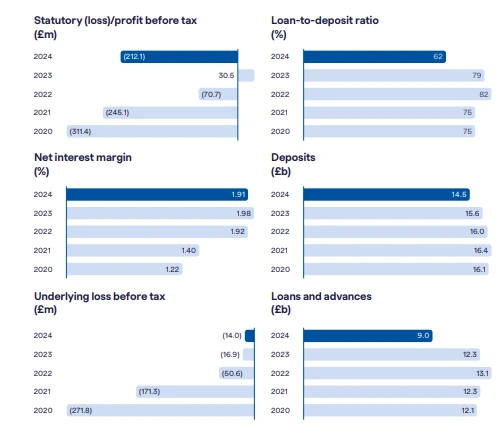
Figure 1: Financial structure
Regulatory aspects and Ethical aspects
Regulatory arbitrage is one factor contributing to competitive advantage of FinTechs and BigTechs. FinTechs are usually subjected to lighter-touch regimes, especially when they are providing unbundled services. Technology firms are called BigTechs and are not regulated under the same prudential regulations as the banks albeit they provide quasi-financial services. This has resulted to uneven play field provoking a regulatory dilemma. It can cause system risks, customer misunderstanding, and decrease financial control due to this asymmetry.
Metro Bank as regulated deposit-taking institution under PRA and FCA have strict requirements on capital adequacy, data protection and conduct of consumer (Ahmed, Nazar, and Kareem, 2024). Though these obligations are fundamental in maintaining financial stability, it restricts it to be able to test new technologies or products and products under free experimentation. To give an example, in the case of a BNPL launch, thorough credit risk analysis and disclosure to the customers would be essential the same way pushing the botton in the system is missing equivalent supervision of some FinTechs exploiting the space (Patki and Sople, 2022).
At the ethical level, FinTechs and Bigtechs have brought issues of privacy about data, algorithmic prejudice, and exclusion about the financial market. BigTechs generate large consumer data which they monetise and may discriminate between prices or lending.
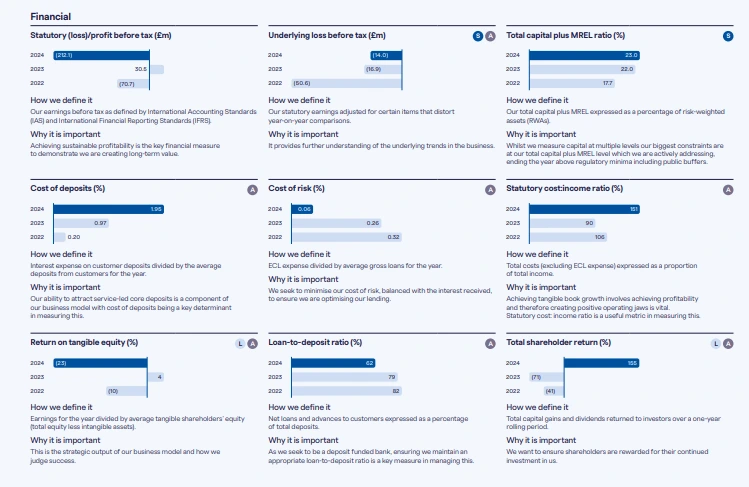
Figure 2: Financial factors
Risks to Cybersecurity and Operations
Banks are becoming vulnerable to cyber threats as they progressively become digital. The new entrants to the nonbank arena FinTechs and BigTechs might be more prepared than traditional banks since their cybersecurity systems are well developed. As revealed by the National Cyber Security Centre of the UK (2023), phishing, ransomware, and chain of supply attack are on the increase in financial institutions.
Metro Bank has documented numerous service suspensions and online platforms blockages, which affect customer confidence and business endurance (Hughes, Seddon, and Dwivedi, 2024). BigTech platforms, on the contrary, spend billions per year on cloud security and threat detectors AI (Zia, Zhong, and Akbar, 2024). Take the case of Google in that its cybersecurity unit, Chronicle relies on machine learning as a way of identifying the anomalies in real-time. Metro Bank with limited technical capability will have to outsource to other vendors or use cloud that brings third party risk and increased complexity of regulations.
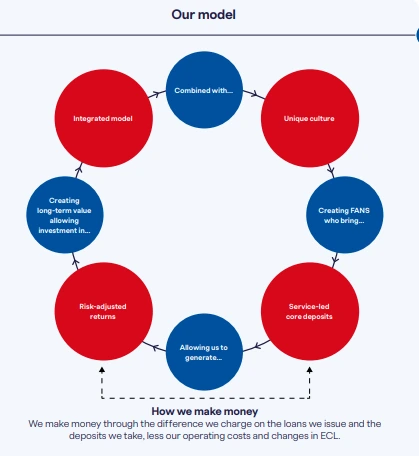
Figure 3: The Company's morale
Effect upon Revenues and Profit Models
The BigTechs and FinTechs are also breaking the profit model in the banking business. There is margin compression in the main products of banking industry with zero-fee current accounts, commission-free trading applications, and cheap international transfers. Net interest margins and fee-related services contribute significantly to Metro Bank revenue and both of the mentioned sources face compression.
Third-party providers have acquired access to consumer data through the emergence of API-based banking and Open Banking in the UK, an initiative compelled by the CMA and provided its own financial guidance or budgeting applications (Bassens, Pažitka, and Hendrikse, 2024). This destroys intermediation of customer relationships and diminishes the power of Metro Bank to collect profits on client insights.
Organisational and Cultural Adjustment
On a culture front, internally, Metro bank processes a shift in its culture, as it heads towards being a digital-first enterprise, instead of being one that is branch-centric. Here, this change means the retraining of personnel and the recruitment of technology employees and the redesigning of KPIs, focusing not on the number of service hours but on innovations.
Conclusion
It can be seen that this report has been a critical analysis of how FinTechs and BigTechs can and have affected Metro Bank and the sector of banking as a whole. In the results, the Metro Bank business, as it stands today, can be considered an innovator at its early stages of presenting a challenge, which has become overwhelmed with newer, more digital-focused FinTechs and tech giants that are not only transforming consumer expectations but even altering how the business operates and the competitions it faces. The sudden development of app-enabled banking, embedded finance and digital payment systems has highlighted critical gaps in Metro Bank hybrid business model, where physical branches co-exist with gradual digital improvements. The discussion indicates that Metro Bank has suffered more on keeping digitalization behind, regulatory pressures, and loss of traditional sources of revenue whereas FinTechs and BigTechs have enjoyed a simpler organization, ability to innovate through use of technology, and relaxed regulations. Besides, cybersecurity, data governance, and talent sourcing are also major issues as the bank goes digital to become a more integrated institution. These results are consistent with the findings in the literature, which indicate that bans should be ready to change radically to ensure their survival in the post-digital world. Nevertheless, as the case of Metro Bank shows, the struggles of mid-sized, branch-based challenger banks are not the same ones as those of the incumbents or FinTechs.
Reference List
Journals
Bueno, L. A. (2024). Exploratory Study of Digital Operational Efficiency for Brazilian Banks (Doctoral dissertation, [sn]). Retrieved from: https://repositorio.unicamp.br/Busca/Download?codigoArquivo=575101&tipoMidia=0 [Retrieved on: 15.6.2025]
Ellili, N. O. D. (2023). FinTech Adoption during COVID-19 Pandemic: Bibliometric analysis. What Lessons for the Future?. What Lessons for the Future. Retrieved from: https://papers.ssrn.com/sol3/Delivery.cfm?abstractid=4604116 [Retrieved on: 15.6.2025]
Hendrikse, R., Bassens, D., & Rossiter, A. (2024). Rebooting Amsterdam for the age of Big Tech: Platform capitalism, reintermediation, and financial-center change. Geoforum, 148, 103894. Retrieved from: https://researchportal.vub.be/files/108416916/Hendrikse_Bassens_Rossiter_2024_Geoforum.pdf [Retrieved on: 15.6.2025]
Hughes, L., Seddon, J. J., & Dwivedi, Y. K. (2024). Disruptive change within financial technology: A methodological analysis of digital transformation challenges. Journal of Information Technology, 39(4), 756-783. Retrieved from: https://journals.sagepub.com/doi/pdf/10.1177/02683962231219512 [Retrieved on: 15.6.2025]
Murinde, V., Rizopoulos, E., & Zachariadis, M. (2022). The impact of the FinTech revolution on the future of banking: Opportunities and risks. International review of financial analysis, 81, 102103. Retrieved from: https://www.sciencedirect.com/science/article/pii/S1057521922000734 [Retrieved on: 15.6.2025]
Patki, A., & Sople, V. (2022). Open banking ecosystem: The Indian perspective. Indian Journal of Finance, 16(5), 24-40. Retrieved from: https://www.researchgate.net/profile/Aarti-Patki/publication/360929083_Open_Banking_Ecosystem_The_Indian_Perspective/links/62a706a56886635d5cd54dff/Open-Banking-Ecosystem-The-Indian-Perspective.pdf [Retrieved on: 15.6.2025]
Pažitka, V. Please cite as: Bassens, D., Pažitka, V., & Hendrikse, R.(2024). Banking in the cloud: mapping big tech’s global digital technology networks. Regional Studies, 1–15. Retrieved from: https://researchportal.vub.be/files/120200378/Banking_in_the_cloud_preprint.pdf [Retrieved on: 15.6.2025]
Shuaib Ahmed, M., Nazar, A., & Kareem, S. A. (2024). The Digitalization Impact on the Indian Financial Sector. Advances in Finance, Accounting, and Economics. Retrieved from: https://www.academia.edu/download/118215425/book_chapter_.pdf [Retrieved on: 15.6.2025]
Taneja, S., Siraj, A., Ali, L., Kumar, A., Luthra, S., & Zhu, Y. (2023). Is fintech implementation a strategic step for sustainability in today's changing landscape? An empirical investigation. IEEE Transactions on Engineering Management, 71, 7553-7565. Retrieved from: https://repository.londonmet.ac.uk/8430/3/Manuscript%20-%20Acceptane%20Version.pdf [Retrieved on: 15.6.2025]
Temelkov, Z. (2022). Factors affecting neobanks sustainability and development. Journal of Economics, 7(1), 1-10. Retrieved from: https://js.ugd.edu.mk/index.php/JE/article/download/4930/4340 [Retrieved on: 15.6.2025]
Wójcik, D. (2021). Financial geography I: Exploring FinTech–maps and concepts. Progress in Human Geography, 45(3), 566-576. Retrieved from: https://journals.sagepub.com/doi/pdf/10.1177/0309132520952865 [Retrieved on: 15.6.2025]
Zia, Z., Zhong, R., & Akbar, M. W. (2024). Analyzing the impact of fintech industry and green financing on energy poverty in the European countries. Heliyon, 10(6). Retrieved from: https://www.cell.com/heliyon/pdf/S2405-8440(24)03563-1.pdf [Retrieved on: 15.6.2025]
Go Through the Best and FREE Samples Written by Our Academic Experts!
Native Assignment Help. (2026). Retrieved from:
https://www.nativeassignmenthelp.co.uk/financial-markets-regulation-and-ethics-fmre-coursework-54223
Native Assignment Help, (2026),
https://www.nativeassignmenthelp.co.uk/financial-markets-regulation-and-ethics-fmre-coursework-54223
Native Assignment Help (2026) [Online]. Retrieved from:
https://www.nativeassignmenthelp.co.uk/financial-markets-regulation-and-ethics-fmre-coursework-54223
Native Assignment Help. (Native Assignment Help, 2026)
https://www.nativeassignmenthelp.co.uk/financial-markets-regulation-and-ethics-fmre-coursework-54223
- FreeDownload - 40 TimesTesla's Manufacturing Process: A Comprehensive Analysis Assignment Sample
Tesla's Manufacturing Process: A Comprehensive Analysis Get free samples...View or download
- FreeDownload - 39 TimesEffective Sales Management Strategies Assignment Sample
Introduction - Sales Management Sales management can be defined as the process...View or download
- FreeDownload - 43 TimesPrinciples Of Finance Assignment Sample
Introduction-Principles Of Finance Assignment Competing theories of capital...View or download
- FreeDownload - 42 TimesNew Business Plan for Eco Bricks in India Assignment Example
New Business Plan for Eco Bricks in India Get free samples written by our...View or download
- FreeDownload - 38 TimesSummative Assessment Personal Effectiveness Assignment Example
Summative Assessment Personal Effectiveness Assignment Are you in need...View or download
- FreeDownload - 41 TimesM-615-3826 Person-Centred Care Assignment Sample
Introduction to Person-Centred Care Assignment Sample Person centred care is...View or download
-
100% Confidential
Your personal details and order information are kept completely private with our strict confidentiality policy.
-
On-Time Delivery
Receive your assignment exactly within the promised deadline—no delays, ever.
-
Native British Writers
Get your work crafted by highly-skilled native UK writers with strong academic expertise.
-
A+ Quality Assignments
We deliver top-notch, well-researched, and perfectly structured assignments to help you secure the highest grades.