
- PART 1: Material Testing Techniques
- a) Six Mechanical Testing Procedures
- b) Non-Destructive Testing (NDT) Techniques
- PART 2: Data Analysis and Material Selection
- a) Analysis and Comparison of Mechanical Properties
- b) Influence of Test Results on Material Selection
- PART 3: Material Failure Mechanisms
- a) Six Failure Mechanisms
- b) Influence of Working & Environmental Conditions
- PART 4: Service Life & Prevention Strategies
PART 1: Material Testing Techniques
a) Six Mechanical Testing Procedures
Mechanical testing
Mechanical testing constitutes the major assessment of physical performance and reliability of engineering materials. It establishes important material characteristics which include strength, ductility, toughness and stiffness under different loading scenarios. These observations help to choose the best possible material to use in specific services to be safe, effective and durable.
Understanding material testing and failure mechanisms can make engineering concepts easier to apply in real-world situations. For additional academic guidance and study support, Native Assignment Help offers helpful resources through its Help with Assignment section.
Tensile Testing
Among the most applied measures of evaluating the mechanical performance, especially in metals and polymers, is tensile testing. A standard specimen is fixed in a universal testing machine and subjected to a uniaxial tensile force till break (Lin & Kang, 2021).
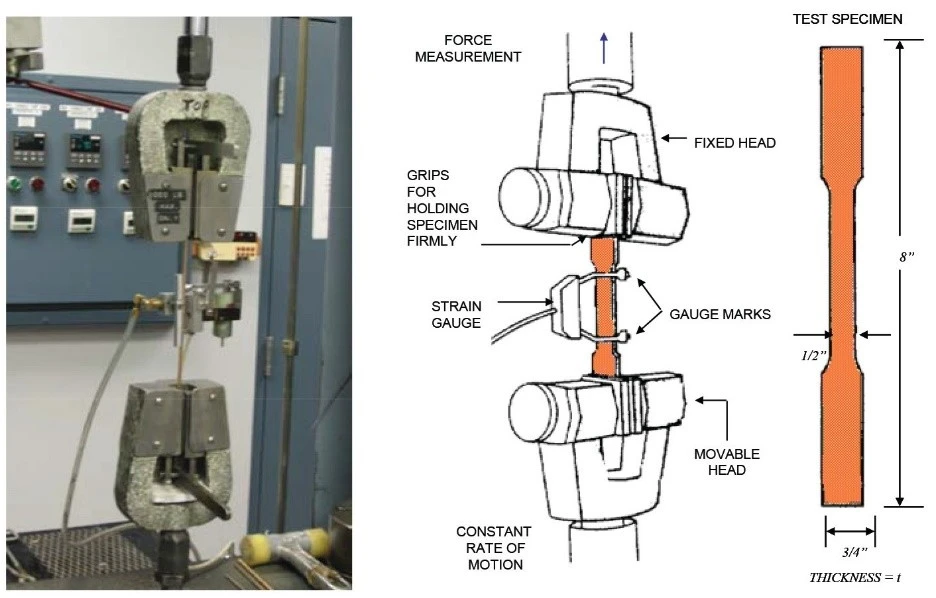
Figure 1: Tensile Testing
The stress-strain curve derived would give valuable results such as the elastic modulus, the yield strength, the tensile strength as well as the elongation at break.
Compression Testing
Compression testing helps measure the behaviour of a material under compressive loads assisting in ascertaining compressive strength and compressive modulus. It can easily be applied on brittle materials such as ceramics and cast iron, which probably are not good in tension.
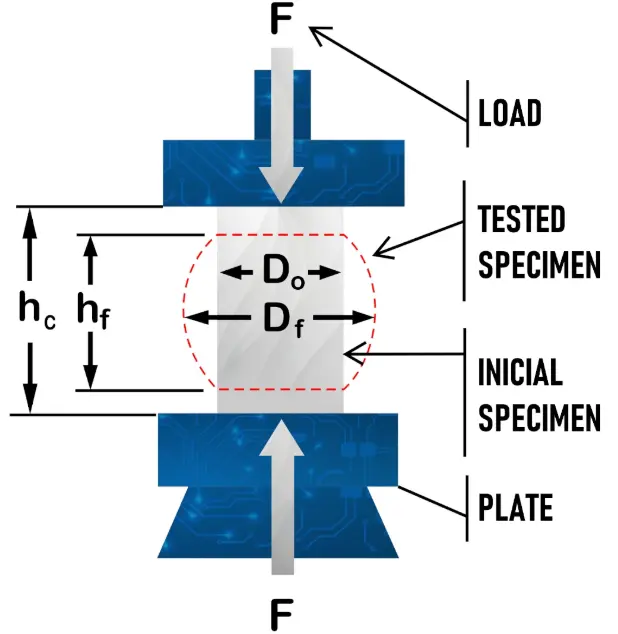
Figure 2: Compression Testing
The test requires the positioning of a sample, usually a cylinder or cuboid, between plates and load is applied until the sample deforms or fails. Stress-strain relationship denotes the capacity of the material to withstand bending or compressing.
Hardness Testing
Tests of hardness are tests of resistance to localised plastic deformation. Widespread techniques are Brinell, Rockwell, and Vickers, which vary with regard to the type of indenter and the force used to measure them. With Vickers testing, a diamond pyramid-shaped indenter is utilised, which is pressed into the surface; a calculation of the hardness achieved through the impression diagonal length (Alshamrani et al. 2022).
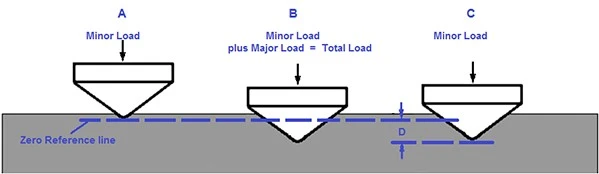
Figure 3: Rockwell hardness test
Hardness is associated with wear resistance and strength, thus rendering it very handy in gauging surface treatments or even components that have been treated with heat.
Static Shear Testing
Static shear testing is defined as the loading of the material with an element that acts parallel to the surface of the material to measure the shear strength of the material and the response to sliding loads. It is certainly applied in bonding-adhesive tests, fastener testing, and multilayered and laminar compositions.
Bend (Flexural) Testing
Bend testing is widely done as three-point bending, which is particularly beneficial when dealing with brittle materials that including polymers and ceramics.
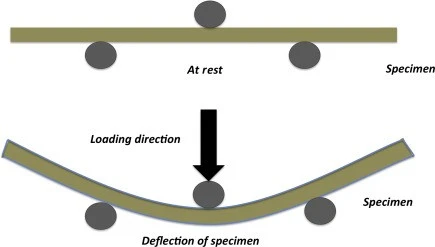
Figure 4: Bending Test
Flexural strength and modulus are assessed by setting a sample of materials on two supports and exerting force in one or two central locations of the sample (Oettel et al. 2022). The resulting failure or maximum bending stress provides some indication about the resistance of the material against fracture induced by flexural loads.
Impact Testing
Charpy and Izod tests are types of impact tests which determine the amount of energy that a material takes up before breaking when subjected to high-rate loading. A pendulum hits the notched sample, and the amount of energy that is absorbed is noted. This figure signifies the toughness of a material, that is, its resistance to a sudden shock or its fracture.
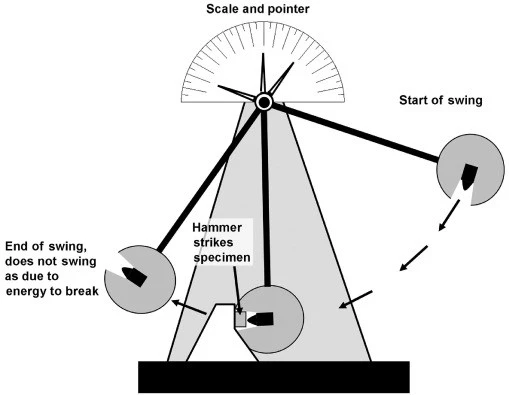
Figure 5: Impact testing
These tests are of specific interest in low temperatures or moving cases such as the ship hulls and ship machine parts. Impact testing is one of the most critical tests in the identification of ductile-brittle changes in metal.
Fatigue Testing
Fatigue testing determines the capability of a material to bear the cyclical load and is crucial in components that undergo repeated changes in their loads in service, like shafts, propellers, and wings. A fatigue test is the application of varying amplitudes of stress loads to a specimen under a constant or varying load over a large number of cycles until the sample fails.
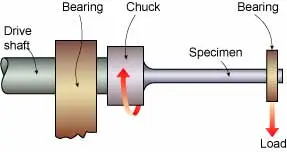
Figure 6: Fatigue test
The output is usually found on an S-N (Stress vs. Cycles) graph to assess the endurance limit, that is, the stress level at which a material can theoretically sustain an infinite number of cycles (Stinville et al. 2022). Fatigue failure usually occurs at relatively low stress ranges far below the material yield strength, and there is no sign or warning, which makes fatigue analysis very necessary in marine and mechanical equipment operating with either vibration or oscillating loads.
Two Non-Mechanical Tests
Thermal Testing
Thermal testing ascertains the capability of a material to conduct or insulate heat, which is critical in cases where the heat environment is high. Evaluation of thermal conductivity (k) is one of the most significant properties determining the speed of the movement of heat through a material. The high conductivity materials used are those of metals (copper, aluminum) in the heat exchangers and low conductivity materials such as ceramics and polymers as a thermal insulator (Yousefi & Tariku, 2021). Thermal testing also assists in assessing properties like the specific heat and thermal diffusivity, which are essential properties in the case of transient thermal applications.
Electrical Testing
Electrical testing determines the electromagnetic property of a substance, which is the electrical conductivity or resistivity. This applies particularly to the selection of conductors, insulators and semiconductors (Gu et al. 2022). Metals are normally tested with a four-point probe or Ohm's law set-up, whereas dielectric strength is measured in insulators. Copper and silver have low resistivity and are hence ideal for wiring and circuit components.
b) Non-Destructive Testing (NDT) Techniques
Dye Penetrant
Dye penetrant inspection is applied to find surface-discontinuous non-porous material defects. The surface is covered with liquid dye, it percolates down through cracks, and is pulled out by a developer that brings defects into visibility either under visible light or ultraviolet light. It is commonly applied on casting surfaces and welds on stainless steel or aluminium parts. The technique is perfect in locating fatigue cracks and surface insinuations in marine valves and non-magnetic components.
Magnetic Particle
Only ferromagnetic materials can be tested by magnetic particle testing. It includes magnetisation of the material, and then iron particles are added and tend to accumulate on discontinuities because magnetic flux leaks through the iron particles (Zhang et al. 2021). Laps, cracks and seams start to be seen under a visible or fluorescent light. This technique is repeatedly applied in the examination of the gears, shafts, and structural fasteners.
Ultrasonic
Ultrasonic testing makes use of sound waves of high frequency to be placed into a material, where the internal defects or alterations like voids or inclusions can be identified. The internal interfaces are used to find out the size of the defect and its location (Fitzka et al. 2021). It proves exceptionally useful for thick and multilayered materials like laminated composites and steel plates. UT has been critical in the aerospace and shipbuilding industries because of its capability to identify the delamination occurring internally without destroying the object.
Radiography
Radiographic testing is a process which uses X-rays or gamma rays to penetrate a substance and record the image on film or a digital plate.
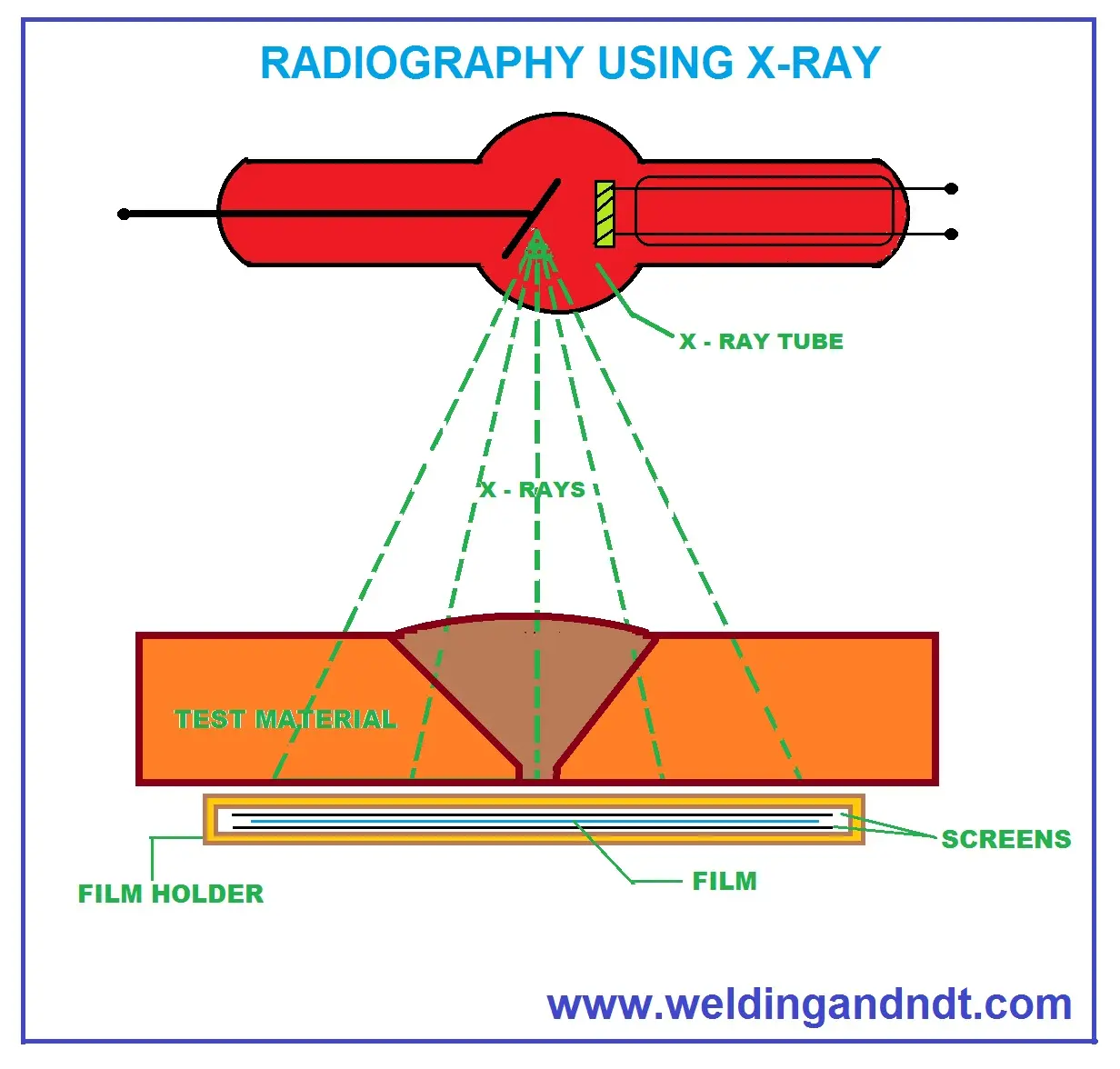
Figure 7: Radiography Testing
Changes in the density, thickness or internal voids of materials present as discrepancies in contrast (Lftta et al. 2024). Inspecting welds is widely applied in pressure vessels, the piping system and aerospace components using this method. RT has an image record that becomes permanent and is considered important when certifying critical parts used in the marine and nuclear sectors.
PART 2: Data Analysis and Material Selection
a) Analysis and Comparison of Mechanical Properties
A comparison with standard data of highly recognised sources of information, such as, RoyMech, manufacturer datasheets like AALCO, with the mechanical testing results of four materials Stainless Steel 316L, Natural Diamond, Polycarbonate, and Fibreglass, has been evaluated. The materials are the major categories, i.e., metals, ceramics, polymers, and composites and were unique in the sense that each of them had a distinct property profile, versatile marine and structural applications.
Beginning with Stainless Steel 316L, the measured tensile strength is 430 MPa, with the compressive strength of 140 MPa. In typical values in the standard industry, tensile strength of 316L was usually placed near 515 MPa and compressive strength between 170-310 MPa (azom.com). The variation in the tensile strength can be related to aspects involving cold working status, grain condition or imperfections in the sample surface. Equally, the compressive strength is significantly lower than anticipated, and it could be due to a lack of proper surface finish, misalignment of the sample during testing or the remaining stresses during the manufacturing process. Stainless Steel 316L has been characterised by resistance to corrosion and mechanical strength balance, making it appropriate to be used on marine fasteners, pumps, as well as valves. The slightly reduced values do not rule off service but caution at high-load designs.
On Natural Diamond, compressive strength is stated to be 18,000 MPa and Vickers Hardness 10,000 kg/mm2. These values are quite close to the data, according to which diamond is known as one of the hardest and strongest natural materials. The normal compressive strength is over 20000 MPa and the hardness is 8000-10000 on the Vickers scale. A very slight difference in compressive strength could be attributed to crystallographic orientation and testing at the micro/nanoscale levels. The high hardness of diamond can be used in making abrasive equipment and cutting tools, and wear-resistant surfaces. Its fragility to tension, however, limits its usage in construction loads.
The polycarbonate tensile strength is 60 MPa, and its Izod impact strength is 1000 J/m. These values lie well within the expected range as compared to that of standard values, which range between 59-70 MPa and 850-1050 J/m for tensile and impact strength, respectively (Ashby, 2025). Polycarbonate is an engineering thermoplastic of great popularity in engineering due to its combination of strength, clarity and dimensional stability. The fact that the test shows high impact resistance is what is expected of it; therefore, it will be used in outdoor marine glass applications, protective enclosures, and signal covers. There can also be minor variations because of sample conditioning (absorption of moisture, annealing, etc.), although otherwise, the material behaves well in dynamic applications.
The fourth material is Fibreglass, which is in fact polyester resin with a satin weave of reinforcing E-glass material with tensile strength of 200 Mpa and a compressive strength of 250 Mpa. These values are comparable to typical composite data, which are tensile strength of over 350 MPa and compressive strength near 300 MPa according to fibre orientation, fiber volume fraction and type of resin (Matweb.com). These insights reinforce that E-glass has proven to be effective in increasing the tensile and compressive performance significantly. The fibreglass composites are most suitable where moderate strength, low weight and corrosion resistance is desired, which is the main use in boat hulls, cover over engines and large structural panels. Deviation of a few percentages can be due to the difference in fibre wet-out, lay-up quality or the temperature of testing.
The mechanical test data can be characterized as quite close to the expected performance of all 4 materials, and most of the discrepancy appears to be attributable to sample-level considerations or small differences in the test methodology (Zhao et al. 2022). These data justify the adequacy of each of the options to be used in the locations where they are normally used. Such differences should be taken into account when selecting materials and designing components to be used in a real environment that is highly variable and prone to accidents that can cause the loss of such components as well as cost.
b) Influence of Test Results on Material Selection
The decision concerning the choice of materials to be used in engineering products is highly dependent on the results of mechanical testing, especially when the performance of such projects will occur in an environment where such will be of key importance, like marine engineering. Examination of the quantified properties important to the success of a material application, such as tensile and compression strength, hardness, toughness, fatigue performance, and thermal or electrical performance, allows them to pair materials with specific demands of the application, reducing the chances of failure and maximizing efficiency, dependability and life cycle.
Tensile and fatigue strength are some of the most crucial considerations made during the choice of material used in making a marine propeller. The water resistance and torsional loads mean that a propeller also undergoes ongoing cyclic loading. The stainless steel 316L with medium strength tensile and good corrosion resistance in marine environments is usually favoured. But by use of fatigue testing, whereby the endurance is found to be not as expected, the design can be redefined, or the more strong duplex stainless steels can be considered so that during service, the duplex stainless steel does not crack due to fatigue.
Boat hulls are usually manufactured using composite materials such as fibreglass, which is reinforced by E-glass. The laminate should also be able to resist wave slamming, light collision, and mechanical vibrations, so material selection would imply flexural strength and impact resistance as defined by mechanical tests. Any hull, as proven or testified by the Izod or Charpy test, which is of a material exhibiting high impact toughness and low density, would be used to make it structurally sound, but also lightweight and float high above in water. Where test results in shear strength or interlaminar bonding were poor, this would suggest the risk of delamination and water ingress, which would trigger the re-evaluation of the type of resin (or manufacturing process).
Polymers are commonly chosen in sealing non-metallic parts like gaskets or rubber compounds joints. In this case, the decisive parameters are the hardness, the compressive strength, the stability to heat (Chai, 2023). To give another example, a polycarbonate seal that is good on compression testing and thermal expansion reading will be tight and durable without becoming deformed at the point of loading or temperature change. Where a sealing material has to insulate against an electrical source of noise, such as marine radar or communication cabinets, then electrical resistivity can be used to determine which materials to use.
Altogether, the obtained results of mechanical and non-mechanical tests develop a valid methodology of comparing and ranking materials. It is cost-effective as this systematic selection process allows to suit material towards the cost, weight, safety and environmental resistance, which are critical in marine applications where conditions of exposure are harsh and the consequences of failure are high.
PART 3: Material Failure Mechanisms
a) Six Failure Mechanisms
Fatigue
Usually at stresses below the yield point of a material, fatigue failure happens as a result of progressive and local structural damage of a substance in the form of cyclic loading. The small cracks on the surface will develop and grow with time and are usually in the area of stress concentration (onsite notches or edges). At some point critical size of a crack is reached, and then a sudden and often catastrophic failure occurs (Chai et al. 2022). The problem of fatigue exists in rotating and oscillating parts like the shafts, marine propellers, as well as the driving systems. Fatigue contributes to a substantial part of the service failures during engineering applications, particularly in the case of vibration as well as load reversals.
Creep
Creep is the deformation with time under a fixed load or stress; that is, it represents the permanent deformation of a material under a fixed load or stress, often at high temperatures compared with the melting point of the material. It is most apparent in metals such as steel and nickel-based alloys, where temperatures above 0.4 times their absolute melting point are used. Creep takes place through three steps, primary, secondary and tertiary, with the secondary step characterised by a constant rate of deformation. Some of these parts of the sailing environment that are liable to creep are the exhaust pipes, heat exchangers and the turbine blades, especially when it has to deal with high temperatures over extended periods. Creep resistance is also a critical selection factor in choosing the material to be used to construct the components because it has to be dimensioned when subjected to thermal stress.
Wear
The progressive deformation or removal of the surfaces of solid materials because of mechanical contact, either in sliding/rolling, or by abrasion. Wear types vary; adhesive, abrasive, fretting, and erosive. These types are regulated by contact and environmental conditions. In marine engineering, wear is of particular concern to moving parts such as bearings, pistons and valve seats, which may be poor or contaminated lubricants such as sand or silt (Kumar et al. 2023). Too much wear causes dimensional inaccuracies, loss of fit and resultant component failure. The ability to wear with resistance is an important design selection criterion when designing parts that are long-lived and low-maintenance.
Corrosion
Corrosion is the electrochemical deterioration of materials (especially metals) because of their interaction with the environment. The corrosion rate increases when salts, moisture, and oxygen are present in the marine environment, and this factor makes stainless steels and coated alloys indispensable in this environment (Saji, 2023). They are commonly in the form of uniform corrosion, pitting, crevice corrosion as well as galvanic corrosion, which, upon occurrence, different components are affected in different ways. Corrosion undermines strength, reduces cross-sectional area and can result in a leak or complete collapse. The selection of materials, protection of the material by a coating or cathodic protection, occurs because a long-term performance in difficult marine environments is essential to keep the cost of maintenance to a minimum.
Brittle Fracture
Brittle fracture refers to the impulsive and rapid breakdown of a substance with minimal to no plastic deformation. It generally happens to materials of little toughness, including ceramics or low-temperature or high-strain-rate metal. Crack starts at the microscopic defects and it travels at a high rate along grain boundaries (Cai, 2023).
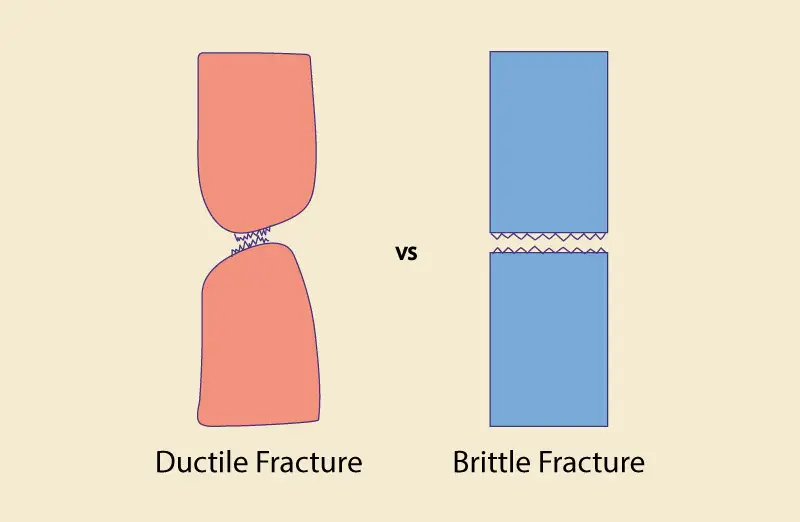
Figure 8: Brittle Fracture
In brittle fracture, cracks normally propagate at right angles to the stress applied and either a transgranular or an intergranular path. Brittle failure may also be catastrophic in a structural application, like the hull or support of a ship.
Stress Corrosion Cracking (SCC)
Stress Corrosion Cracking (SCC) is a failure mode of a material cracking as occasioned by the simultaneous influence of a tensile stress and a hostile environment. The spread of cracks are insidious as initially there are no external visible indications, but cracks start internally and spread subsequently (Ming et al. 2022). Austenitic stainless steel and brass are some of the materials that are vulnerable to SCC in an atmosphere containing chlorides, like the marine atmosphere. A special concern exists with components in residual or applied tensile stressing, such as welded joints, fasteners or pressure vessels.
b) Influence of Working & Environmental Conditions
Environmental and operating conditions have a great impact on the performance and lifespan of engineering materials. Load history, chemical exposure, stress cycles and temperature are factors that can contribute towards faster failure.
In the case of metals, marine pipelines or propellers, which are manufactured out of stainless steel, are exposed to constant stress and saltwater. Fatigue is brought about by cyclic loading, and pitting and crevice corrosion are encouraged by the availability of chloride ions in the seawater. In the long run, this mixture may cause stress corrosion cracking (SCC), particularly in zones affected by welding (Putri et al. 2022).
Gaskets or electrical insulating polymers made of polyvinyl chloride (PVC) or silicone rubber are susceptible to damage due to exposure to ultraviolet (UV) radiation, ozone and heat. The polymers become soft under high temperatures and lose their mechanical integrity; moreover, when they are exposed to UV over a long period, the polymers become brittle and crack. Chemical exposures and thermal cycling present an opportunity for gasket failure or insulation failure within engine compartments located in marine environments.
In ceramics, like spark plug insulators, thermal shock is a key issue. Change of temperature is extreme when the engine is running, creating cracking, which may be caused by unequal thermal expansion. Ceramics are weak and brittle with poor thermal conductivity, hence they might fracture when the design tolerances are overstressed.
Composites such as fibreglass-reinforced plastic (FRP) boat hulls or radar domes are subject to the effects of moisture penetration, cycling, and UV degradation, resulting in delamination (Lin, 2024). Cracking and separation can occur as a consequence of the interfacial bond breaking due to the weakening of the resin matrix or seepage towards the layers. This is made worse by vibrations and repeated strikes of waves on structures, particularly old ones.
When choosing material in all such instances, environmental compatibility needs to be taken into consideration, and protective measures like coatings, UV stabilisers, or material inhibitors of corrosion should be included in the design to minimise the effects of environmental stresses.
PART 4: Service Life & Prevention Strategies
Preventative Measures
Prolonging the wear life of components experiencing high loads, thermal variability, or repetitive fatigue is a matter of strategy concerning the choice of material, treatments and structural design optimisation.
The main way that corrosion is avoided is by having a protective coating that acts as a barrier between the environment and the material. Protective coatings used include galvanisation, epoxy paints and anodising. Sacrificial anodes are also deployed in marine environments to give Cathodic protection to underwater metal structures.
Stress control plays an important role in the mitigation of the onset of cracks and fatigue failure. These entail keeping the corners rounded, having smooth surface finishes and the elimination of stress concentration by using the fillets. Thermal stresses may be reduced by choosing materials with similar coefficients of thermal expansion of adjacent components.
Design optimisation is also useful in even load distribution and fatigue resistance. As an illustration of example, a composite layup is customised to suit the alignment of fibre orientation to the direction of major components of stress to improve the structure's performance.
Regular inspection and maintenance (through non-destructive testing, like ultrasonic testing, radiographic testing, etc) are used to help identify signs of damage early. Routine checking adds service life, as repair or replacement can be carried out as soon as possible before crash failure can happen.
Service Life Estimation
A combination of empirical information and simulation tools is needed to estimate the service life of materials in complicated loading and environmental scenarios.
Typical estimation of fatigue life is done via S-N (stress vs. number of cycles) curves, which are acquired via standard fatigue testing (Pauliuk et al. 2021). These graphs determine the range of stress that a material can, in theory, withstand any number of cycles, called the endurance limit. In real life, however, loading conditions tend to vary, and in this case Miner Rule is applied. This rule adds damage fractions due to various amplitudes of the loads to give the total fatigue life.
Components being used in high-stress applications, particularly those exposed to high temperatures on a long-term basis, require creep life prediction. Analysis of creep curves (strain vs. time) is done to predict time-to-failure under stress and constant temperature by extrapolation at the secondary stage. Creep rupture time under different conditions can be estimated with Larson-Miller parameters or other models of the same type.
More modern tools like Finite Element Analysis (FEA) predict service life more accurately than strain-based methods because of modelling stress distribution, heat flow and deformation at realistic operating conditions (Silva et al. 2021). This enables to detection of the stress areas of high intensity and the areas that are prone to failures before the physical test.
Through the integration between experimental and calculated models, it helps to be in s better position to forecast when a component will demand repair or replacement. This contributes to preventive maintenance scheduling and keeps the safety-critical systems in the operational state with known performance margins.
Reference List
Journals
Alshamrani, A. A., Raju, R., & Ellakwa, A. (2022). Effect of printing layer thickness and postprinting conditions on the flexural strength and hardness of a 3D‐printed resin. BioMed Research International, 2022(1), 8353137. Retrieved From: https://onlinelibrary.wiley.com/doi/abs/10.1155/2022/8353137 [Retrieved On: 14.06.2025]
Ashby, M. F. (2005). Materials Selection in Mechanical Design (3rd ed.). Elsevier.
Callister, W. D., & Rethwisch, D. G. (2009). Fundamentals of Materials Science and Engineering: An Integrated Approach (5th ed.). Wiley. Retrived from: https://ftp.idu.ac.id/wp-content/uploads/ebook/tdg/TEKNOLOGI%20REKAYASA%20MATERIAL%20PERTAHANAN/Materials%20selection%20textbook.pdf [Retrieved On: 14.06.2025]
azom.com , Stainless Steel - Grade 316 (UNS S31600) Retrieved From: [Retrieved On: 14.06.2025] Retrieved From: https://www.azom.com/properties.aspx?ArticleID=863 [Retrieved On: 14.06.2025]
Cai, L. (2023). Fracture prediction of fully clamped circular brittle plates subjected to impulsive loadings (Doctoral dissertation, university of Sheffield). Retrieved From: https://etheses.whiterose.ac.uk/id/eprint/32767/ [Retrieved On: 14.06.2025]
Chai, K. S. (2023). Development of Nitrile Butadiene rubber-based coating material using waste tire powder for gasket application (Doctoral dissertation, UTAR). Retrieved From: http://eprints.utar.edu.my/id/eprint/5623 [Retrieved On: 14.06.2025]
Chai, M., Hou, X., Zhang, Z., & Duan, Q. (2022). Identification and prediction of fatigue crack growth under different stress ratios using acoustic emission data. International journal of fatigue, 160, 106860. Retrieved From: https://www.sciencedirect.com/science/article/pii/S0142112322001359 [Retrieved On: 14.06.2025]
Fitzka, M., Schönbauer, B. M., Rhein, R. K., Sanaei, N., Zekriardehani, S., Tekalur, S. A., ... & Mayer, H. (2021). Usability of ultrasonic frequency testing for rapid generation of high and very high cycle fatigue data. Materials, 14(9), 2245. Retrieved From: https://www.mdpi.com/1996-1944/14/9/2245 [Retrieved On: 14.06.2025]
Gu, G., Ma, T., Chen, F., Xu, F., & Zhang, J. (2022). Electromagnetic and mechanical properties of FA-GBFS geopolymer composite used for induction heating of airport pavement. Cement and Concrete Composites, 129, 104503. Retrieved From: https://www.sciencedirect.com/science/article/pii/S095894652200097X [Retrieved On: 14.06.2025]
Kumar, T. S., Thankachan, T., Shalini, S., Čep, R., & Kalita, K. (2023). Microstructure, hardness and wear behavior of ZrC particle reinforced AZ31 surface composites synthesized via friction stir processing. scientific reports, 13(1), 20089. Retrieved From: https://www.nature.com/articles/s41598-023-47381-5 [Retrieved On: 14.06.2025]
Lftta, J. G. J., Zahra, A. N. A. A., Ashour, A. H. J., Nasser, A. H. K., & Shanawa, A. N. (2024). X-Rays and Their Uses on The Human Body. Current Clinical and Medical Education, 2(8), 91-115. Retrieved From: https://www.visionpublisher.info/index.php/ccme/article/view/149 [Retrieved On: 14.06.2025]
Lin, C. Y., & Kang, J. H. (2021). Mechanical properties of compact bone defined by the stress-strain curve measured using uniaxial tensile test: a concise review and practical guide. Materials, 14(15), 4224. Retrieved From: https://www.mdpi.com/1996-1944/14/15/4224 [Retrieved On: 14.06.2025]
Lin, H. (2024). A Comprehensive Review of the History, Advantages, Applications and Fabrication Techniques of Composite Materials. Retrieved From: https://anapub.co.ke/journals/jcims/jcims_pdf/2024/jcims_volume_02/JCIMS202402012.pdf [Retrieved On: 14.06.2025]
MatWeb.com. Material Property Data. Retrieved From : https://asm.matweb.com/search/SpecificMaterial.asp?bassnum=mq316q&utm [Retrived On: 14.06.20125]
MatWeb.com. Material Property Data. Retrieved From : https://www.matweb.com/search/datasheet.aspx?MatGUID=d9c18047c49147a2a7c0b0bb1743e812 [Retrieved On: 14.06.20125]
Ming, T., Xue, H., Zhang, T., Han, Y., & Peng, Q. (2022). Improving the corrosion and stress corrosion cracking resistance of 316 L stainless steel in high temperature water by water jet cavitation peening. Surface and Coatings Technology, 438, 128420. Retrieved From: https://www.sciencedirect.com/science/article/pii/S0257897222003413 [Retrieved On: 14.06.2025]
Oettel, V., Schulz, M., & Haist, M. (2022). Empirical approach for the residual flexural tensile strength of steel fiber‐reinforced concrete based on notched three‐point bending tests. Structural Concrete, 23(2), 993-1004. Retrieved From: https://onlinelibrary.wiley.com/doi/abs/10.1002/suco.202100565 [Retrieved On: 14.06.2025]
Pauliuk, S., Heeren, N., Berrill, P., Fishman, T., Nistad, A., Tu, Q., ... & Hertwich, E. G. (2021). Global scenarios of resource and emission savings from material efficiency in residential buildings and cars. Nature communications, 12(1), 5097. Retrieved From: https://www.nature.com/articles/s41467-021-25300-4 [Retrieved On: 14.06.2025]
Putri, E. D. W. S., Triyono, T., & Prabowo, A. R. (2022). Estimating failure mechanism of steel specimens using stress corrosion-cracking (SCC) testing methods: state and development. Procedia Structural Integrity, 41, 266-273. Retrieved From: https://www.sciencedirect.com/science/article/pii/S2452321622004899 [Retrieved On: 14.06.2025]
Saji, V. S. (2023). Corrosion and materials degradation in electrochemical energy storage and conversion devices. ChemElectroChem, 10(11), e202300136. Retrieved From: https://chemistry-europe.onlinelibrary.wiley.com/doi/abs/10.1002/celc.202300136 [Retrieved On: 14.06.2025]
Silva, G. C., Beber, V. C., & Pitz, D. B. (2021). Machine learning and finite element analysis: An integrated approach for fatigue lifetime prediction of adhesively bonded joints. Fatigue & Fracture of Engineering Materials & Structures, 44(12), 3334-3348. Retrieved From: https://onlinelibrary.wiley.com/doi/abs/10.1111/ffe.13559 [Retrieved On: 14.06.2025]
Stinville, J. C., Charpagne, M. A., Cervellon, A., Hemery, S., Wang, F., Callahan, P. G., ... & Pollock, T. M. (2022). On the origins of fatigue strength in crystalline metallic materials. Science, 377(6610), 1065-1071. Retrieved From: https://www.science.org/doi/abs/10.1126/science.abn0392 [Retrieved On: 14.06.2025]
Yousefi, Y., & Tariku, F. (2021, November). Thermal conductivity and specific heat capacity of insulation materials at different mean temperatures. In Journal of Physics: Conference Series (Vol. 2069, No. 1, p. 012090). IOP Publishing. Retrieved From: https://iopscience.iop.org/article/10.1088/1742-6596/2069/1/012090/meta [Retrieved On: 14.06.2025]
Zhang, S., Ducharne, B., Takeda, S., Sebald, G., & Uchimoto, T. (2021). Identification of the ferromagnetic hysteresis simulation parameters using classic non-destructive testing equipment. Journal of Magnetism and Magnetic Materials, 531, 167971. Retrieved From: https://www.sciencedirect.com/science/article/pii/S030488532100247X [Retrieved On: 14.06.2025]
Zhao, L., Song, L., Macías, J. G. S., Zhu, Y., Huang, M., Simar, A., & Li, Z. (2022). Review on the correlation between microstructure and mechanical performance for laser powder bed fusion AlSi10Mg. Additive Manufacturing, 56, 102914. Retrieved From: https://www.sciencedirect.com/science/article/pii/S2214860422003116 [Retrieved On: 14.06.2025]
Go Through the Best and FREE Samples Written by Our Academic Experts!
Native Assignment Help. (2026). Retrieved from:
https://www.nativeassignmenthelp.co.uk/material-testing-techniques-and-failure-mechanisms-assignment-54066
Native Assignment Help, (2026),
https://www.nativeassignmenthelp.co.uk/material-testing-techniques-and-failure-mechanisms-assignment-54066
Native Assignment Help (2026) [Online]. Retrieved from:
https://www.nativeassignmenthelp.co.uk/material-testing-techniques-and-failure-mechanisms-assignment-54066
Native Assignment Help. (Native Assignment Help, 2026)
https://www.nativeassignmenthelp.co.uk/material-testing-techniques-and-failure-mechanisms-assignment-54066
- FreeDownload - 40 TimesEntrepreneurial Finance Assignment Example
Entrepreneurial Finance Assignment Answer 1 (a) Income and Cash Flow...View or download
- FreeDownload - 43 TimesPrinciples Of Finance Assignment Sample
Introduction-Principles Of Finance Assignment Competing theories of capital...View or download
- FreeDownload - 39 TimesClinical Governance and Improvement Practice Assignment Sample
Introduction: Clinical Governance and Improvement Practice Assignment...View or download
- FreeDownload - 40 TimesThe Implementation of a Student Council Policy in UK
The Implementation of a Student Council Policy in UK Introduction to the...View or download
- FreeDownload - 37 TimesStrategic Employment Relations - Perspectives, Conflicts, Trade Unions, and Collective Bargaining Assignment Sample
Task 1: Journal Article For Strategic Employment Relations 1. Different...View or download
- FreeDownload - 41 TimesUnit 1.4 Global Trade and its Impact on Strategy Assignment Sample
Unit 1.4 global trade and its impact on strategy Assignment...View or download
-
100% Confidential
Your personal details and order information are kept completely private with our strict confidentiality policy.
-
On-Time Delivery
Receive your assignment exactly within the promised deadline—no delays, ever.
-
Native British Writers
Get your work crafted by highly-skilled native UK writers with strong academic expertise.
-
A+ Quality Assignments
We deliver top-notch, well-researched, and perfectly structured assignments to help you secure the highest grades.