
Introduction: BAM4015T2 Business Environment
Business environment is the factors that surround the organisation internally and externally such as employees, customers, suppliers, market demand, regulations, etc. The company chosen for the essay is Boeing, an American MNC that deals in the production and selling of the rotorcraft, airplanes, satellite, missile, etc. This company operates at different locations including the European nations which are known by the name of Boeing UK. This public type company was founded in 2002, having its headquarters in London, England, UK which have around 4000 employees (Boeing UK, 2025). This organisation’s key events show the remarkable history which starts from the year in which it launched its first air craft in 1916. In the year 1920, the venture launched new commercial aircraft which was its first flight launched.
This sample offers a reference point, but students often rely on our help with business assignments for deeper academic understanding.
In 2023, the firm won the Elite supplier awards and it covers around 58% of the aircraft market in the America (Boeing, 2025). In 2024, revenue of the firm was $66.517 which shows declining trend over 2023 by 14.5% (Boeing Revenue 2010-2024, 2025). Thus, competent measures need to be taken by the firm for enhancing both sales and profitability. This essay will cover the company structure and its strengths and weaknesses. Further, it will evaluate its external environment through the use of PESTLE model. Finally, this will cover various ethical responsibilities it has towards its stakeholders using the Carroll’s Pyramid model.
Main Body
Organisational structure defines the system followed in the company pertaining to the allocation of tasks, supervision and coordination that are directed towards the attainment of the venture’s goal. This provides the basics for the functioning standards that guides the business activities. Boeing follows the hierarchal structure in the organisation of its work to the people. Mullins and McLean (2019) stated that hierarchal structure is based on the passage of the order through the chain of command from the top management to the lower division and labours within the firm. Here the orders are being passed by the top managers and the employees at the lower level are accountable to work in order to fulfil those (Nogalski et al, 2021). For example, Boeing mainly practices this in the project work where the employees are assigned with the tasks from the seniors. Here the staffs are responsible to complete it as per the instructions given to them.
There are several strengths and weaknesses of the hierarchical structure and has effects on the Boeing. This form of organisational structure helps the venture to clearly communicate the tasks and goals to its workers. It is also beneficial in the better working based on the company policies and maintain the discipline in the work. When the employees are communicated properly about the goals, they are more responsible towards its attainment in the company (Yin et al, 2023). This system works by dividing the workforce into different teams and departments which leads to the team building and unity in the firm. The leadership based on this type of structure is effective as it focuses on stating what is being expected from the workers in Boeing.
This is an efficient form of system to be used by the large venture like Boeing. However, there are certain weaknesses of the hierarchal structure that causes issues for the venture. Due to the presence of various departments following this type of structure there is a need of more managers and superiors in the firm. This can create conflicts in the various functions of the firm and its workers. Employing multiple teams and managers is also a costly affair that requires planning for the same. It can even impact the firm’s decision making process and result in delayed functions. For example, Boeing have cut hundreds of job in 2024 due to the increased number of people to manage the difficult times faced by the firm (Boeing UK, 2025).There is also issue in the communication gap between the different teams which may impact the flow of information and decision making.
The external environment has the impact on the Boeing performance and operations. This is to be analysed by using the PESTLE model analysis. Political factors include the international relations, tax policies, political stability, etc.
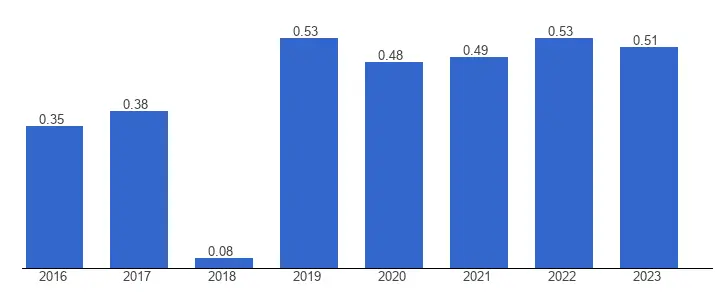
Figure 1: UK Political stability
The above graph shows the political stability of the UK which is recorded at 0.51 in 2023, showing minimum fluctuations from the past few years which represent the stable condition in the country. This can have positive impact on the company that benefits in operating in a smooth manner. When the government is stable the venture finds it easy to understand and forecast better in the implementation of the plans according to the government authorities. It can lead to the activities that are more in alignment with the nation’s legislation. Economic factors include the economic growth, interest rates, employment rates, inflation rates, etc. in the country. The employment rates of the UK in 2024 have recorded at the 74.9%, which is an increase from the last year (IBIS world, 2024). This can have the positive impact on the organisation’s operations and performance due to this the market will have more income generation in the economy.
This can boost the economic condition of the market and favours the venture in optimising its operations through increased funding. Social factors include the cultural trends, people preference, population growth, income levels, etc. The cultural trends in the organisation shows that the people are more tend to attend the various programmes, plans vacation, tour during the times of the festivals. There is an increase in the share of the income generated by this sector which accounted for 5.7% respectively in the year of 2024 during the past years (IBIS world, 2024). It can have positive impact on the firm’s working as it brings more people to use the airplane services for the transportation to various destinations. The venture can effectively work to utilise this time as an opportunity for the increased sales and revenue in the market. Technological factors include the technology, innovation based infrastructure, research, etc. The UK comes at the top rank in the GII which shows the increased innovation in the country. This can influence the venture in adapting to various innovative techniques and modern methods for the better services to the users.
The company is known for bringing efficiency and improvement through the development of its goods. UK’s high activeness in this field can lead the venture to make its performance and operations more effective and better. Legal factors involve the legislation related to the health and safety, equal opportunities, international trade, consumer rights, etc. The UK government has the law The Health and Safety at Work Act 1974 which focuses on providing the right to safety to the workers at the time of job performance. This is emphasised to safeguard the employees and working of the people at the workplace. In adherence to this, Boeing has implemented the policy that is focused on fostering the positive and secure environment for the workforce in the firm. This can have positive influence on the firm’s operations and performance as adherence to the law is effective in working. Most importantly it shows the care for its staffs that can create a positive organisational culture (Khalatur et al, 2021). Environment factors in the country can be the target to reach the net zero by 2050. It may affect the venture operations as the firm operates in the aircraft required the fuel and other materials for production that can lead to the pollution. This can influence the Boeing in negative manner and require finding the resolution.
Ethical responsibilities are the values that are followed by the ventures in order to practice what is considered to be right in the environment surrounding it. As per Cole and Kelly (2020) it is the duty of every organisation to reflect upon these values and practice them in the working. These are responsibilities that are hold by the firm towards its various stakeholders. The model used to analyse these ethical duties is the Carroll’s Pyramid, Archie Carroll in 1991 works on the four key elements of CSR on different levels. Level 1 is the economic element which says that the firm hold liability to generate the profitability in return by giving return on stakeholder’s investment, employee’s fair pay and better price services to the people. It also involves the activities that can influence the country’s economy in positive way. For example, Boeing UK decision making on this has impacted positively by creating 4000+ jobs in the country and investment of more than £300m in the nation since its establishment (The global economy, 2023). The venture is successfully implementing the strategies and operations that are beneficial for the UK in its development.
Level 2 is the legal component that shows the legal obligations of the venture towards the stakeholders. The company need to adhere to the laws that support the ethical values in the society. The company has implemented the policy and decision making that clearly states the use of these laws in the company operations. For example: Boeing’s safety and quality policy is strictly focusing on the safety of the employees, its product and services. This is effective in fulfilling the responsibilities through the code of conduct implemented in the firm (Needle and Burns, 2019). Level 3 is based on the element of CSR such as ethical duty where the venture holds the liability to operate by following the moral principles in the company. This tells about how the business is actively working with what is considered to be right and avoiding what is wrong.
For example, Boeing UK global equity, diversity and inclusion are an ethical practice that is being focused to provide the right of equality to everyone. This shows that the venture values different people and is open to the various minds and personalities. This also supports the engagement and community building through the various volunteering programmes. Level 4 is the Philanthropic responsibilities that the business is liable to fulfil towards its various stakeholders for the ethical practices. This involves organising and participating in the events that support the environment and influence in the positive manner. In 2023, Boeing has invested around $7.6M and $8.5 in local communities by Employee community fund chapter and environmental programs (Boeing, 2025). This also focuses on maintaining the community wellbeing, uplifting them, drive engagement in the people etc. In this way, Boeing UK is managing to fulfil its duties towards its several stakeholders such as the suppliers, customers, investors, and workforce.
Conclusion
From the above essay it can be concluded that the business environment is the various external and internal factors that impact the organisations and its working. Boeing UK follows the hierarchal organisational structure that is effective in delegating the tasks, bringing unity in team, communicating the goals clearly to its members. However, there are certain weaknesses of this type of structure which is the inefficiency in the cost and teams conflicts. Moreover, the external factors in the UK such as political, economic, social, etc. have shown the positive impact on the organisation performance and operations. On the other hand, the environmental factors showed the negative impact which is needed to be solved in order to run the operation smoothly. This can also be summarised that Boeing UK is successfully forming and implementing the policies that are effective in the fulfilment of its various ethical responsibilities towards the stakeholders.
- It can be recommended to the venture to conduct the training programmes to the existing employees that can take over the position of the manager in the future. It will be effective in managing the cost and time for the recruitment of the new department head in the company (Mullins and McLean, 2019). Further, in service industry proficient employees play a vital role in evolving high level of satisfaction among the customers by delivering quality services.
- This is also recommended that the venture should implement the technology that can help in the efficient working and reduce the wastage. It can lead to meeting the challenge of the environment factor and working in more effective manner (Needle and Burns, 2019).
- This is also suggested that the business can work on implementing the sessions and seminars that can increase the people engagement with each other and foster the positive work culture. This can help in making the ethical practices of the inclusion and diversity better.
Reference materials and sample papers are provided to clarify assignment structure, theoretical application, and expected learning outcomes. Through our Native Assignment Help, academic guidance is reflected while maintaining originality and ethical academic practice. The BAM4015T2 Business Environment Assignment Sample demonstrates structured analysis of organisational structure, external environmental factors, and corporate social responsibility frameworks
References
Books and Journals
- Cole, G.A. and Kelly, P., 2020. Management Theory and Practice. 9th ed. Andover: Cengage Learning
- Johnson, G., Whittington, R., Scholes, K., Angwin, D. and Regner, P., 2017. Exploring Strategy: text and cases. 11th ed. Harlow: Pearson.
- Khalatur, S., Vinichenko, I. and Volovyk, D., 2021. Development of modern business processes and outsourcing activities. Baltic Journal of Economic Studies, 7(3), pp.195-202.
- Mullins, L.J. and McLean, J.E., 2019. Organisational Behaviour in the Workplace. 12th ed. Harlow: Pearson.
- Needle, D. and Burns, J., 2019. Business in Context: An introduction to Business and its Environment. 7th ed. Andover: Cengage Learning.
- Nogalski, B., Nguyen, H.T. and Kuc, B.R., 2021. Comparative analysis of internal business environment of Van Lang University and Van Hien University using IFE matrix. International Journal of Advanced Multidisciplinary Research and Studies, 1(1), pp.10-15.
- Yin, X., Qi, L., Ji, J. and Zhou, J., 2023. How does innovation spirit affect R&D investment and innovation performance? The moderating role of business environment. Journal of Innovation & Knowledge, 8(3), p.100398.
Go Through the Best and FREE Samples Written by Our Academic Experts!
Native Assignment Help. (2026). Retrieved from:
https://www.nativeassignmenthelp.co.uk/bam4015t2-business-environment-assignment-sample-47581
Native Assignment Help, (2026),
https://www.nativeassignmenthelp.co.uk/bam4015t2-business-environment-assignment-sample-47581
Native Assignment Help (2026) [Online]. Retrieved from:
https://www.nativeassignmenthelp.co.uk/bam4015t2-business-environment-assignment-sample-47581
Native Assignment Help. (Native Assignment Help, 2026)
https://www.nativeassignmenthelp.co.uk/bam4015t2-business-environment-assignment-sample-47581
- FreeDownload - 43 TimesBA Health And Social Care Assignment Sample
1.0 INTRODUCTION: BA Health And Social Care Assignment Health and social care...View or download
- FreeDownload - 42 TimesComparing and Contrasting the Methodological and Ethical Issues Coursework Sample
Introduction: Comparing and Contrasting the Methodological and Ethical Issues...View or download
- FreeDownload - 43 TimesUK Media Coverage Dissertation
How Does UK Media Coverage Of International Students' Migration Compare To That...View or download
- FreeDownload - 40 TimesUnit 19 Health Care Reflective Logs Assignment Example
Unit 19 Health Care Reflective Logs Assignment 1. Introduction - Unit 19...View or download
- FreeDownload - 44 TimesThemes & Controversies Assignment Sample
Introduction The foreign policy development can be recognised as the most...View or download
- FreeDownload - 47 TimesIKEA Case Study Assignment Sample
IKEA Case Study Assignment Sample Introduction In this research paper we have...View or download
-
100% Confidential
Your personal details and order information are kept completely private with our strict confidentiality policy.
-
On-Time Delivery
Receive your assignment exactly within the promised deadline—no delays, ever.
-
Native British Writers
Get your work crafted by highly-skilled native UK writers with strong academic expertise.
-
A+ Quality Assignments
We deliver top-notch, well-researched, and perfectly structured assignments to help you secure the highest grades.