
Slide 1: Promoting Health and Preventing of Ill Health Assignment
Rationale
- Alcohol consumption is one of the major preventable causes of death and morbidity in England (City Hackney Health, 2024)
- Alcohol dependence also impacts badly on mental, physical as well and social health.
- In Hackney, there are excessive amounts of alcohol-related illness and disparity in health (City of Hackney Health, 2024)
- Brief interventions (e.g., MECC) enhance support of change, which improves the outcomes (Public Health England, 2016)
- Nurses are essential in frontline prevention and wellness promotions in the community (Jones, Edwards and Alexander, 2022).
Why Hackney?
- London borough of deprivation and inequality (ONS, 2021)
- More than 40%t of the residents are born abroad (Vargas-Silva and Rienzo, 2022)
- One of the 5 highest boroughs of hospital admissions related to alcohol (Southampton, 2022)
- 48.7 million population with a diverse ethnic makeup (ONS, 2022)
- 21% of adults binge drink regularly; 25% unaware of alcohol-related health risks (Department of Health Social Care, 2021)
Native Assignment Help provides reliable UK assignment help service, offering students practical academic guidance and support throughout their studies.
Figure: Alcohol Risk Demographics Hackney (2023)
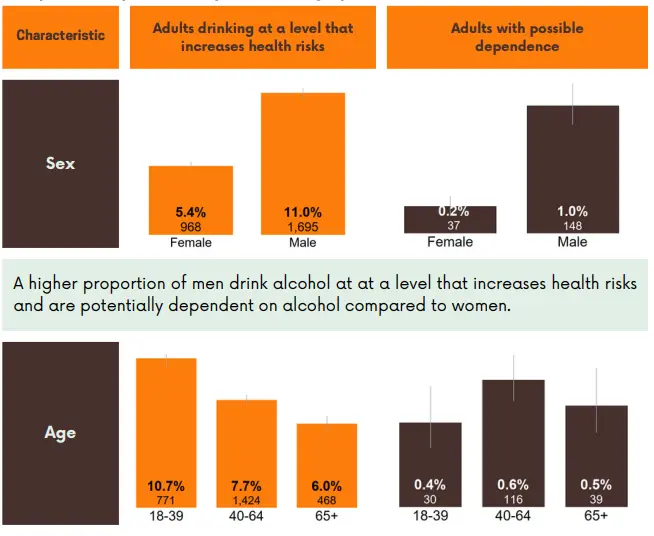
Figure: Alcohol Risk Demographics Hackney (2023)
| Group | % Drinking at Health Risk Level | % With Possible Dependence |
|---|---|---|
| Male | 11.0% | 1.0% |
| Female | 5.4% | 0.2% |
| Ages 18–39 | 10.7% | 0.4% |
| Ages 40–64 | 7.7% | 0.6% |
| Ages 65+ | 6.0% | 0.5% |
Social Factors
- The probability of drinking at high-risk levels is more than twice as high among men as women (City of Hackney Health, 2024)
- With adults (18-64), the rates of risk and dependency on alcohol are the highest (City of Hackney Health, 2024)
- Alcohol abuse is comorbidity to mental health, loss of employment, and loneliness.
- Old adults (65 +) had a still unmet risk but a decreased tendency to pursue support.
- The feeling of stigma and the absence of culturally competent services in Hackney discourages early intervention.
Slide 2: Needs assessment
Key Indicators (Hackney)
- The combined lost lives in Hackney and the City per year because of alcohol-related conditions to the amount of 1,300 (City of Hackney Health, 2024).
- There are also most ambulance call-outs in the Hoxton East Shoreditch area as it comprises 25% of total call-outs in the borough (City of Hackney Health, 2024).
- Hackney has an excess of more than 20000 adults involved in drinking at destroyer levels of alcohol (City of Hackney Health, 2024).
- There are only 1,400 adult individuals who are officially registered as potential alcohol-dependent individuals, which is probably low considering that a lot of people do not tell the truth (City of Hackney Health, 2024).
- The screening coverage is low less than 13% of the adults have a record of AUDIT-C in the primary care (City of Hackney Health, 2024).
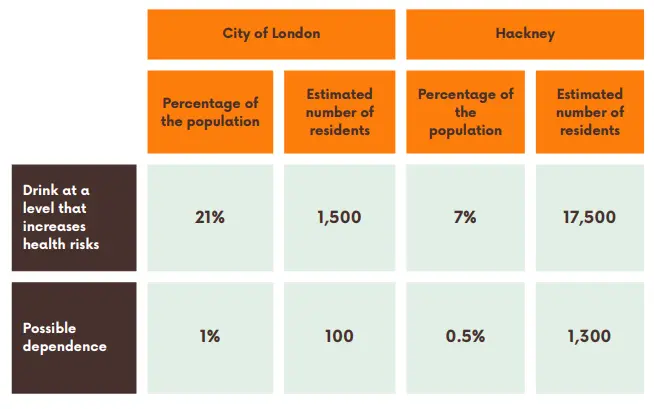
Figure: Harmful Drinking in Hackney (2023)
- In Hackney, 7% of and 17,500 residents of the adult population are consuming alcohol in an amount that exposes them to health risks (City of Hackney Health, 2024)
- Approximately 1,300 grown-ups (or 0.5%) in Hackney could be alcoholics (City of Hackney Health, 2024)
- Rates of harmful drinking in Hackney are far below those of the City of London (21%), and are an important area of concern in terms of the public health burden in the area (City of Hackney Health, 2024)
- The numbers could be underrepresented as a result of limited screening extent and incomplete registration of alcohol consumption (City of Hackney Health, 2024)
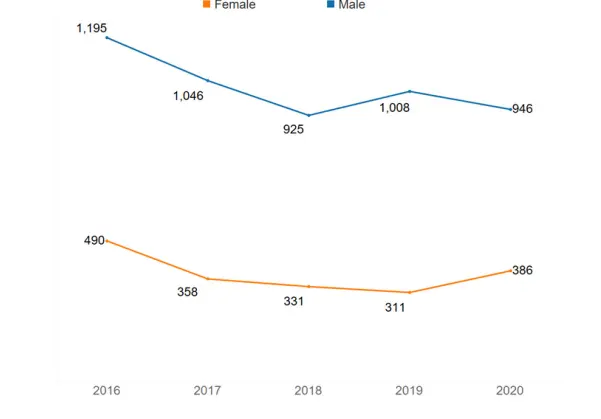
Figure: Potential years of life lost due to alcohol-related conditions, City and Hackney
- In all years, alcohol-related conditions were always greater in men than in women.
- The male count decreased by 1,195 in 2016 and by 946 in 2020, whereas the female rate is almost one-third of this one (City of Hackney Health, 2024).
- The number of female cases reduced in 2016, with a minimum of 311 in 2019, followed by an increase to 386 in 2020, which shows an upward recent trend (City of Hackney Health, 2024).
- The patterns indicate the gender inequality of alcohol harm and the necessity of specific intervention, particularly in the case of the male population (City of Hackney Health, 2024).
Slide 3: Aims/Objectives
Aims
Social deprivation and alcohol misuse are the identified increasing trends in Hackney, which require the implementation of a focused nurse-led health promotion intervention.
To enable the person with alcohol addiction issues to gain control over the behaviour, make better decisions, and improve overall health and well-being.
Short Term Goals
- Raise awareness of the alcohol health risks.
- Create an enhancement of desire to minimise alcohol consumption.
- Support the connection with local systems of support (e.g. Hackney Recovery Service) (NHS North East London, 2025)
- Get behaviour change started with MECC Very Brief Advice.
Long Term Goals
- Physical and mental health outcomes
- Self-management and resilience
- Employment potential and housing stability
- Quality of life and social inclusion
- Reduction in alcohol-related hospital admissions
Slide 4 Health Promotion Model
Transtheoretical Model
- The cognitive and behavioural stages that individuals go through to change their alcohol use (Hien et al., 2022)
- Pre-contemplation: failure to accept alcohol as a destructive behaviour.
- Contemplation: Brushes with the risk of drinking, but not willing to make changes.
- Preparation: Making plans to quit; victory or complaint.
- Action: Cutting or quitting drinking; visiting sessions.
- Maintenance: Maintaining an alcohol-free life; preventing a relapse.
Approach Public Education
- Deliver MECC-based conversations to increase awareness (Krouwel et al., 2024)
- Make alcohol harm education available in the form of leaflets, workshops, and GP contacts.
- Promote self-evaluation with screening instruments (e.g. AUDIT-C).
- Decrease stigma with the help of culturally relevant messaging.
- Increase awareness of local services (e.g. Hackney Recovery Service).
Approach Social Change
- Raise a challenge to the Hackney nightlife drinking culture.
- Encourage discussion in the community regarding the harm of alcohol.
- Foster responsible licensing.
- Collaborate with the local population and promote behaviour change in the high-risk wards (Yap et al., 2024)
- Become safer in surroundings to lower the alcohol exposure.
Intervention
Nurse-led Alcohol Screening Support Strategy
- AUDIT-C screening
- Brief advice and goal setting
- Referral to Hackney Recovery Service
- Follow-up and relapse prevention support
Critical Analysis
- The Transtheoretical Model (TTM) is an extensively used behaviour change model that acknowledges stage-oriented change and dimensions of the change, namely pre-contemplation, contemplation, preparation, action, and maintenance.
- It is especially useful in the field of alcohol misuse intervention since it facilitates individualised, stage-congruent plans so that the medical professionals, including nurses, may have an easier time helping people transition through a behavioural change.
- The focus of the model on self-efficacy and personal decision-making meets the principles of empowerment and such tools and approaches to it as MECC. It is also capable of being a framework for determining reading to customise interventions.
- This flexibility comes in particularly handy in the cases of dealing with different needs and views, as seen in culturally diverse neighbourhoods such as Hackney.
Limitations
- Although it is helpful, the TTM has its significant limitations. It supposes a rational, linear and stage-based process of progression, which is not always the case because addiction and relapse may be a cycle.
- It also lays extreme emphasis on individual choice, disregarding broader societal, economic and cultural factors.
- In addition, it is vague regarding external factors, which is of paramount importance to communities deprived and unequal, such as Hackney, including stigma or lack of accessibility to the service.
Slide 5 Behaviour Change MECC
- Apply NICE Behaviour Change Guidelines (2020) (NICE, 2020)
- Encourage people to realise the effects, not only short-term but also long-term, of drinking.
- Assist individuals in mapping implementation measures that are realistic in reducing the consumption of alcohol.
- Promote the establishment of individual goals and the monitoring of progress.
Use MECC: “Ask Advise Act”
- During the regular contact, enquire about the alcohol habits with the AUDIT-C (Bell, 2024)
- Give suggestions about suggested restrictions and the advantages of reduction.
- Take action such as providing leaflets, information, and the Hackney Recovery Service.
- In line with NICE Behaviour Change Guidelines (2020), efforts must be made to help people learn the short- and long-term implications of alcohol intake misuse. Nurses can be useful in assisting individuals to simplify behaviour change so that they can achieve it and establish individualised objectives to curb consumption.
- The practical approach in the clinical setting is the MECC approach, also known as the Ask, Advise, Act approach.
- The current tools that nurses can employ in their interactions with people regularly include AUDIT-C, which will help in the diagnosis of drinking behaviours, provision of personalised guidance on ways to reduce consumption and referral to services like Hackney Recovery Service. Quick interventions and teaching materials also help individuals to take charge of their health process.
Slide 6 Empowerment Social Change
- Recovery ownership is the result of empowerment through peer-led support and health education.
- The community-based programmes provided by local co-workers, such as Hackney Recovery Service and Turning Point, accommodate the issues of alcohol dependence and social isolation (NHS North East London, 2025).
- Empowerment strategies ensure e values-driven culture and individual resiliency, self-worth, and long-term recovery.
- Empowerment has higher independence of clients as compared to the medicalised model; however, it might be time- and motivation-consuming (Jiang et al., 2021)
- The autonomy of individuals in a recovery process is enabled by providing peer-led support and education.
- The issues of alcohol dependence, together with social isolation, which frequently occurs with it, are covered by community-based services such as Hackney Recovery Service and Turning Point.
- Empowerment strategies enhance resilience, self-worth and long-term behaviour change in a values-based person-centred culture. In contrast to the medicalised model, where treatment and diagnosis are prioritised, empowerment promotes self-determination and autonomy.
- Nevertheless, it may demand more time and consistency from the person, and it is not immediate, yet it could be more lasting when expressing outcomes of alcohol recovery in different communities in Hackney.
Slide 7: Evaluation
Process
- Gather and examine information in regards to alcohol 2 awareness and behaviour (e.g., AUDIT-C screening, feedback forms).
- Quantify the short-term interventions and referrals made using MECC (Parchment et al., 2023)
- It involves monitoring the uptake of Hackney Recovery Service and peer-led support groups.
Outcome
- Unite the knowledge of the residents on the dangers that alcohol misuse brings about to health (Mutschler et al., 2021)
- Stimulate more to consume or look for stimulation.
- Promote help-seeking and attending to local services.
Impact
- Long-term decline of illness and hospitalisation occasioned by alcohol.
- An improvement of self-efficacy and participation in healthier behaviours (Wang et al., 2022)
- A change in community standards would make the use of alcohol safer and more educated.
- The evaluation will be done at three levels, i.e., process, outcome and impact. The process evaluation includes the gathering of information on alcohol awareness and behaviour with the help of such tools as AUDIT-C and feedback forms, and the number of MECC-based interventions and referrals.
- The outcomes evaluation will be based on enhancing the knowledge of the residents about the health consequences of using alcohol and making them more motivated to quit or request assistance.
- Impact assessment will carry out assessments of the long-term outcomes, including less alcohol-related morbidity and hospitalisation, increased self-efficacy, and healthier behaviour.
- In the long run, the strategy will gradually change the norms of the communities to be more secure and informed about alcohol consumption.
Slide 8: Conclusion and Recommendations
- Alcohol education is a source of empowerment since it makes an individual aware of the negative drinking behaviour to curb it (van Schalkwyk et al., 2022)
- Alcohol misuse is chronic and causes liver disease, cancer, mental illness, and social collapse.
- The MECC strategies and the behaviour change models can be used to promote awareness and self-efficacious behaviour.
Community-based services such as Hackney Recovery Service are critical in post-discharge support as well as relapse prevention.
- Nurses are central to the solution (Moreira et al., 2024)
- Deliver brief interventions using MECC (Ask–Advise–Act)
- Conduct risk assessments and screen with the AUDIT-C (Conigrave et al., 2022)
- Refer patients to alcohol support services
- Foster therapeutic relationships and guide recovery
- Alcohol education enables people to feel empowered as they become aware of their drinking habits that are harmful and need to be changed. Excessive drinking remains a growing problem associated with liver disease, cancer, Psychiatric illness and social crisis.
- The MECC strategies and the models on behaviour change have the capability of aiding the development of self-awareness and better health decisions. The presence of community-based services such as Hackney Recovery service is crucial to continued maintenance and relapse.
- The key role of nurses is to provide brief interventions, assess the risk using such tools as AUDIT-C and refer people to specialist care.
- By using the tool of therapeutic relationships and regularly coming across as mentors, nurses assist people on their way to recovery and limit the harm of alcohol in communities.
Recommendations
- Increase the coverage of screening of AUDIT-C: Accomplish this by promoting AUDIT-C screening within primary care, especially on high-risk wards, such as Hoxton East Shoreditch, through routine nurse-led assessments.
- Culturally Inclusive Health Promotion: Prepare and distribute materials on the awareness of alcohol in their various languages and implement cultural sensitivity to minimize stigma and maximize the reach in the diverse culture of Hackney.
- Empowering Community Partnerships: Intensifying the collaboration with local organisations, like Hackney Recovery Service and Turning Point to provide integrated services, peer-led aftercare and follow-up support that may support long-term recovery and behaviour change.
References
- Bell, S. (2024). Screening for Unhealthy Alcohol Use: Implementation of Screening and Brief Intervention (SBI) in Primary Care using the AUDIT-C. DNP Scholarly Projects. [online] Available at: https://repository.belmont.edu/dnpscholarlyprojects/98/.
- City of Hackney Health (2024). ALCOHOL HABITS AND HARMS Report for Hackney and the City of London. [online] Available at: https://cityhackneyhealth.org.uk/wp-content/uploads/2024/02/Alcohol-Habits-and-Harms-Report-for-Hackney-and-City-of-London.pdf [Accessed 28 Jun. 2025].
- Conigrave, J.H., Lee, K.S.K., Haber, P.S., Vnuk, J., Doyle, M.F. and Conigrave, K.M. (2022). More than three times as many Indigenous Australian clients at risk from drinking could be supported if clinicians used AUDIT-C instead of unstructured assessments. Addiction Science Clinical Practice, 17(1). doi:https://doi.org/10.1186/s13722-022-00306-5.
- Department of Health Social Care (2021). Chapter 12: Alcohol. [online] GOV.UK. Available at: https://www.gov.uk/government/publications/delivering-better-oral-health-an-evidence-based-toolkit-for-prevention/chapter-12-alcohol [Accessed 28 Jun. 2025].
- Hien, D.A., Morgan-López, A.A., Saavedra, L.M., Ruglass, L.M., Ye, A., López-Castro, T., Fitzpatrick, S., Killeen, T.K., Norman, S.B., Ebrahimi, C.T. and Back, S.E. (2022). Project Harmony: A Meta-Analysis With Individual Patient Data on Behavioural and Pharmacologic Trials for Comorbid Posttraumatic Stress and Alcohol or Other Drug Use Disorders. American Journal of Psychiatry. Doi:https://doi.org/10.1176/appi.ajp.22010071.
- Jiang, F., Liu, Y., Hu, J. and Chen, X. (2021). Understanding health empowerment in the context of online information seeking: The perspective of information processing. Journal of Medical Internet Research, [online] 24(1). doi:https://doi.org/10.2196/27178.
- Jones, K.L., Edwards, L.A. and Alexander, G.K. (2022). Shoring Up the Frontline of Prevention: Strengthening Curricula With Community and Public Health Nursing. American Journal of Public Health, 112(S3), pp.S237–S240. doi:https://doi.org/10.2105/ajph.2022.306739.
- Krouwel, M., Greenfield, S., Sanders, J.P., Gokal, K., Chalkley, A., Griffin, R.A., Parretti, H., Jolly, K., Skrybant, M., Biddle, S., Greaves, C., Esliger, D.W., Sherar, L.B., Edwardson, C., Yates, T., Maddison, R., Frew, E., Mutrie, N., Ives, N. and Tearne, S. (2024). Making Every Contact Count: health professionals’ experiences of integrating conversations about Snacktivity to promote physical activity within routine consultations a qualitative study. BMJ Open, 14(10), pp.e085233–e085233. doi:https://doi.org/10.1136/bmjopen-2024-085233.
- Moreira, M.T., Lima, A., Fernandes, C.S., Pereira, A., Lemos, D., Pereira, L., Delgado, R., Rodrigues, S. and Sampaio, F. (2024). Nurse-Led Approaches to Lowering Alcohol Use among Adolescents: Study Findings. Nursing Reports, [online] 14(2), pp.707–718. doi:https://doi.org/10.3390/nursrep14020054.
- Mutschler, C., Junaid, S., Tellez, C., Franco, G., Gryspeerdt, C. and Bushe, J. (2021). Community‐based residential treatment for alcohol and substance use problems: A realist review. Health Social Care in the Community, 30(2). doi:https://doi.org/10.1111/hsc.13511.
- NHS North East London (2025). City and Hackney Recovery Service - GP Website. [online] GP Website. Available at: https://gps.cityandhackneyccg.nhs.uk/service/hackney-recovery-service [Accessed 28 Jun. 2025].
- NICE (2020). Overview | Behaviour change: digital and mobile health interventions | Guidance | NICE. [online] NICE. Available at: https://www.nice.org.uk/guidance/ng183 [Accessed 28 Jun. 2025].
- Office for National Statistics (ONS) (2021). Exploring local income deprivation. [online] www.ons.gov.uk. Available at: https://www.ons.gov.uk/visualisations/dvc1371/#/E07000223 [Accessed 28 Jun. 2025].
- ONS (2022). Ethnic group, England and Wales - Office for National Statistics. [online] www.ons.gov.uk. Available at: https://www.ons.gov.uk/peoplepopulationandcommunity/culturalidentity/ethnicity/bulletins/ethnicgroupenglandandwales/census2021 [Accessed 28 Jun. 2025].
- Parchment, A., Lawrence, W., Rahman, E., Townsend, N., Wainwright, E. and Wainwright, D. (2023). ‘I can feel myself coming out of the rut’: a brief intervention for supporting behaviour change is acceptable to patients with chronic musculoskeletal conditions. BMC Musculoskeletal Disorders, [online] 24(1). doi:https://doi.org/10.1186/s12891-023-06336-7.
- Public Health England (2016). Making Every Contact Count (MECC): Consensus Statement. [online] Public Health England. Available at: https://www.england.nhs.uk/wp-content/uploads/2016/04/making-every-contact-count.pdf [Accessed 28 Jun. 2025].
- Southampton (2022). Alcohol. [online] data.southampton.gov.uk. Available at: https://data.southampton.gov.uk/health/health-behaviours/alcohol/ [Accessed 28 Jun. 2025].
- van Schalkwyk, M.C.I., Petticrew, M., Maani, N., Hawkins, B., Bonell, C., Katikireddi, S.V. and Knai, C. (2022). Distilling the curriculum: An analysis of alcohol industry-funded school-based youth education programmes. PLOS ONE, 17(1), p.e0259560. doi:https://doi.org/10.1371/journal.pone.0259560.
- Vargas-Silva, C. and Rienzo, C. (2022). Migrants in the UK: An overview. [online] The Migration Observatory. Available at: https://migrationobservatory.ox.ac.uk/resources/briefings/migrants-in-the-uk-an-overview/.
- Wang, Y., Song, Y., Zhu, Y., Ji, H. and Wang, A. (2022). Association of eHealth Literacy with Health Promotion Behaviors of Community-Dwelling Older People: The Chain Mediating Role of Self-Efficacy and Self-Care Ability. International Journal of Environmental Research and Public Health, 19(10), p.6092. doi:https://doi.org/10.3390/ijerph19106092.
- Yap, C.Y.L., Daniel, C., Cheng, L., Oliffe, J.L. and Gerdtz, M. (2024). Safewards in acute medical/surgical care wards: Capability, opportunity, motivation and behaviour model (COM-B) and theoretical domains framework analysis. International Journal of Nursing Studies, [online] 153, p.104719. doi:https://doi.org/10.1016/j.ijnurstu.2024.104719.
Go Through the Best and FREE Samples Written by Our Academic Experts!
Native Assignment Help. (2026). Retrieved from:
https://www.nativeassignmenthelp.co.uk/promoting-health-and-preventing-of-ill-health-assignment-sample-54170
Native Assignment Help, (2026),
https://www.nativeassignmenthelp.co.uk/promoting-health-and-preventing-of-ill-health-assignment-sample-54170
Native Assignment Help (2026) [Online]. Retrieved from:
https://www.nativeassignmenthelp.co.uk/promoting-health-and-preventing-of-ill-health-assignment-sample-54170
Native Assignment Help. (Native Assignment Help, 2026)
https://www.nativeassignmenthelp.co.uk/promoting-health-and-preventing-of-ill-health-assignment-sample-54170
- FreeDownload - 41 TimesSocial Determinants of Health Inequality in Kenya Assignment Sample
Introduction Healthcare access is recognised around the world as both a...View or download
- FreeDownload - 37 TimesCMA4000: Introduction to Law and Statutory Requirements Assignment Sample
Introduction In the United Kingdom, the “construction industry” is...View or download
- FreeDownload - 39 TimesFinancial Markets, Regulation and Ethics (FMRE) Coursework
Introduction and Literature Review With the high rate of development of...View or download
- FreeDownload - 39 TimesAnalysis of Patient Advocacy and Healthcare Quality Assignment
Introduction The process of a high-quality healthcare system is complex and...View or download
- FreeDownload - 38 TimesSH5008QA Reduce Smoking in High-Risk Populations in the UK
Introduction The current essay examines the most promising evidence-based...View or download
- FreeDownload - 43 TimesBusiness Strategy Assignment
Introduction - Business Strategy Strategic activities are those that help a...View or download
-
100% Confidential
Your personal details and order information are kept completely private with our strict confidentiality policy.
-
On-Time Delivery
Receive your assignment exactly within the promised deadline—no delays, ever.
-
Native British Writers
Get your work crafted by highly-skilled native UK writers with strong academic expertise.
-
A+ Quality Assignments
We deliver top-notch, well-researched, and perfectly structured assignments to help you secure the highest grades.