
- Introduction
- Task 1: Outline of the Legal and Statutory Requirements Relevant to the Construction Industry in the UK
- Construction Contracts and Legal Structures
- Health and Safety Regulations
- Environmental Regulations
- Case Study: HS2 and Legal Compliance
- Dispute Resolution and Adjudication
- Task 2: Methods and Management Tools in Construction Projects
- Case Study: HS2 High-Speed Rail Project
- Legal and Statutory Considerations
- Management Tools and Techniques
- Effectiveness of Management Tools
- Task 3: Law of Tort in Construction Projects
- Case Study: HS2 High-Speed Rail Project
- What Went Wrong in the Project? Indicate the Type of Negligence
- What Are the Contractors/Client’s Rights?
- Legal Principles and Procedures
- Task 4: Legal Precedents and Adjudication in Construction Law
- Legal Precedents for Construction Law and Adjudication Practice
- Legal Precedent Procedures in Construction Law (England)
- Common Areas for Adjudication in Construction Disputes
Introduction
In the United Kingdom, the “construction industry” is subject to a complex framework of relevant legal and “statutory requirements” developed for safety, quality, and fairness in construction projects. Construction law encompasses several legal disciplines, including but not limited to contract law, tort law, health and safety regulations, and environmental law. These are necessary laws and regulations regarding the relationship that must be maintained between the contractor, clients, subcontractors, and other regulatory bodies, together with resolving disputes arising in the course of the project (Zain-alabdeen, 2023).
One of the important facets of construction law involves the regulation of contracts. Construction contracts outline the rights and responsibilities of the parties concerned and legally frame the actual execution of construction work. In the UK, standard forms of contracts are in use for consistency and clarity in the contractual relationship; examples are those published by the “Joint Contracts Tribunal (JCT)” and the “New Engineering Contract (NEC)”. These contracts address various issues including the terms of payment, time of the project, and dispute resolution mechanisms (Building, 2011).
Other critical components of construction law deal with health and safety regulations. This is usually summarized by Construction (Design and Management) Regulations 2015 (CDM 2015) outlining what must be done by the client, the designers, and contractors regarding obligations to ensure that workers and members of the public enjoy healthy and safe work along with being taken care of properly. Conforming to these sorts of laws is quite imperative to curb occurrences of accidents and incidences at workstations so that a safe place for all might be guaranteed accordingly.
In addition to the contractual and safety aspects, building law also covers environmental constraints. The "Environmental Protection Act of 1990" and related laws impose duties on construction businesses to eliminate environmental hazards, which include waste management, pollution control, and preservation of wildlife. This report will discuss the relevant legal and legislative requirements for the UK construction industry. Also, it will explain underpinning legal frameworks through case studies of negligence claims along with court proceedings and how these would guide several parties so that they take a proper course of legal compliance and get guided through all the complexities of a construction project.
Task 1: Outline of the Legal and Statutory Requirements Relevant to the Construction Industry in the UK
"Construction in the United Kingdom" refers to a broad framework in setting the legitimate and legislative requirements necessary toward ensuring that construction is no less than safe but proper and of the best to merit fairness of the deal to both parties concerned, regulating agreement-related relationships, workplaces and the environment when disputes flare up or have to be settled either by arbitration, adjudication, or certain other alternatives to dispute settlements. With all the specific legal and legislative criteria, knowing these involves fulfilling the satisfaction of all clients and contractors by each of the parties involved in a building process: designers, regulatory agencies (Zain-alabdeen, 2023).
Construction Contracts and Legal Structures
“Construction contracts” are a basic part of the legal infrastructure behind the construction industry. They articulate the rights and responsibilities of all parties involved, together with the legal basis upon which building projects are executed. Various standard contract forms in force in the UK include those prepared by the Joint "Contracts Tribunal (JCT)" and the "New Engineering Contract (NEC)". These would address the terms of payment, timelines for completion of the project, and mechanisms of dispute resolution, among other aspects (Yeung et al., 2023). The JCT contracts are used for traditional procurement where the contractor executes the works in respect of designs produced by the employer's design team. The NEC contracts are designed to be flexible and are often utilized in projects that require a collaborative approach. Both JCT and NEC contracts have variations in the provisions that deal with managing changes, delays, and disputes that may arise to ensure the project is completed efficiently within agreed terms.
Health and Safety Regulations
Health and safety are important in the construction industry because construction activities are normally hazardous. The Construction Design and Management Regulations 2015, abbreviated as CDM 2015, are the major legislation outlining the responsibilities of the duty holders on the health, safety, and welfare of the workers and the public, which include clients, designers, and contractors (Dentons, 2021).
- Part 1: Application and definitions.”
- Part 2: Duties of clients for all construction projects.”
- Part 3: Health and safety duties and roles of other duty holders, including designers, principal designers, principal contractors, and contractors.”
- Part 4: General requirements for all construction sites.”
- Part 5: Transitional arrangements and revocations.”
Another important legislation in this regard is the “Health and Safety at Work etc. Act 1974”, which casts a “general duty on employers to ensure”, so far as is reasonably practicable, the “health, safety, and welfare” of their employees. This Act is supplemented by numerous regulations, one of which is the Management of Health and Safety at Work Regulations 1999, under which employers are obliged to make risk assessments and take necessary measures to control risks (HSE, 1974; Legislation, 1999).
Environmental Regulations
In the construction field, environmental protection is taking a major role. Founded on the Environmental Protection Act of 1990, further legislation put an obligation on the construction firms to have minimal effects on the setting of their activities. Environmental protection encompasses waste management, pollution controls, and protection of natural homes. The construction projects must adhere to or be in line with environmental laws that protect the environment without causing damage and sustain development effectively (Legislation, 1990.).
Case Study: HS2 and Legal Compliance
The HS2 case “high-speed railway” line project that connects “London to Birmingham” is a relevant case study related to “legal and statutory” compliance by a construction company. On several occasions, the construction of the project has harnessed various controversies; it has been under continuous questions regarding land acquisition, problems associated with compensation, and environmental impact. In 2015, the Parliamentary and Health Service Ombudsman (PHSO) stated in a report that HS2 had failed to engage in proper consultation with communities likely to be affected by the line (ICLG, 2024). The report found that HS2 had poorly communicated with residents, especially those who were directly affected by the high-speed railway project, thereby leading to anxiety and uncertainty. The situation illustrates that compliance issues are significantly related to proper communication and stakeholder consultation. Furthermore, several legal issues have been raised over the compensation of compulsory land acquisitions by HS2. This comes as a result of the fact that the Compensation Code, governing compensation for compulsory purchase, states that fair compensation needs to be paid based on the unblighted value of a property. These issues have led to major disputes regarding the valuation of properties and the adequacy of the compensation offered by HS2.
Dispute Resolution and Adjudication
The most important aspect of construction law is dispute resolution. The Housing Grants, Construction and Regeneration Act 1996 established a statutory scheme of adjudication for quicker and less expensive methods of resolving disputes (Legislation, 1996). Adjudication is an “interim binding” decision by an independent third party, and a decision will be made within a particular period, usually 28 days. It has helped in saving the project on the right track and providing a quicker way of ending disputes without resorting to prolonged court cases. Other different dispute resolution techniques that go hand in hand with the adoption of adjudication within the building industry are mediation and arbitration. Different ways of dispute resolution provide the alternatives needed to attempt to keep relationships good among parties. The legal and statutory requirements related to the “construction industry” in the UK are developed to ensure “successful construction” project delivery along with taking care of the interest of all stakeholders: owners, clients, companies, consultants, and citizens. To do so, the effective observance of risk management, conflict avoidance, and a safe and sustainable work environment depends upon these aspects. Knowing the legal framework and being able to comply with it, therefore, allows construction companies to cut through a host of industry complexities to arrive at successful project outcomes (Charlson, 2020).
Task 2: Methods and Management Tools in Construction Projects
Case Study: HS2 High-Speed Rail Project
The “HS2 project a high-speed railway” line between London to Birmingham is the perfect fit for “a case study” focused on the method and other “management tools” in monitoring from a legal and statutory, developmental perspective in construction project management. Indeed, no project has received much criticism during its inception and development-everywhere along the lines of land acquisition, computation of compensation, environmental obstacles, and stakeholder involvement-one being the HS2 proposal. The HS2 project will be a good case to note the relevant legal and statutory considerations and discuss how these different management tools will handle the project developments and the issues linked with the development (Ombudsman, 2021).
Legal and Statutory Considerations
The HS2 project is governed by a comprehensive legal framework that includes several key pieces of legislation:
- “High Speed Rail (London - West Midlands) Act 2017”: This Act provides the necessary statutory framework for the building and operation of the HS2 railway. It sets out the powers and responsibilities of the company behind the delivery, HS2 Ltd, as well as the processes to be followed in terms of compulsory acquisition of land, compensation, and environmental impact (Nita et al., 2022; Legislation, 2017).
- Compensation Code: This is the compensation code for compulsory land acquisitions. It mandates that correct compensation be granted to affected home and property owners on the land's unblighted values. There has been major controversy over valuations or the adequacy of such compensation offered by HS2 for the properties affected. That does show how vital it may be to have clear, easily understandable, and fair compensation mechanisms and policies (HSE, 2015).
- Environmental Protection Act 1990: The Act also imposes certain obligations on HS2 Ltd regarding ensuring minimum environmental impact from the works, ranging from waste management and pollution control to protection of natural habitats. Adherence to environmental legislation will help prevent environmental damage and ensure that development is sustainable (Higginbottom, 2023).
- Construction (Design and Management) Regulations 2015 (CDM 2015): The following regulations outline the duties that are to be followed by the duty holders, whether it is a client, designer, or contractor, for maintaining the health, safety, and welfare of workers and the general public. If CDM 2015 is not complied with, then accidents and injuries at the site will occur, which is a very important regulation promoting a safe working environment (HSE, 2015).
Management Tools and Techniques
- “Project Management Software”: HS2 Ltd. employs advanced “project management” software that helps plan, schedule, and monitor project activities. With such software, managers will be able to spot and track progress in line with resource management and also flag off potential problems likely to arise and cause critical impacts. In any large-scale construction of a project, advanced software packages such as Microsoft Project and Primavera P6 are used, among others (Mayangkara et al., 2021).
- “Building Information Modelling (BIM)”: BIM is the “digital representation” of both the physical and “functional characteristics” of a facility. It forms a supporting electronic basis of knowledge regarding data about a facility since it conveys reliable information helpful in making decisions regarding critical stages in its life cycle or lifetime. In addition to that, BIM was generally used on the HS2 project to enhance bonding among the various parties interacting, improved overall design accuracy, and a variety of construction errors have in general decreased drastically (Shao et al., 2020).
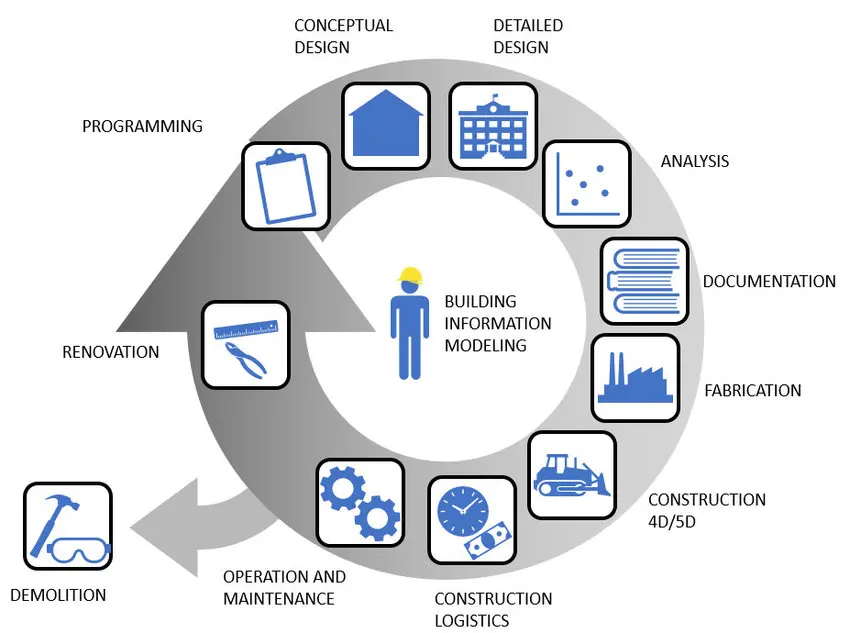
Figure 1: BIM
- Risk Management: It also involves risk management, which is key to the success of every construction project. HS2 Ltd. engages in a variety of risk management approaches, including identification, assessment, and mitigation of risks by periodic risk assessments, developing risk mitigation plans, and monitoring risk factors during the whole life cycle of the project. These risks are documented and managed by the use of tools such as risk registers and risk matrices (Kirkham, 2022).
- Stakeholder Engagement: The involvement of stakeholders with the HS2 project is of paramount importance. HS2 Ltd has been involved in numerous ways with stakeholder engagements through public consultations, community meetings, and regular updates to affected communities. Communication and engagement will help in building trust, addressing concerns, and informing stakeholders of project developments (Thomas et al., 2022).
- Environmental Monitoring: HS2 Ltd is required through its various environmental legislative requirements of the need for routine environmental monitoring by assessing air and water quality and noise levels at suitable locations, which will make sure that the natural environment is not damaged. EIAs conducted analysed potential environmental problems and proposed mitigative measures wherever needed (Thomas and Wright, 2020).
Effectiveness of Management Tools
- Timeliness: “Project management technologies” and BIM have done a good job in maintaining the operations of projects. These systems update the project status in real-time the managers can immediately identify when operations are running late to take action instantly (Kadam and Patil, 2020).
- Cost Control: The risk management techniques and “project management software” helped in controlling the cost of the project. Early identification of potential risks and the development of mitigation plans have helped HS2 Ltd avoid costly delays and budget overruns (Puška et al., 2020).
- Stakeholder Satisfaction: The stakeholder engagement approaches have been effective in responding to the concerns of affected communities. Regular communication and consultations have helped in creating confidence and ensuring that the stakeholders are well-informed about project developments (Olanrewaju et al., 2022).
- Environmental Compliance: The environmental monitoring system and compliance with environmental rules have minimized the negative effect of HS2 on the environment. It considers regular monitoring and impact assessment to identify and mitigate potentially adverse environmental impacts (Koulinas et al., 2020).
Task 3: Law of Tort in Construction Projects
Case Study: HS2 High-Speed Rail Project
The HS2 case study would be appropriate to explore issues of application of tort to construction projects, given the ambitious projection of connecting London to Birmingham with the new “high-speed railway line”, challenges arising right from the stages of land acquisition and compensation of land, to environmental impact to stakeholder communication. Based on this, an explanation of relevant legal and statutory considerations can be done while discussing the use of different management tools when it comes to addressing the development of such projects and the problems arising therein (Ombudsman, 2021).
What Went Wrong in the Project? Indicate the Type of Negligence
Several issues arose concerning the HS2 project for the law of tort, especially concerning negligence. As a principle in tort, "negligence" refers to “the failure of a party” to act in a duty of care towards another which “results in the other party” suffering an injury or damage. In light of such regard, the following issues explain the HS2 project:
- Failure to Engage with Stakeholders: In 2015, the “Parliamentary and Health Service Ombudsman (PHSO)” published a report highlighting that HS2 had failed to engage the communities it was set to affect in its consultation process. The people who were to be affected were not communicated with appropriately, resulting in stress and uncertainty on their part. Lack of this engagement and transparency could therefore mean a breach of the duty of care owed to these stakeholders and thus amount to negligence (Lin et al., 2021).
- Inadequate Compensation for Land Acquisition: Compensation, as required by the Compensation Code, must be paid when compulsory land is acquired, which also must be fair concerning the unblighted value of the property affected. However, there were valuation disputes and whether the compensation being offered by HS2 was adequate. To not fairly compensate could be argued as negligence in a financial capacity on the part of the owners (Kujala et al., 2022).
- Environmental Impact: This puts an obligation on construction firms to limit the environmental impacts of their activities through the Environmental Protection Act of 1990. Most of the legal challenges concerning HS2 pertained to the issues related to the environment, which encompasses “waste management, pollution control, and the protection of natural habits”. Failure to observe the environmental regulations amounts to neglect and thus causes harm to the environment and those around it (Latilo et al., 2024).
What Are the Contractors/Client’s Rights?
Under the law of tort, as well as in general legal principles, in terms of the HS2 development, “contractors and clients” hold particular rights. Such will at least ensure their concerns will be heard and that there is redress for instances of negligence or other areas which can be considered legally culpable.
- Right to Fair Compensation: The owners who are affected by compulsory land acquisition may receive appropriate compensation on unblighted value. The owners should be allowed to object if the compensation is not proper to reach a fair agreement; the Compensation Code provides a venue for determining compensation, as well as the grounds on which disputes are resolved (Pedroso and Gomes, 2020).
- “Right to Safe Working Conditions”: Contractors and other workers involved in HS2 should enjoy safe working conditions because, on one hand, under the CDM 2015 or ‘Construction Design and Management Regulation 2015”, together with the “Health and Safety at Work etc. Act 1974”, a duty of care exists for an “employer concerning employees for health, safety, and welfare”. If negligence results in a set of unsafe working conditions, affected parties are entitled to seek redress and compensation against harm suffered (Legislation, 1974).
- Right to Environmental Protection: Communities and other affected individuals who are usually covered by environmental damage wrought by the HS2 could well seek protection under the Environmental Protection Act 1990 for their affected rights of claims against the negligent action involving environmental hazards, pollution of all kinds, and losses and destruction to natural living, flora, and fauna; similarly, the applicant seeking legal action against violations may also resort to availing redress from the courts about actual environmental degradation (Kostomakhin et al., 2023).
- Right to Transparent Communication: The stakeholders’ owners and communities-have the right to be treated with Candor and transparency by HS2 Ltd. Failure to engage and communicate effectively could amount to a breach of the duty of care, entitling parties affected by the lack of transparency to seek redress for any harm caused (Ombudsman, 2021).
Legal Principles and Procedures
- “Duty of Care”: That the defendant owed the claimant a duty of care-this means HS2 Ltd would owe a duty of care to the land/property owners, as well as the workers-particularly affected by the HS2 project (Clooney and Webb, 2021).
- “Breach of Duty”: Breach of duty means where the defendant failed to attend upon the duty of care owing the plaintiff and any insufficiency in payments, lack of participation to stakeholders, or failure to adopt environmental protectionist policy is manifested while acting in breach of duty with due care (Eddy et al., 2023).
- Causation: The breach of the duty results in the causing directly to the claimant of loss or damage, which can be in numerous aspects such as financial, bodily, and environmental damages (Tyllianakis and Martin-Ortega, 2021).
- Damages: The claimant suffered actual damage or hurt from the breach. In some cases, it takes the form of monetary damages to the property owners and medical costs for the injured labourers, or even the cost spent to restore the damage to environmental features (Mason and Potts, 2023).
Task 4: Legal Precedents and Adjudication in Construction Law
Legal Precedents for Construction Law and Adjudication Practice
Legal precedents are a cornerstone of “construction law and adjudication practice” in the UK. Setting such precedents occurs by way of judicial decisions in court cases where the law is interpreted and applied to specific circumstances. These decisions, over time, create a body of case law guiding future legal interpretations and dispute resolutions.
The case of “S&T (UK) Limited v Grove Developments Limited [2018] EWCA Civ 2448” is one which provided a major “legal precedent in the field of construction law”, relating to the issue of "smash and grab" adjudications-that is, where a “contractor seeks” immediate payment on an “interim payment application” in circumstances where the employer has failed to give a valid pay-less notice. The “Court of Appeal” upheld that, even in the case of an invalid pay-less notice, the “employer” could argue the "true value" of the work at a subsequent adjudication. The set precedent here underlines the imperatives of accurate payment notices while allowing employers a chance to dispute inflated claims of payment (Kohn et al., 2023).
Another relevant case is Vinci Construction (UK) Limited v Beumer Group UK Limited [2018] EWHC 1874 (TCC) (Gatehouselaw, 2018). The question involved disagreement in the interpretation of the terms of the contract. Disputes concerning these issues were directly connected with the question of payment and variation. The judgment of the Court under consideration has outlined that for terms to be considered transparent and ambiguous in the content of a contract is extremely essential, and secondly, the parties are to proceed under the terms laid down for the conduct of contract procedures. This precedent underlines the importance of accurate drafting of contracts and adherence to contractual obligations.
Legal Precedent Procedures in Construction Law (England)
In England, most of the construction laws deal with common law principles, statutes, and contracts. As such, the courts go through a legal precedent procedural process whereby the “interpretation and application” of each of these laws are made to offer a binding precedent in the resolution of disputes.
The “Housing Grants, Construction and Regeneration Act 1996”, most commonly referred to as the “Construction Act 1996”, made statutory adjudication compulsory for all construction contracts. By this Act, parties will at any time be able to refer their “disputes to an adjudicator” who will enable a fast and inexpensive resolution of the disputed matter. The adjudicator's decision is binding upon parties, subject to the right either to challenge it in the courts or through arbitration (HSE, 2024).
The “Construction Design and Management) Regulations 2015”, most commonly known as “CDM 2015”, state the responsibilities of the respective duty holders for “health, safety, and welfare on a construction site”, which includes the client, designers, and contractors. All these regulations aim to maintain the rate of accidents and injuries low to preserve a safe working environment.
Common Areas for Adjudication in Construction Disputes
- “Payment Disputes”: Payment issues, such as nonpayment or late payment for work executed, may be common in construction projects. Adjudication offers the route to rapid resolution and enforcement of payment for contractors. A good example is the case “S&T (UK) Limited v Grove Developments Limited”, wherein the contractor initiated immediate action for payment via adjudication against the “employer's failure to issue a valid pay-less notice”. The effect of the adjudicator's decision was that the contractor was paid the sum due, although the employer could then go on to challenge in litigation or arbitration the true value of the work (Filler et al., 2022; Vlex, 2018).
- “Delays and Extensions of Time”: Construction projects most often develop disputes between parties over delayed projects or extensions of time. Through adjudication, parties will be able to settle their differences concerning causes and responsibilities related to the delays. For example, where the contractor has claimed an extension of time on account of unexpected site conditions, the employer could refute it on grounds of validity. It may try to demonstrate the incorrectness of that claim before the adjudicator, who gives the entitlement to such an extension of time by binding determination after the presentation of the evidence of both parties (Felzmann et al., 2020).
- Defects in Workmanship or Materials: The defects in craftsmanship and materials of projects are also critical points, apart from the quality, of disputes between clients and contractors. Adjudication ensures a timely solution to these problems by pinpointing which party is obligated to take responsibility. For instance, a client can initiate a dispute for defects in the job after finishing and request a rectification or compensation in compensation (Goldberg et al., 2021).
Professional academic support and assignment samples are provided by Native Assignment Help, delivering clear, organised, and plagiarism-free content to support understanding and successful assignment completion.
Conclusion
The "UK construction industry" is not an exception to having an appropriate and validly established legislative framework necessary for ensuring the safety, quality, and justifiability of a project. This paper looked into the following aspects of construction legislation: contract relationships. "Health and safety law," environmental protection, as well as "disputes resolution machinery." When considering the HS2 high-breed train project, with the failure of the processes to adhere to legal requirements and legislation in place attention was brought. The HS2 project has been a great case study to learn and understand all the complexities concerning construction legislation and the numerous other issues huge infrastructure projects face. Issues such as stakeholder involvement, fair compensation upon land acquisition, and damage to the ecology raise concerns about proper and effective communication, compensating mechanisms that are fair to all parties, and correct adherence to legislation that is already in place to protect the ecological environment. Application of the tort law, particularly the concept of negligence, depends upon the duty of care and interest of the parties.
"Legal precedents and adjudication" play an important role in the resolution of disputes in construction, enabling project development to take place smoothly. The cases of "S&T (UK) Ltd v Grove Developments Limited " and "Vinci Constructions (UK) Limited v Beumer Group UK Ltd" emphasized those made over the proper receipt and the issue of notices of receipt of intended payments, clarity in the making of contracts upon agreeing on the terms of a particular contract, and that these exist for a system directed to adherence, notice as well as action upon such defects within the contract mechanisms. Adjudication is a rapid and effective dispute resolution procedure since most of the construction disputes are claims of overpayment and delay. To conclude, appropriate understanding and application of the "legal and statutory requirements" applicable to the "construction industry" are of significant importance regarding risk management, conflict avoidance, and a safe and ongoing construction environment. If proper management tools and practices were followed, construction companies would work through all the difficulties that beset the industry to attain successful project outputs. Understanding gleaned from the HS2 case brings vast expertise and applications of legal jurisprudence to help ensure that building projects are conducted in a fit and proper way, within proper bounds, and by the rule of law.
References
- Building, 2011. A quick guide to construction projects: The legal structure. Available at: https://www.building.co.uk/comment/a-quick-guide-to-construction-projects-the-legal-structure-/5024859.article [Accessed December 6th, 2024]
- Charlson, J., 2020. Construction contracts. In Galbraith's Construction and Land Management Law for Students (pp. 140-145). Routledge.
- Clooney, A. and Webb, P., 2021. The right to a fair trial in international law. Oxford University Press, USA.
- Dentons, 2021. New and proposed legislation, December 2020 (UK construction focus). Available at: https://www.dentons.com/en/insights/articles/2021/january/6/new-and-proposed-legislation-december-2020-uk-construction-focus [Accessed December 6th, 2024]
- Eddy, T., Mansar, A., Purnomo, S., Hanifah, I. and Arifin, M., 2023. Reconstruction of Corporate Liability Law in the Provision of Construction Services. Journal of Law and Sustainable Development, 11(7), pp.e932-e932.
- Felzmann, H., Fosch-Villaronga, E., Lutz, C. and Tamò-Larrieux, A., 2020. Towards transparency by design for artificial intelligence. Science and engineering ethics, 26(6), pp.3333-3361.
- Filler, D.M., Haendler, D.M. and Fischer, J.L., 2022. Negligence at the Breach: Information Fiduciaries and the Duty to Care for Data. Conn. L. Rev., 54, p.105.
- Gatehouselaw, 2018. Grove Developments Limited v S&T (UK) Limited [2018] EWCA Civ 2448. Available at: https://gatehouselaw.co.uk/grove-developments-limited-v-st-uk-limited-2018-ewca-civ-2448/ [Accessed December 6th, 2024]
- Goldberg, J.C., Sebok, A.J., Zipursky, B.C. and Kendrick, M., 2021. Tort law: Responsibilities and redress. Aspen Publishing.
- Higginbottom, G., 2023. Design and Build Contracts. John Wiley & Sons.
- HSE, 1974. Health and Safety at Work etc Act 1974. Available at: https://www.hse.gov.uk/legislation/hswa.htm [Accessed December 6th, 2024]
- HSE, 2015. Legal requirements: A summary. Available at: https://www.hse.gov.uk/construction/cdm/2015/legal.htm [Accessed December 6th, 2024]
- HSE, 2015. The Construction (Design and Management) Regulations 2015. Available at: https://www.hse.gov.uk/construction/cdm/2015/index.htm [Accessed December 6th, 2024]
- HSE, 2024. Construction law. Available at: https://www.hse.gov.uk/construction/resources/law.htm [Accessed December 6th, 2024]
- ICLG, 2024. Construction & Engineering Laws and Regulations Report 2024 England & Wales. Available at: https://iclg.com/practice-areas/construction-and-engineering-law-laws-and-regulations/england-and-wales [Accessed December 6th, 2024]
- Kadam, S. and Patil, S., 2020. Case Study of Defect Due to Poor Workmanship in Construction Industry–Cracking.
- Kirkham, R., 2022. Parliamentary scrutiny of the Parliamentary and Health Services Ombudsman. Journal of Social Welfare and Family Law, pp.1-12.
- Kohn, J.P., Friend, M.A., Friend, M. and Kohn, J., 2023. Fundamentals of occupational safety and health. Rowman & Littlefield.
- Kostomakhin, M., Kostomakhin, N. and Tseiko, M., 2023. Impact of digitalization on the effectiveness of management in the field of agricultural development. In E3S Web of Conferences (Vol. 402, p. 13004). EDP Sciences.
- Koulinas, G.K., Xanthopoulos, A.S., Tsilipiras, T.T. and Koulouriotis, D.E., 2020. Schedule delay risk analysis in construction projects with a simulation-based expert system. Buildings, 10(8), p.134.
- Kujala, J., Sachs, S., Leinonen, H., Heikkinen, A. and Laude, D., 2022. Stakeholder engagement: Past, present, and future. Business & Society, 61(5), pp.1136-1196.
- Latilo, A., Uzougbo, N.S., MC, U. and Oduro, P., 2024. Role and effectiveness of advance payment guarantees in construction contracts. World Journal of Advanced Science and Technology, 6(01), pp.088-102.
- Legislation, 1974. Health and Safety at Work etc. Act 1974. Available at: https://www.legislation.gov.uk/ukpga/1974/37/contents [Accessed December 6th, 2024]
- Legislation, 1990. Environmental Protection Act 1990. Available at: https://www.legislation.gov.uk/ukpga/1990/43/contents [Accessed December 6th, 2024]
- Legislation, 1996. Housing Grants, Construction and Regeneration Act 1996. Available at: https://www.legislation.gov.uk/ukpga/1996/53/contents [Accessed December 6th, 2024]
- Legislation, 1999. Management of Health and Safety at Work Regulations 1999. Available at: https://www.legislation.gov.uk/uksi/1999/3242/contents [Accessed December 6th, 2024]
- Legislation, 2017. High Speed Rail (London - West Midlands) Act 2017. Available at: https://www.legislation.gov.uk/ukpga/2017/7/contents [Accessed December 6th, 2024]
- Lin, S.S., Shen, S.L., Zhou, A. and Xu, Y.S., 2021. Risk assessment and management of excavation system based on fuzzy set theory and machine learning methods. Automation in Construction, 122, p.103490.
- Mason, J. and Potts, K., 2023. Construction law: from beginner to practitioner. Routledge.
- Mayangkara, R.H., Subiyanto, A.A. and Tamtomo, D.G., 2021. Implementation of hospital occupational health and safety regulations to minimize occupational accidents at the Sultan Agung Islamic Hospital, Semarang. Journal of Health Policy and Management, 6(3), pp.160-167.
- Nita, A., Fineran, S. and Rozylowicz, L., 2022. Researchers' perspective on the main strengths and weaknesses of Environmental Impact Assessment (EIA) procedures. Environmental Impact Assessment Review, 92, p.106690.
- Olanrewaju, O.I., Kineber, A.F., Chileshe, N. and Edwards, D.J., 2022. Modelling the relationship between Building Information Modelling (BIM) implementation barriers, usage and awareness on building project lifecycle. Building and Environment, 207, p.108556.
- Ombudsman, 2021. An investigation into HS2's failure to communicate with a family about acquiring their home. Available at: https://www.ombudsman.org.uk/sites/default/files/An%20investigation%20into%20HS2%27s%20failure%20to%20communicate%20with%20a%20family%20about%20acquiring%20their%20home.pdf [Accessed December 6th, 2024]
- Pedroso, E. and Gomes, C.F., 2020. The effectiveness of management accounting systems in SMEs: A multidimensional measurement approach. Journal of Applied Accounting Research, 21(3), pp.497-515.
- Puška, A., Stojanović, I., Maksimović, A. and Osmanović, N., 2020. Project management software evaluation by using the measurement of alternatives and ranking according to compromise solution (MARCOS) method. Operational Research in Engineering Sciences: Theory and Applications, 3(1), pp.89-102.
- Shao, S., Hu, Z., Cao, J., Yang, L. and Guan, D., 2020. Environmental regulation and enterprise innovation: a review. Business strategy and the environment, 29(3), pp.1465-1478.
- Thomas, R. and Wright, M., 2020. Construction contract claims. Bloomsbury Publishing.
- Thomas, R., Matanyahu, E., Pottakis, A. and Keenoy, A., 2022. Ombudsman Peer Review of The Parliamentary and Health Service Ombudsman, UK.
- Tyllianakis, E. and Martin-Ortega, J., 2021. Agri-environmental schemes for biodiversity and environmental protection: How we are not yet “hitting the right keys”. Land Use Policy, 109, p.105620.
- Vlex, 2018. Vinci Construction (UK) Limited v Beumer Group UK Limited [2018] EWHC 1874 (TCC). Available at: https://vlex.co.uk/vid/vinci-construction-uk-ltd-841088714 [Accessed December 6th, 2024]
- Yeung, J.F., Chan, D.W., Chan, J.H. and Lok, K.L., 2023. Development of a Composite Project Performance Index for the New Engineering Contract (NECPPI) of construction projects in Hong Kong: A Delphi study. International Journal of Construction Management, 23(16), pp.2804-2817.
- Zain-alabdeen, W., 2023. A Comparison of Dispute Resolution Provisions between the Joint Contract Tribunal and the Iraqi Standard Bidding Document. Journal of Engineering, 29(2), pp.92-98.
Go Through the Best and FREE Samples Written by Our Academic Experts!
Native Assignment Help. (2026). Retrieved from:
https://www.nativeassignmenthelp.co.uk/cma4000-introduction-law-statutory-requirements-assignment-sample-43631
Native Assignment Help, (2026),
https://www.nativeassignmenthelp.co.uk/cma4000-introduction-law-statutory-requirements-assignment-sample-43631
Native Assignment Help (2026) [Online]. Retrieved from:
https://www.nativeassignmenthelp.co.uk/cma4000-introduction-law-statutory-requirements-assignment-sample-43631
Native Assignment Help. (Native Assignment Help, 2026)
https://www.nativeassignmenthelp.co.uk/cma4000-introduction-law-statutory-requirements-assignment-sample-43631
- FreeDownload - 36 TimesFinancial Evaluation and Risk Analysis of Project Bold Assignment Sample
1.Introduction 1.1 Purpose and Scope DGG plc manufactures progressed...View or download
- FreeDownload - 40 TimesCommunity, Equality, and Sustainable Tourism Growth Assignment Sample
Introduction In the current time the tourism sector is one of the speedily...View or download
- FreeDownload - 44 TimesConsumer Behavior Assessment Assignment Example
Consumer Behavior Assessment Assignment Sample Introduction In this report,...View or download
- FreeDownload - 37 TimesUnderstanding Business Ethics Assignment Example
Understanding Business Ethics Assignment Introduction:...View or download
- FreeDownload - 40 TimesEffective Marketing Communication Plan For Apple's iPhone 15 Launch Assignment Sample
Effective Marketing Communication Plan For Apple's iPhone 15...View or download
- FreeDownload - 44 TimesTake home Test Marketing Mix Strategy Assignment Sample
Take-home Test Marketing Mix Strategy Assignment {{TEXT2}} 1.0...View or download
-
100% Confidential
Your personal details and order information are kept completely private with our strict confidentiality policy.
-
On-Time Delivery
Receive your assignment exactly within the promised deadline—no delays, ever.
-
Native British Writers
Get your work crafted by highly-skilled native UK writers with strong academic expertise.
-
A+ Quality Assignments
We deliver top-notch, well-researched, and perfectly structured assignments to help you secure the highest grades.