
Discovering the Construction Environment through Global Construction Expo
1. Introduction
The construction industry is one of the most influential sectors of the UK economy. It relates to several phases and types of construction such as residential, commercial construction, infrastructure construction, industrial construction, and others. There have been developments where new technologies such as BIM, prefabrication and smart construction technologies have been incorporated in the industry (Yang et al., 2021). Moreover, owing to the sustainability agenda, concepts like utilising environmentally friendly products, carbon-neutral structures, and energy-positive architecture are being implemented.
Primarily, the Global Construction Expo provides an opportunity to garner information on novelties in the industry, innovative technologies, and sustainable practices among leaders, professionals, and students (Mian et al., 2020). The event also offers possibilities to learn the specifics of the construction’s newest approaches, safety standards, informatization, and professional growth. First and foremost, as an international event, it brings together various stakeholders desirable for developing the sector.
It will focus on the historical and present state of the construction industry in the UK, the roles and responsibilities of the professionals, the importance of sustainability and the measures which guarantee construction quality and safety (Newman et al., 2020). It will also analyse career advancement opportunities and include a Personal Professional Development Plan (PDP) containing future career plans and skill enhancement.
2. Development of the Construction Industry & Professional Roles (LO1)
2.1 Historical and Contemporary Development
The construction industry in the UK has grown from the ancient civilization where engineering structures such as concrete, roads and aqueducts were affiliated with the Roman civilization. As the Industrial Revolution took place, various cities grew larger and people started using a lot of steel, complex machinery, and concrete, which facilitated the construction of larger projects such as railways, factories, and even tall buildings (Musarat et al., 2023).
Today, different technologies in the construction industry are related to the digital world. BIM promotes teamwork within construction projects, and 3D printing and modular construction increase productivity and decrease material wastage.
Figure 1: 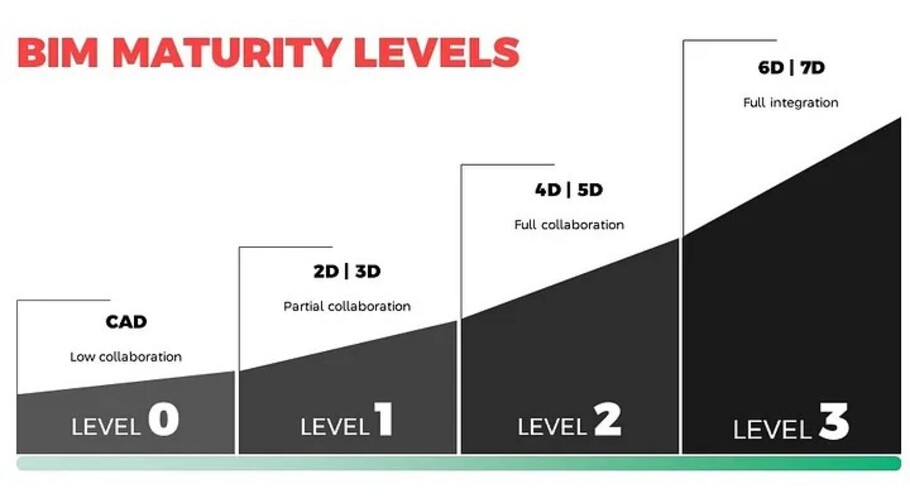
(Source: Eischet, 2023)
The increasing features in smart construction involve the use of Artificial Intelligence, automation and the Internet of Things, which result in safer and more sustainable construction. The UK government has now required companies to follow BIM Level 2 for public projects, so the industry is experiencing digital change (Jiang et al., 2021) (Figure 1).
2.2 Roles and Responsibilities in the Industry
|
Profession |
Roles and Responsibilities |
|
Architects |
Design functional, aesthetically pleasing, and sustainable structures, ensuring compliance with planning regulations. |
|
Civil Engineers |
Ensure the structural integrity and durability of buildings, bridges, and infrastructure projects. |
|
Project Managers |
Oversee project planning, execution, and budgeting, and ensure timely delivery within scope. |
|
Quantity Surveyors |
Manage cost estimation, procurement, and contract administration to prevent financial overruns (Shah et al., 2023). |
|
Health & Safety Officers |
Enforce workplace safety regulations, ensuring compliance with CDM 2015 and the Health and Safety at Work Act 1974. |
Table 1: Role and responsibilities as per the profession
(Source: Self-created)
2.3 Role of Professional Bodies in the UK Construction Industry
|
Professional Body |
Role and Responsibilities |
|
Royal Institute of British Architects (RIBA) |
Regulates architectural standards, promotes high-quality design, and ensures sustainability in building projects. |
|
Institution of Civil Engineers (ICE) |
Supports civil engineers in achieving technical excellence, ensuring the safety and durability of infrastructure projects (Li et al., 2022). |
|
Chartered Institute of Building (CIOB) |
Oversees construction management, promotes ethical standards, and provides professional training and accreditation. |
|
Royal Institution of Chartered Surveyors (RICS) |
Governs land, property, and cost management, ensuring accurate valuation and financial efficiency in construction (RICS, 2024). |
Table 2: Role and Responsibilities of the professional bodies
(Source: Self-created)
This table effectively summarizes the roles of key UK professional bodies in the construction industry.
2.4 Professionalism, Diversity & Inclusion in Construction
The acts governing employment and equal opportunity in the industry are well defined in the Equality Act of 2010 to discourage discrimination by gender, colour or disability. Those are Women in Construction (WiC) and STEM outreach, which are still in place to encourage diversification (Afful et al., 2025). Employment bias and diversity have become an important aspect in companies in the UK, with many organisations providing employment opportunities, diversity training and even diversity sponsorship to minority employees. People of diverse origins bring creativity, efficiency and sustainability to a production line and a company as a whole.
3. Impact of the Construction Industry (LO2)
3.1 Sustainability in the UK Construction Sector
The role of environmental, social, cultural and economic sustainability has influenced the formation of the UK construction industry. Environmental sustainability is now considered through the Building Research Establishment Environmental Assessment Method (BREEAM) that measures many elements of new and remodelling of the building as per energy efficient, carbon-efficient and with sustainable materials (Seminara et al., 2022). The UK government aims to achieve net zero carbon through the construction of buildings through innovations and technologies of the buildings that can help in the achievement of this set goal by 2050.
Social sustainability concerns relate to housing and workplaces, whereby there is an emphasis on the affordability of the houses and safety standards, in this case, the workplace. In this respect, there are different programmes with the government such as Help to Buy that guarantee that people with low income will continue to have access to decent houses through social housing projects (Winston, 2021). More especially, proper implementation of the Health and Safety at Work Act results in improved working environment and low incidents of workplace accidents.
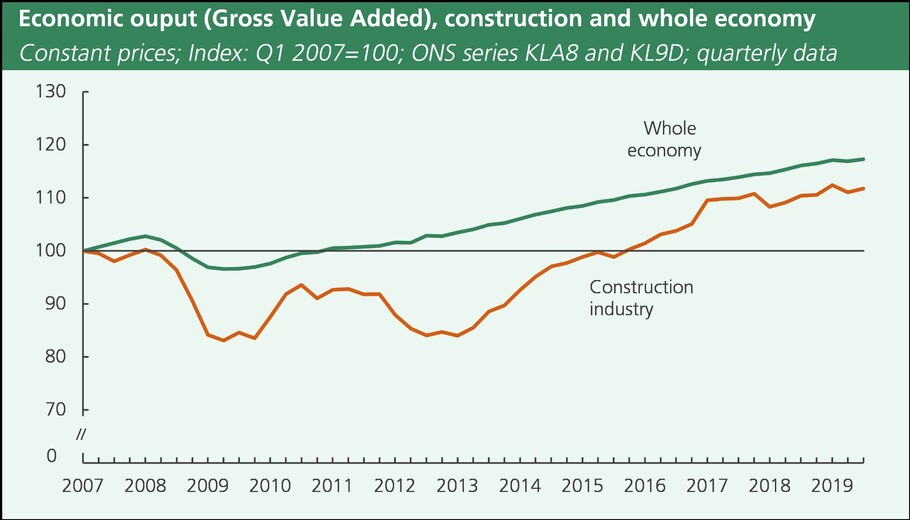
Figure 2: Economic output and construction industry
(Source: Rhodes, 2019)
Economic sustainability is important since the construction industry accounts for 6% of the country’s Gross Domestic Product and provides direct employment to 2.4 million people (Rhodes, 2019). Large-scale investments facilitate employment opportunities and boost revenues in the economy's output (Figure 2).
3.2 Challenges in the UK Construction Industry
The construction sector has some challenges that affect it. Brexit has affected the availability of labour, especially skilled workers, which has become scarce in the market. This has led to demand for opportunities for continuing education in domestic apprenticeship and vocational training programmes.
Labour costs have gone up due to factors such as minimum wage increments, and the inflation impacts have had to deal with expensive materials suppliers. This has affected the overall cost of materials in general especially steel and timber, which in turn has affected further the already pressured project costs and the duration of projects (Hart and Pomponi, 2020).
Diversity and inclusion gaps have been observed at PwC and are worst at leadership positions. Currently, females make up approximately 15% of the construction workers in the UK and ethnic minorities face certain challenges when it comes to promotion, thus restricting inclusiveness in the industry (CIOB, 2022).
3.3 Strategies for Equality, Diversity & Inclusion (EDI)
To meet these challenges, the UK government and several industries have prepared and begun implementing some strategies. That skills training combined with the apprenticeships implies that the companies attract young people from any background. Employment opportunities for people with disabilities have also been embraced by many corporations, which insist on being equal for all candidates. Moreover, Continuing Professional Development (CPD) programmes help underprivileged sectors improve their employability status and contribute to the increased representation of the diverse community in the job market (Magwenya et al., 2022).
4. Ensuring Quality, Timely Completion & Safety in Construction (LO3)
4.1 Project Handover and Quality Control
A proper project handover procedure helps to ensure that construction projects go through elements of quality before occupancy or utilisation. In the UK, the basic mode of handover comprises commissioning, and defect rectification, also known as snagging and documentation. It means the testing of overall building systems like HVAC, electrical and many other systems and essential equipment to ensure that they are performing as they are supposed to (Asim et al., 2022). The rectification process is useful in the fixing of all the issues that have been inspected by different organisations before passing the final stamp of approval. The last of the assignments in document writing encompasses providing clients with operations manuals, warranties, as well as maintenance instructions.
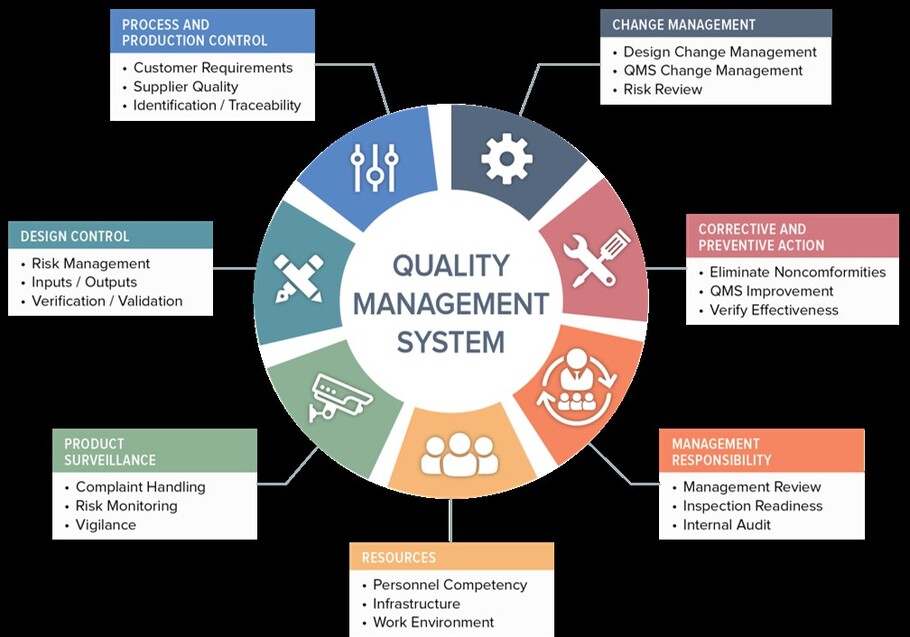
Figure 3: Quality Management System
(Source: Onuweri, 2020)
It is evidenced that the UK construction industry implements the ISO 9001 (Quality Management System) which prescribes guidelines on quality assurance programmes (Figure 3). ISO 9001 practices help to standardise the process, improve efficiency, and meet the customers' expectations in delivering projects (ISO, 2015).
4.2 Cost Monitoring in Construction
Budgeting for the cost is a vital factor in the company to keep costs low yet quality high. One of the most popular methods used to assess construction projects' financial profitability within the UK is the Cost-Benefit Analysis (CBA) (Vagdatli and Petroutsatou, 2022). This entails costing the initial capital, annual expenditures, as well as possible returns to be generated from projects before they are deemed economically sustainable.
Figure: Importance of Cost Control in Construction Projects
(Source: RIB, 2024)
Also, management of risk assists in avoiding extra expenses which are an occurrence likely to overwhelm the implementation of project plans. Managers use contingency planning, negotiated supply contracts with pre-agreed prices, and computerised project systems for cost monitoring. The implementation of BIM (Building Information Modelling) also helps with preventing budget problems before they arise, thus minimising the occurrence of such risks (Samimpay and Saghatforoush, 2020).
4.3 UK Construction Safety Regulations & Compliance
The construction site is very conscious of the safety standards in the United Kingdom since there are many rules governing the safety of workers and the public in construction sites. The Workplace Act of 1974 lays the foundation of the legal requirement for the employer to assess the risks, protect the sector, and provide special guard outfits (Health and Safety Executive, 2020).
CDM 2015 has emphasised construction management on the protection of persons especially during the construction design work and up to the completion stage.
The Building Regulations 2010 set fire safety, structural stability, energy efficiency, and accessibility standards (Kodur et al., 2020). These regulations are meant to make sure that constructed buildings are secure, environmentally friendly, and useful in their intended use.
4.4 Role of UK Professional Bodies in Quality & Safety
One of the roles that have been attributed to professional bodies is the aspect of quality and safety of constructions (Maliha et al., 2021). Institution of Occupational Safety and Health (IOSH) offers guidelines on how to handle risks effectively, and the well-being of workers on construction sites is upheld to the highest level (IOSH, 2024).
Construction Industry Training Board (CITB) helps in developing training programmes and certifications that support enhancing the safety of workplaces (CITB, 2023). Schemes such as the CITB Site Safety and Scheme ensure that workers receive adequate knowledge on how to prevent accidents in construction sites, hence increasing the standard of construction work.
5. Routes to Employment & Career Progression in Construction (LO4)
5.1 Career Pathways in the UK Construction Industry
The construction industry in the UK can be entered through different routes, such as through direct entry into a vocation having a university degree or acquiring a professional qualification. Vocational training includes apprenticeships, NVQ and T levels, this is chosen by those seeking to pursue highly practical work, such as bricklaying, and carpentry (Daniel et al., 2024). Apprenticeship schemes that are funded by the government reduce the deficiency of skilled personnel in the industry.
The university qualifications in civil engineering, construction management, and architecture are academic programmes and tend to be recognised and approved by the relevant professional bodies such as the CIOB, ICE or RICS. All its graduates are privileged to have properly laid down career progression routes that see them attain chartered status.
Industry-recognised professional memberships including CIOB, ICE and RICS charterships can also increase employability as they signify industry experience. These certifications entail work experience, competency test results, and CPD for the practitioners to meet the required set standards (Samuel et al., 2020).
5.2 The Role of Professional Bodies in Employment & Training
Organisations like the CIOB and RICS promote career advancements through training, networking, as well as placement services.
One needs to note that the Governments of various nations have come up with programmes such as the Apprenticeship levy to finance training programmes to enhance skill acquisition (Smith et al., 2021). The Construction Skills Fund provides practical training at the site, to provide necessary experience for newly qualified persons to be employed.
5.3 CPD and Lifelong Learning in Construction
Continuing professional development also plays a major role in the career progression process, as well as keeping the professionals informed about new developments within their selected fields. Some of the CPD activities include online courses offered, workshops given, as well as certifications in specialisation, such as sustainability in construction and embracing the use of technology in the built environment (Batista et al., 2022).
Several organisations such as the CIOB and ICE require CPD to be undertaken within their members as a way of being chartered (Clarkson and Hind, 2024). They also assist CPD by providing training and sponsorship for further educational programmes.
5.4 Education & Training for Leadership in Construction
Over the years, leadership skills have been acclaimed to be very important in the advancement of one's career. The UK has specific leadership and management training programmes that are provided to cover areas of project management, costing, and leadership in project teams.
This behaviour shows that a professional can move from being a site manager to a project director via CPD and other training (Watts and Watts, 2021). Continuing education together with faculty sponsorship remains a critical success factor in career advancement and being promoted to the higher ranks in the construction industry.
6. Personal Professional Development Plan (PDP)
6.1 Career Goals
|
Career Stage |
Goal |
|
Short-term |
Obtain a construction-related certification (e.g., CSCS Card). |
|
Medium-term |
Specialize in project management or sustainable construction. |
|
Long-term |
Achieve chartership with CIOB or RICS for career advancement. |
Table 3: Career Goals
(Source: Self-developed)
In the short term, gaining the CSCS Card will give the candidate key knowledge in site safety. The main goals in the short-term and medium-term include increasing specificity in the qualifications by choosing project management or focusing on environmental specificity in construction. These are getting a Chartership of either CIOB or RICS so that this will enhance the credibility of the person to lead in the construction industry.
6.2 Technical & Employability Skills
Technical skills are now mandatory when it comes to the construction of infrastructure. Therefore, it is advantageous to use BIM software to improve the efficiency of working in a team and increase the level of accuracy during the planning and designing phases of a particular project (Adeyemi et al., 2024). The ability to manage costs is used in cost control and reduction to achieve projected budgets as scheduled when executing projects. Adequate knowledge about the safety site about CDM 2015 regulations protects the working site from potential hazards.
Leadership skills, teaming skills, and decision-making skills are other important employability skills along with a tripartite approach (Mahajan et al., 2022). Leadership aims to enhance decision-making and coordinate efficient project implementation while the concept of teamwork means collaborative effort from other professionals as well. Effective problem-solving abilities help to quickly resolve the construction issues that lead to increased effectiveness of the construction projects, thus enhancing the construction sector in the UK market.
7. Conclusion
Today, the construction industry in the UK has developed greatly to combine technology, sustainability, and safety standards. Sustainability of the environment is supported by programmes such as Building Research Establishment Environment Assessment Method (BREEAM), and safety is regulated by Construction Design and Management (CDM) 2015 as well as Health and Safety at Work Act 1974. Quality assurance, diversity and CPD for the staff and professionals are important for industry growth. In the future, there might be construction with the help of artificial intelligence, smart houses, and the tendency of net zero carbon. There are various approaches to the improvement of competencies for the sustainable development of professionals, including changes in function adaptation to implement digital innovation in professional practice and action for organisational and industry growth.
Need help writing a construction management assignment or PDP like this? Our expert assignment writers assist with UK-based construction coursework, reports, and dissertations—covering BIM, sustainability, health and safety laws, professional bodies, and career planning—ensuring well-structured, plagiarism-free work that meets university marking criteria.
References
Adeyemi, A.B., Ohakawa, T.C., Okwandu, A.C., Iwuanyanwu, O. and Ifechukwu, G.O., 2024. Advanced Building Information Modeling (BIM) for affordable housing projects: Enhancing design efficiency and cost management. Journal of Building Information Modeling, 12(1), pp.45-60. https://www.researchgate.net/profile/Ifechukwu-Gil-Ozoudeh/publication/384079744_Advanced_Building_Information_Modeling_BIM_for_affordable_housing_projects_Enhancing_design_efficiency_and_cost_management/links/66e9b86cdde50b32587a3453/Advanced-Building-Information-Modeling-BIM-for-affordable-housing-projects-Enhancing-design-efficiency-and-cost-management.pdf
Afful, A.E., Wang, C.C., Riza Yosia Sunindijo, Frimpong, S., Boadu, E. and Baah, B. (2025). Evolving Job Roles of Women in the Construction Industry. Journal of Construction Engineering and Management, 151(3). https://doi.org/10.1061/jcemd4.coeng-15133
Asim, N., Badiei, M., Mohammad, M., Razali, H., Rajabi, A., Chin Haw, L. and Jameelah Ghazali, M. (2022). Sustainability of Heating, Ventilation and Air-Conditioning (HVAC) Systems in Buildings—An Overview. International Journal of Environmental Research and Public Health, [online] 19(2), p.1016. https://doi.org/10.3390/ijerph19021016
Batista, J.P.B., Torre, C., Sousa Lobo, J.M. and Sepodes, B. (2022). A review of the continuous professional development system for pharmacists. Human Resources for Health, 20(1). https://doi.org/10.1186/s12960-021-00700-1
CIOB (2022). Equality, Diversity, and Inclusion | CIOB. [online] www.ciob.org. Available at: https://www.ciob.org/industry/policy-research/policy-positions/equality-diversity-inclusion [Accessed 1 Mar. 2025].
CITB (2023). Home. [online] www.citb.co.uk. Available at: https://www.citb.co.uk/ [Accessed 1 Mar. 2025].
Clarkson, S. and Hind, L. (2024). Back to Industry—Evaluating Women’s Return to Chartered Accreditation Post-Maternity in the Built Environment Sector Professions. Administrative Sciences, [online] 14(9), pp.204–204. https://doi.org/10.3390/admsci14090204
Daniel, E.I., Oshodi, O.S. and Odediran, S., 2024. An exploration of construction craftspeople apprentice training: evidence from the UK. International Journal of Construction Education and Research, 20(2), pp.218-240. https://wlv.openrepository.com/bitstream/handle/2436/625262/Daniel_Exploration_of_construction_2023.pdf?sequence=3&isAllowed=y
Eischet, O. (2023). BIM Maturity Levels Explained. [online] Medium. Available at: https://medium.com/specter-automation-insights/bim-maturity-levels-explained-922060c163ef [Accessed 1 Mar. 2025].
Hart, J. and Pomponi, F. (2020). More Timber in Construction: Unanswered Questions and Future Challenges. Sustainability, 12(8), p.3473. https://doi.org/10.3390/su12083473
Health and Safety Executive (2020). Health and Safety at Work Act 1974. [online] Hse.gov.uk. Available at: https://www.hse.gov.uk/legislation/hswa.htm [Accessed 1 Mar. 2025].
IOSH (2024). Institution of Occupational Safety and Health. [online] IOSH. Available at: https://iosh.com/ [Accessed 1 Mar. 2025].
ISO (2015). ISO 9001:2015 Quality management systems — Requirements. [online] ISO. Available at: https://www.iso.org/standard/62085.html [Accessed 1 Mar. 2025].
Jiang, R., Wu, C., Lei, X., Shemery, A., Hampson, K.D. and Wu, P. (2021). Government efforts and roadmaps for building information modelling implementation: lessons from Singapore, the UK and the US. Engineering, Construction and Architectural Management, 29(2), pp.782–818. https://doi.org/10.1108/ecam-08-2019-0438
Kodur, V., Kumar, P. and Rafi, M.M. (2020). Fire hazard in buildings: review, assessment and strategies for improving fire safety. PSU Research Review, 4(1), pp.1–23. https://doi.org/10.1108/prr-12-2018-0033
Li, C.Z., Guo, Z., Su, D., Xiao, B. and Tam, V.W.Y. (2022). The Application of Advanced Information Technologies in Civil Infrastructure Construction and Maintenance. Sustainability, 14(13), p.7761. https://doi.org/10.3390/su14137761
Magwenya, R.H., Ross, A.J. and Ngatiane, L.S. (2022). Continuing Professional Development in the Last Decade – a Scoping Review. Journal of Adult and continuing education, [online] 29(2), p.147797142211472-147797142211472. https://doi.org/10.1177/14779714221147297
Mahajan, R., Gupta, P. and Misra, R. (2022). Employability skills framework: a tripartite approach. Education + Training, 64(3). https://doi.org/10.1108/et-12-2020-0367
Maliha, M.N., Abu Aisheh, Y.I., Tayeh, B.A. and Almalki, A. (2021). Safety Barriers Identification, Classification, and Ways to Improve Safety Performance in the Architecture, Engineering, and Construction (AEC) Industry: Review Study. Sustainability, [online] 13(6), p.3316. Available at: https://www.mdpi.com/2071-1050/13/6/3316/pdf
Mian, S.H., Salah, B., Ameen, W., Moiduddin, K. and Alkhalefah, H. (2020). Adapting Universities for Sustainability Education in Industry 4.0: Channel of Challenges and Opportunities. Sustainability, [online] 12(15), p.6100. https://doi.org/10.3390/su12156100
Musarat, M.A., Irfan, M., Alaloul, W.S., Maqsoom, A. and Ghufran, M. (2023). A Review on the Way Forward in Construction through Industrial Revolution 5.0. Sustainability, 15(18), p.13862. https://doi.org/10.3390/su151813862
Newman, C., Edwards, D., Martek, I., Lai, J., Thwala, W.D. and Rillie, I. (2020). Industry 4.0 deployment in the construction industry: a bibliometric literature review and UK-based case study. Smart and Sustainable Built Environment, [online] 10(4), pp.557–580. https://doi.org/10.1108/sasbe-02-2020-0016
Onuweri, K. (2020). ISO 9001:2015; QUALITY, OR BUSINESS MANAGEMENT SYSTEM? [online] www.linkedin.com. Available at: https://www.linkedin.com/pulse/iso-90012015-quality-business-management-system-kelvin-onuweri/ [Accessed 1 Mar. 2025].
Rhodes, C. (2019). The construction industry: statistics and policy. commonslibrary.parliament.uk, [online] 01432. Available at: https://commonslibrary.parliament.uk/research-briefings/sn01432/ [Accessed 1 Mar. 2025].
RIB (2024). Construction Cost Control Software ▷ See Examples & Tips. [online] RIB Software. Available at: https://www.rib-software.com/en/blogs/construction-cost-control-software [Accessed 1 Mar. 2025].
RICS (2024). RICS. [online] Rics.org. Available at: https://www.rics.org/ [Accessed 1 Mar. 2025].
Samimpay, R. and Saghatforoush, E. (2020). Benefits of Implementing Building Information Modeling (BIM) in Infrastructure Projects. Journal of Engineering, Project, and Production Management, [online] 10(2), pp.123–140. https://doi.org/10.2478/jeppm-2020-0015
Samuel, A., Cervero, R.M., Durning, S.J. and Maggio, L.A. (2020). Effect of continuing professional development on health professionals’ performance and patient outcomes. Academic Medicine, [online] 96(6), pp.913–923. https://doi.org/10.1097/acm.0000000000003899
Seminara, P., Vand, B., Sajjadian, S.M. and Tupenaite, L. (2022). Assessing and Monitoring of Building Performance by Diverse Methods. Sustainability, 14(3), p.1242. https://doi.org/10.3390/su14031242
Shah, F.A., Bhatti, O.S. and Ahmed, S. (2023). A Review of the Effects of Project Management Practices on Cost Overrun in Construction Projects. Engineering Proceedings, 44(1). https://doi.org/10.3390/engproc2023044001
Smith, S., Caddell, M., Taylor-Smith, E., Smith, C. and Varey, A., 2021. Degree apprenticeships-a win-win model? A comparison of policy aims with the expectations and experiences of apprentices. Journal of Vocational Education & Training, 73(4), pp.505-525. https://napier-repository.worktribe.com/preview/2630274/Smith-et-al-2020.pdf
Vagdatli, T. and Petroutsatou, K. (2022). Modelling Approaches of Life Cycle Cost–Benefit Analysis of Road Infrastructure: A Critical Review and Future Directions. Buildings, 13(1), p.94. https://doi.org/10.3390/buildings13010094.
Watts, G. and Watts, N., 2021. CPD in the Built Environment. Routledge. https://scholar.archive.org/work/3j4kedzdvrg7bopqst2qu4rczq/access/wayback/https://s3-euw1-ap-pe-ws4-capi2-distribution-p.s3.eu-west-1.amazonaws.com/books/9780429353062/HUB/googleScholarPdf.pdf?response-content-disposition=attachment%3B%20filename%3D%229780429353062_googlepreview.pdf%22&response-content-type=application%2Fpdf&X-Amz-Algorithm=AWS4-HMAC-SHA256&X-Amz-Date=20210324T083117Z&X-Amz-SignedHeaders=host&X-Amz-Expires=604800&X-Amz-Credential=AKIAQFVOSJ57SSJPZ65S%2F20210324%2Feu-west-1%2Fs3%2Faws4_request&X-Amz-Signature=ca2b81bab5b10ee88b368b9bdb80d82178b6da49ed84aad6ebd8eb5ee07c320a
Winston, N. (2021). Sustainable community development: Integrating social and environmental sustainability for sustainable housing and communities. Sustainable Development, 30(1). https://doi.org/10.1002/sd.2238
Yang, A., Han, M., Zeng, Q. and Sun, Y. (2021). Adopting Building Information Modeling (BIM) for the Development of Smart Buildings: A Review of Enabling Applications and Challenges. Advances in Civil Engineering, [online] 2021(1), pp.1–26. https://doi.org/10.1155/2021/8811476
Go Through the Best and FREE Samples Written by Our Academic Experts!
Native Assignment Help. (2026). Retrieved from:
https://www.nativeassignmenthelp.co.uk/unit-4-construction-environment-assignment-47107
Native Assignment Help, (2026),
https://www.nativeassignmenthelp.co.uk/unit-4-construction-environment-assignment-47107
Native Assignment Help (2026) [Online]. Retrieved from:
https://www.nativeassignmenthelp.co.uk/unit-4-construction-environment-assignment-47107
Native Assignment Help. (Native Assignment Help, 2026)
https://www.nativeassignmenthelp.co.uk/unit-4-construction-environment-assignment-47107
- FreeDownload - 37 TimesConstruction Project Planning Assignment Example
Introduction-Construction Project Planning Infrastructure is the backbone of...View or download
- FreeDownload - 43 TimesHCM5001 Fundamentals of Health and Care Finance Assignment
TASK 1 A) Recent development in financial and legal environment of social care...View or download
- FreeDownload - 39 Times5HR009 International HR Professional Assignment
5HR009: The International Human Resource Professional Task 1 Knowledge An...View or download
- FreeDownload - 35 TimesFinTech in Cross-Border Payments: Risks & Efficiency Assignment
1. Introduction 1.1 Background of the study The global economy is...View or download
- FreeDownload - 43 TimesBA Health And Social Care Assignment Sample
1.0 INTRODUCTION: BA Health And Social Care Assignment Health and social care...View or download
- FreeDownload - 40 TimesContemporary Management Issues Assignment Sample
Introduction - Contemporary Management Issues...View or download
-
100% Confidential
Your personal details and order information are kept completely private with our strict confidentiality policy.
-
On-Time Delivery
Receive your assignment exactly within the promised deadline—no delays, ever.
-
Native British Writers
Get your work crafted by highly-skilled native UK writers with strong academic expertise.
-
A+ Quality Assignments
We deliver top-notch, well-researched, and perfectly structured assignments to help you secure the highest grades.