
1.0 Introduction
Sustainability reporting (SR) has emerged as relevant mainly due to pressures that force organizations to integrate sustainability issues into the business environment and ESG factors. Laws on SR have been implemented in large organizations throughout the world, but SMEs have not adopted the SR due to voluntary reporting frameworks and high costs. Evaluate the views of the experts in regards to the applications of SR in the SMEs where economic estimate is a priority to the academics while consultants foresee competitiveness and reputation as the benefits of SR. This essay aims at critically analyzing the business risks of SR with comparison to the returns it brings to SMEs in relation to cost analysis in order to determine the idea of whether or not SR offers SMEs a sustainable competitive advantage.
2.0 Analysis
2.1. Costs of Sustainability Reporting in SMEs
While considering the subordinate factors that hampers SR adoption in SMEs, academics are keen on financial costs that prevent SMEs from fully engaging in SR. SMEs usually do not have the huge capital base coupled with human resource personnel who can plan and implement initial structured sustainability reports (Castilla‐Polo, F. and Guerrero‐Baena 2023). This parallels the findings of, who assert that following guidelines, like the Global Reporting Initiative (GRI) entails the provision of substantial capital for data procurement, organizational awareness programmers for its employees and hiring of third-party assurance firms.
Other issues that SMEs experience includes the related costs that go round in implementing, processing, and preparing sustainability reports. Lack of standard reporting that can capture the different format that is most useful for an SME also contributes to the problem. For example, explicate that SMEs face difficulties related to collecting data pertaining to sustainability and this is primarily because of issues in the technological sector. Therefore, SMEs view SR as or else a cost-increasing activity rather than as an opportunity to deliver value to the company and its customers.

Figure 1: Sustainability reporting
This is an important expenditure as there will always be the need to involve independent auditors and providers of assurance (Setyaningsih et al. 2024). Although, third-party verification of its reports increases the credibility of sustainability reports, its implementation is a financial problem to SMEs with limited financial resources. Therefore, SMEs may decide not to opt for assurance or engage in minimal internal checks and this tells the stakeholders that the reports they are receiving are not credible.
2.2. Competitive Advantage and Business Growth
By design, consultants included in this study perceive that SR offers a competitive advantage over rivals and as a result is worth any cost associated with its implementation. The signal that a company is sustainability reporting allows it to have a better such image, attracts increasingly demanding investors and opens new markets (Galli et al. 2024). For instance, use of systematic reviews in decision making means that the firms are likely to source contracts from large organizations that implement sustainability measures in their supply chain.
Secondly, sustainability reporting enhances internal organizational practices because it brings out areas that need improvement on resource consumption and waste management. By so doing, through SR, SMEs are able to reduce costs of production such as through the use of energy and minimized wastage and this leads to enhanced long term financial benefits for SMEs even though they may have to incur a form of cost through reporting.
The last competitive advantages associated with SR is the ability to attract the talent. Thus, the youth are more inclined towards working with organizations that have responsible management practices (Guerrero‐Baena et al. 2024). Reporting and implementing sustainability practices in the SMEs benefit the internal context in the sense that they help boost the morale of the employees, and attract the best talents probably within the industries where talent hunt may be a challenge given the fact that competition in that area is attracted to large firms.
2.3. Reputation and Stakeholder Trust
Another important reason is the improvement of the company’s image, which is important given that consultants agree that one of the significant advantages of SR is the ability to increase the organization’s legitimacy. It is evident that reporting on sustainability activities is adopted to demonstrate a firm’s good standing when dealing with customers, investors and regulators (Celli et al. 2024). Moreover, it reduces the reputational risks of an agency by addressing issues on environment and social issues that would later lead to formation of crises that would be very damaging to the image of an agency.
Therefore, there is an indication that the impact of SR in increasing reputation remains relative to the industry characteristic and stakeholder perceptions. For instance, those industries that are closely monitored include manufacturing and thus, businesses in this industry will benefit more from SR as compared to the other industries. Moreover, often, the large firms get immediate benefits from sustainability reporting while such reports, sometimes, may not even help SMEs to get noticed for their sustainability efforts.
Besides, it plays a role in controlling the consumers’ buying behavior. Studies have shown that the general consumers in the market today are more inclined to support products from brands that not only respect the environment but are also ethical (Pizzi and Coronella 2024). Since customers appear to be willing to pay more for products from firms they deem socially responsible, this means SMEs that report regularly on sustainability initiatives will be better placed in the current competitive business environment.
2.4. Long-Term Strategic Benefits and Future Outlook
Moving beyond the competitive strategy, SR has a long-term strategic value. companies that use SR create a synergistic value based on enhancing employee, supplier, and financial bonds. in support of this, noting that SMEs that report on sustainability are better placed for future regulation actions including the more recent CSRD by the EU.
More so, through SR, SMEs can also prepare and protect themselves from future shifting of regulations. Many countries are now shifting towards the necessity of companies to report on their ESG, and small and medium enterprises that implement SR practices may make it easier for them to actually respond to new regulations as they emerge (Ortiz et al. 2024). The former also increases funding stability for SMEs from lending institutions that consider ESG criteria when providing capital .
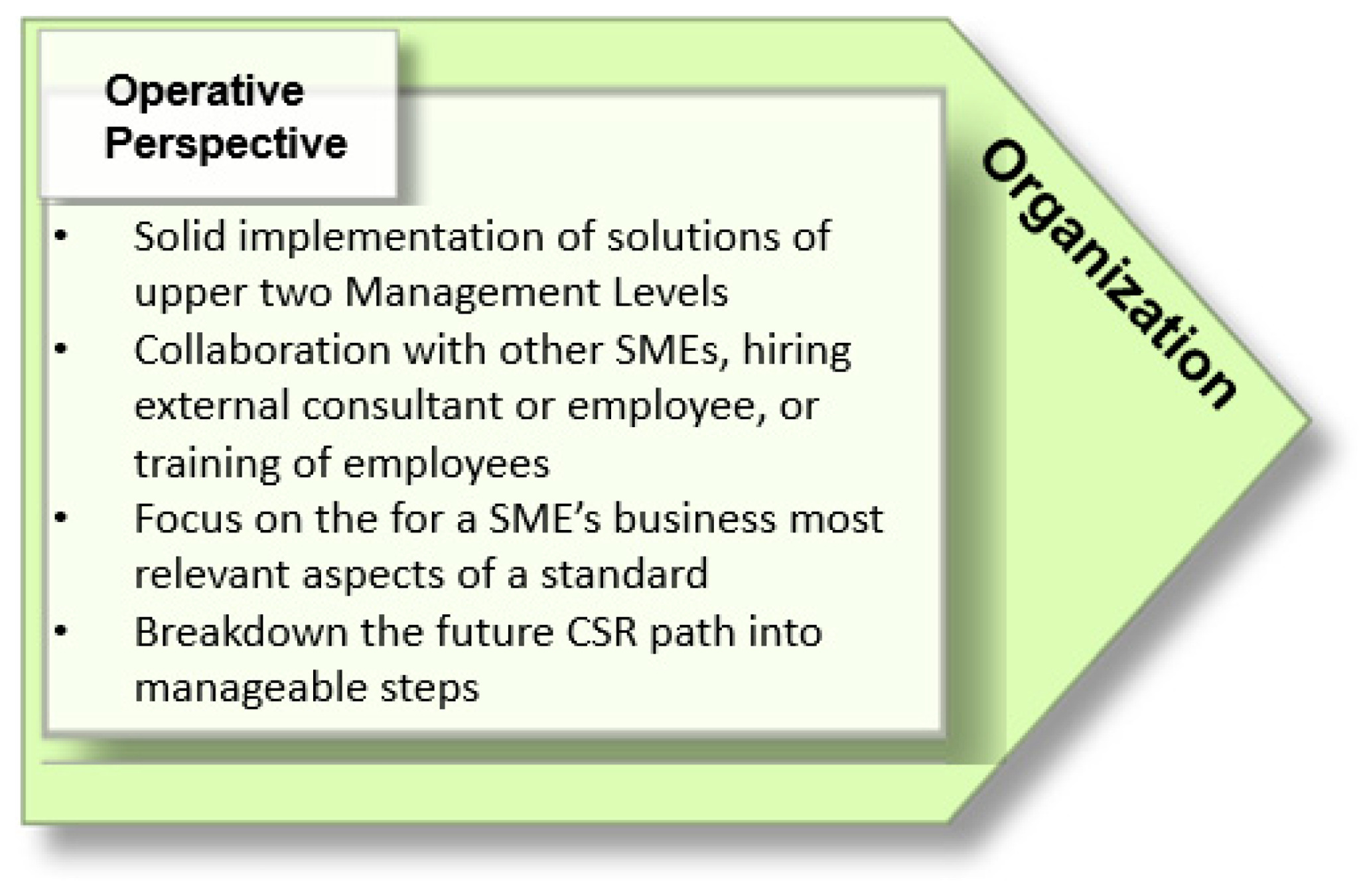
Figure 2: Solution for SMEs challenges
However, one of the issues that may discourage the adoption of SR in SMEs is the fact that it is not mandatory. However, the sustainability reports are not mandatory as financial reports and thus the companies’ compliance is not obligatory and calculated voluntarily, meaning that the level of sustainability reports adopted is also inconsistent. There is the need to calibrate the reporting frameworks so as to satisfy the demands of the former while being cognizant of the challenges faced by the latter.
2.5. Regulatory Compliance and Legal Considerations
The most apparent reason that we may identify regarding the adoption of SR in SMEs is regulatory compliance. The legal requirements for companies to provide sustainability reports have steadily grown across nations and globally in industries that are most influential (Owusu et al. 2024). The Organisation additionally captures the executives and directors liable through extending the European Union Corporate Sustainability Reporting Directive (CSRD) to SMEs to align with broader ESG goals.
Non-compliance to the provision of sustainability laws is going to attract legal and real consequences. Governing compliance failure there are State penalties or exclusion of contract not to supply any goods that /which do not conform with the standard. In the current world, where SMEs are looking forward to expanding internationally, the assurance of conforming to the international sustainable standards offer a competitive advantage.
Also, the topic of SR raises questions of legal nature that can be linked to the aspect of liability. To re-establish this, organizations that fall under the vice of greenwashing entails offering a damaged reputation to shareholders and potential investors as well as legal contempt (Pirveli et al. 2024). Stakeholder demands for sustainable operations are featured by accountability and honestly presented by sustainable reporting to minimize litigation towards the achievement of organizational long-term stability.
Conclusion
The second area of challenge in the business case for sustainability reporting in SMEs is the costs and strategic benefits’ dilemma. Whereas doctors argue that skilled related restrictions are the main filter, business people claim that SR intensifies competition, prestige, and confidence. A review of the literature shows that SMEs who engage in sustainability reporting can post improvements in their operational efficiency as well as improving its market position and hence earn better sustainable revenues in the process. However, the issues that effectively impede SMEs include regulatory uncertainties, lack of standardized SME reporting frameworks that continue to present themselves as challenges.
It is therefore advisable for policymakers and industry associations to become more decisive in terms of offering better direction and more motivation to SMEs on the adoption of SR. Some general recommendations that could be considered include the governments providing some subsidies or tax breaks to rectify the cost issue while the industry groups could provide standardized reporting frameworks which can easily be understood by the SMEs. The third key area for improving the level of sustainability reporting by SMEs is that they should enter into collaborations for shared reporting on sustainability objectives since this will allow the cost of reporting to be shared across several companies that wish to embark on sustainability projects.
For students seeking expert Assignment Help, Native Assignment Help offers professional academic support in sustainability, accounting, and business management topics. Our experienced writers deliver critically analysed, well-referenced assignments aligned with UK university marking criteria. With Native Assignment Help, complex sustainability reporting concepts are presented clearly and academically.
Reference List
Journals
Castilla‐Polo, F. and Guerrero‐Baena, M.D., 2023. The business case for sustainability reporting in SMEs: consultants' and academics' perceptions. Sustainable Development, 31(5), pp.3224-3238.
Celli, M., Arduini, S. and Beck, T., 2024. Corporate sustainability reporting directive (CSRD) and his future application scenario for italian SMEs. International Journal of Business and Management, 19(4), pp.1-44.
Galli, D., Torelli, R. and Caccialanza, A., 2024. Sustainability performance and sustainability reporting in SMEs: a love affair or a fight?. Journal of Management & Organization, 30(3), pp.574-599.
Guerrero‐Baena, M.D., Castilla‐Polo, F. and Rodríguez‐Gutiérrez, P., 2024. Motivations for social and environmental reporting in Spanish SMEs: An inductive content analysis. Business Strategy and the Environment, 33(5), pp.4130-4144.
Ortiz, E., Marín, S. and Thompson, P., 2024. The role of small-and medium-sized practices in the sustainable transition of SMEs: Sustainable Transition and Professionals. Environment, Development and Sustainability, 26(8), pp.19299-19323.
Owusu, A., Tauringana, V. and Asare, N., 2024. Sustainability performance reporting in Ghana: The views of SMEs. Small Enterprise Research, 31(1), pp.56-75.
Pirveli, E., Ortiz-Martínez, E., Marín-Hernández, S. and Thompson, P., 2025. Influencing sustainability: the role of lobbyist characteristics in shaping the EU’s Corporate Sustainability Reporting Directive. Sustainability Accounting, Management and Policy Journal, 16(2), pp.415-442.
Pizzi, S. and Coronella, L., 2024. Are listed SMEs ready for the corporate sustainability reporting directive? Evidence from Italy. Business Ethics, the Environment & Responsibility.
Setyaningsih, S., Widjojo, R. and Kelle, P., 2024. Challenges and opportunities in sustainability reporting: a focus on small and medium enterprises (SMEs). Cogent Business & Management, 11(1), p.2298215.
Go Through the Best and FREE Samples Written by Our Academic Experts!
Native Assignment Help. (2026). Retrieved from:
https://www.nativeassignmenthelp.co.uk/acco1114-ama-and-acco1115-afa-sustainability-reporting-in-smes-analysis-45187
Native Assignment Help, (2026),
https://www.nativeassignmenthelp.co.uk/acco1114-ama-and-acco1115-afa-sustainability-reporting-in-smes-analysis-45187
Native Assignment Help (2026) [Online]. Retrieved from:
https://www.nativeassignmenthelp.co.uk/acco1114-ama-and-acco1115-afa-sustainability-reporting-in-smes-analysis-45187
Native Assignment Help. (Native Assignment Help, 2026)
https://www.nativeassignmenthelp.co.uk/acco1114-ama-and-acco1115-afa-sustainability-reporting-in-smes-analysis-45187
- FreeDownload - 41 TimesTeam Leadership in Adult Care Assignment Sample
1. Understand team leadership in adult care A multidisciplinary team in an...View or download
- FreeDownload - 41 TimesMarketing Plan At Tesco PLC Case Study
Introduction to Tesco's Marketing Plan Background Marketing is a...View or download
- FreeDownload - 38 TimesUnit 2: Handle Information in Care Settings Assignment
Introduction In health and care settings, handling information appropriately...View or download
- FreeDownload - 40 TimesInternational Operation Management Assignment Sample
International Operation Management Assignment Sample Introduction Operation...View or download
- FreeDownload - 44 TimesUnit 11 Research Project Assignment Sample
Introduction: Unit 11 Research Project Assignment Sample Explore the...View or download
- FreeDownload - 45 TimesNursing Assignment Help UK Sample
Nursing Assignment Introduction - Nursing Assignment The study is based...View or download
-
100% Confidential
Your personal details and order information are kept completely private with our strict confidentiality policy.
-
On-Time Delivery
Receive your assignment exactly within the promised deadline—no delays, ever.
-
Native British Writers
Get your work crafted by highly-skilled native UK writers with strong academic expertise.
-
A+ Quality Assignments
We deliver top-notch, well-researched, and perfectly structured assignments to help you secure the highest grades.