
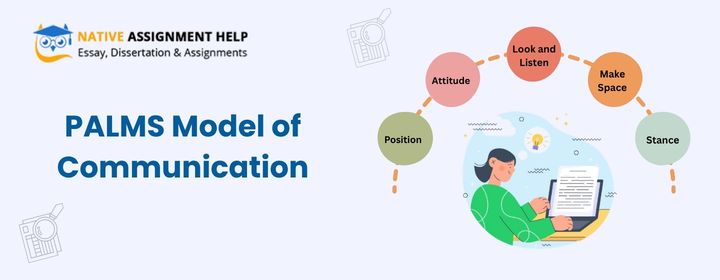
- PALMS Model of Communication: Definition, Origin, and Professional Variants
- Variants of the PALMS Model
- PALMS Model of Communication: Key Components and Real-World Examples
- Position
- Attitude
- Look & Listen
- Make Space
- Stance
- Real-World Applications of the PALMS Model in Education, Healthcare (NHS), and Conflict Resolution
- Education
- Healthcare (NHS Practice Context)
- Conflict Resolution
- PALMS Model of Communication vs SOLER, LEAPS, and Transactional Models
- Strengths and Limitations of the PALMS Model of Communication
PALMS Model of Communication: Definition, Origin, and Professional Variants
PALMS is often interpreted wrong because of confusing sources on the internet. Here’s the correct definition: The PALMS model of communication is a structured way to help professionals interact with each other in education, healthcare, and conflict resolution. The model emphasises "Position, Attitude, Look & Listen, Make Space, and Stance", providing clear, actionable steps to ensure accurate understanding of messages. Unlike generic guidance, PALMS combine both verbal and non-verbal ways to manage conversations with confidence, clarity and empathy. Making it particularly valuable in high-stakes, face-to-face interactions.
The origin of the PALMS communication model lies in NHS healthcare training. Nurses and healthcare professionals need a consistent method to communicate with patients while balancing authority with approachability. Over time, educators and conflict resolution experts started using PALMS because its basic ideas, like structured posture, attention and spatial awareness, can be used in any job that needs clear, guided communication.
In real life, PALMS is observable and measurable: a nurse stands at eye level, listens carefully without interruption, and maintains open body language. This example shows that the action is guided by position, attitude, look & listen, making space, and stance. That enhances clarity, builds trust and improves engagement while demonstrating the model’s real work effectiveness. However, all these behaviours vary across different PALMS model variants.
Variants of the PALMS Model
Here are the three variants of the PALMS that evolved by time to meet different workplace needs:
- Therapeutic/Counselling Variant – Look & Listen: Emphasises non-verbal empathy to improve patient or client engagement.
- Conflict-Resolution Variant – Make Space: Expands the space for dialogue to manage tense or high-stakes discussions.
- SOLER-Integrated Variant – Posture & Eye Contact: Highlights structured posture and visual attention for counselling, leadership, and coaching contexts.
Despite these adaptations, the NHS-endorsed version remains the authoritative standard. As it ensures that all five components are applied consistently, it provides the most reliable framework for professional communication training. Understanding these variants and all elements allows practitioners to tailor PALMS according to environments without compromising the core purpose.
PALMS Model of Communication: Key Components and Real-World Examples
The PALMS model of communication organises professional interaction into five elements: Position, Attitude, Look & Listen, Make Space, and Stance. Understanding each element helps a user apply clearly in real situations. In this section each subheading explains the component of PALMS and how it supports strategic communication across education, healthcare and conflict resolution-kind of situations.
Position
Definition: A practitioner’s “position” is how they stand and speak during a conversation to support clarity, authority, and professional balance.
In communication:
- You need to maintain posture aligned with the other person’s eye level.
- Make sure distance is comfortable for interaction.
- Think about the ideas behind Argyle's communication cycle and strategies for nonverbal communication.
In conflict:
- Maintain a calm, respectful stance to reduce tension.
- Project authority without appearing confrontational.
Example: During a patient consultation, a nurse stands at eye level, explains treatment steps clearly, pauses for confirmation, and mirrors body language, ensuring understanding, calm, and engagement.
Attitude
Definition: A practitioner's attitude is how they think and act on purpose, showing respect, openness, and professional intent.
In communication:
- Use a calm, measured tone and controlled delivery.
- Show that you are interested and unbiased.
- Reflect structured approaches applied in real-world contexts.
In conflict:
- Prevent escalation by demonstrating willingness to listen before responding.
- Maintain empathy while upholding professional boundaries.
Example: Tutors calmly address students' concerns, clearly explain reasoning, and suggest next steps when giving grading feedback. This helps students understand in a way that they can use.
Look & Listen
Definition: Look & Listen is focused attention on both verbal and non-verbal cues to fully understand the other person before responding.
In communication:
- Maintain eye contact and observe body language.
- Allow pauses to process information.
- Strengthens accuracy, engagement, and comprehension.
In conflict:
- Prevent misunderstandings by capturing subtle signals.
- Respond thoughtfully rather than reacting impulsively.
Example: During a student consultation, a tutor maintains eye contact, nods, and pauses to reflect on the student’s concerns, ensuring clarity and demonstrating how communication assignment help reinforces structured guidance.
Make Space
Definition: 'Make space' refers to intentionally giving others room to speak, reflect, and contribute without pressure or interruption.
In communication:
- Use deliberate pauses and open posture.
- Invite input to create a collaborative environment.
In conflict:
- Allow each participant to articulate concerns fully.
- Encourage calm dialogue and constructive responses.
Example: During a group discussion, a tutor pauses after each student’s point, maintains relaxed posture, and invites clarification, reducing misunderstandings and tension.
Stance
Definition: Stance is the practitioner’s consistent professional behaviour, combining ethical positioning, authority, and calm presence.
In communication:
- Ensure messages are delivered with clarity and credibility.
- Signal reliability and control without intimidation.
In conflict:
- Maintain a steady presence to prevent escalation.
- Model professionalism and reinforce boundaries while allowing dialogue.
Example: A nurse calmly explains treatment protocols to a concerned patient, keeping posture upright, tone measured, and instructions clear, ensuring structured and authoritative discussion.
Professionals can communicate clearly, with confidence, and with empathy if they master all of the PALMS components. And once you understand these parts, you can step up to real-world use cases in areas like education, healthcare, and conflict resolution.
Real-World Applications of the PALMS Model in Education, Healthcare (NHS), and Conflict Resolution
When it comes to education, NHS healthcare interaction and conflict resolution, the PALMS model of communication actually works well. Its structured positioning, careful listening, and controlled response improve clarity, trust and professional outcomes in practice.
Education
In education settings, the PALMS model helps tutors keep feedback clear and organised. It prevents discussions from becoming confusing or overwhelming. Using Position and Look & Listen, tutors control the pace of the conversation, check student understanding, and respond to concerns before explaining improvements. This creates focused, step-by-step feedback that students can follow and apply easily.
For example, during assignment feedback, a tutor sits at eye level, pauses after each concern raised, and explains revision priorities step by step. This palms communication model example improves engagement and strengthens guidance on assignments during marking discussions.
The result is greater feedback clarity, stronger student confidence, and more effective participation during improvement-focused academic conversations.
Healthcare (NHS Practice Context)
In clinical settings, the PALMS model of communication in NHS practice helps healthcare professionals manage sensitive conversations where patients may feel anxious, confused, or unsure about treatment decisions. By adjusting the position, being calm and using look & care, practitioners explain information clearly while giving patients assurance and involvement in decisions.
For example, during a treatment discussion, a nurse sits beside the patient at eye level, listens fully before responding, pauses after explaining options, and checks understanding before continuing. This palms model of communication in NHS interaction builds trust and reduces patient hesitation about next steps.
The result is clearer understanding, stronger reassurance, and safer shared decision-making during clinical communication.
Conflict Resolution
In workplace and academic disagreements, the PALMS model helps professionals keep conversations calm and controlled. Using Make Space, each person gets time to explain their concerns clearly. A steady stance keeps the discussion respectful and focused on solutions instead of turning into arguments.
For example, during a disagreement between two students working on a group project, a tutor pauses the discussion, invites each student to explain their concern without interruption, maintains a neutral posture, and then summarises both viewpoints before suggesting next steps. This palms model conflict resolution example reduces defensiveness and helps both students focus on solutions rather than blame.
The result is calmer dialogue, clearer understanding of issues, and faster movement toward practical agreement.
Across education, healthcare, and conflict settings, PALMS demonstrates how structured positioning, listening, and response control improve interaction quality, preparing a clear foundation for comparing PALMS with other established communication models.
PALMS Model of Communication vs SOLER, LEAPS, and Transactional Models
The comparison in this section shows how the PALMS models differ from SOLER, LEAPS, and transactional communication frameworks. Within that, it shows purpose, structure, and practical usage across all the PALMS-preferred contexts.
Below is the structured table for deeper understanding of differences within all 4 communication frameworks:
|
Feature |
PALMS |
SOLER |
LEAPS |
Transactional Model |
|
Primary purpose |
Guides posture, listening attention, response timing, and interaction structure |
Improves supportive body-language engagement |
Builds trust through structured listening and empathy |
Explains continuous two-way message exchange |
|
Communication type |
Applied behavioural communication framework |
Non-verbal engagement technique |
Listening-focused communication method |
Process-based communication theory |
|
Interaction control level |
Controls posture, listening focus, pacing, and conversational response clarity |
Focuses mainly on body orientation and eye contact |
Focuses mainly on structured listening steps |
Explains feedback exchange but does not guide behaviour directly |
|
Best professional use |
Education feedback, NHS patient interaction, conflict-resolution dialogue |
Counselling sessions and mentoring conversations |
Mediation, policing, leadership discussions |
General interpersonal and organisational communication |
|
Model structure |
Position, Attitude, Look & Listen, Make Space, Stance |
Squarely face, Open posture, Lean forward, Eye contact, Relax |
Listen, Empathise, Ask, Paraphrase, Summarise (the LEAPS model of communication stands for these steps) |
Continuous sender–receiver feedback loop |
|
Key strength |
Integrates positioning, listening awareness, and response timing together |
Strengthens trust through open posture signals |
Encourages empathy through structured listening stages |
Clarifies feedback relationships between participants |
|
Practical limitation |
Requires conscious posture awareness during interaction |
Focuses mainly on body-language signals |
Emphasises listening more than response structure |
Explains communication but offers limited behavioural guidance |
Comparing PALMS with SOLER, LEAPS, and transactional models highlights its broader behavioural control, preparing readers to evaluate the advantages and limitations that shape when PALMS works most effectively in practice.
Strengths and Limitations of the PALMS Model of Communication
After comparing PALMS with other communication models, it becomes easier to see where the palms model of communication works best and where another approach may be more suitable.
Strengths: PALMS helps professionals manage face-to-face conversations by guiding posture, listening attention, and response timing all at once. This helps keep discussions calm and structured when explaining feedback, discussing treatment decisions, or resolving disagreements where small behavioural signals affect understanding.
Limitations: The model depends on visible interaction. It offers less support in written communication such as email feedback, online discussion boards, or assignment comments where posture and listening signals cannot be observed. In these situations, students usually rely more on UK university referencing guides and formal referencing standards, which structure academic writing rather than live interaction behaviours.
Misuse Scenarios: PALMS is less effective when communication conditions limit direct interaction. That includes -
- fully written exchanges such as email-only assignment clarification
- emergency situations requiring immediate instruction rather than discussion
- large group briefings where individual listening cues cannot be monitored easily.
Recognising these limits helps professionals choose PALMS more carefully alongside other communication models when interaction needs change.
Conclusion
The PALMS model of communication turns everyday interaction into a clear professional skill instead of guesswork. When Position, Attitude, Look & Listen, Make Space, and Stance are used with care, conversations automatically become more focused and respectful. If you use it correctly, PALMS can help in explaining decisions clearly, build trust during sensitive discussions and also improve understanding where communication directly shapes outcomes.
If you’re a student and you need to demonstrate the framework in your projects, then you can directly approach our Native Assignment Help UK for guidance. As we assist students with all the academic requirements and university demands that learners find challenging.

 9+ Years | Masters
Noah Miller creates practical resources on communication frameworks and professional development. His articles explain communication models step by step, helping students improve collaboration, presentation, and interpersonal communication skills.