
GBM5OBR Organisational Behaviour in Global Context (Portfolio of Evidence)
1.0 INTRODUCTION
Organizational behaviour (OB) is defined as the field of study that helps in understanding the behaviour of human in the context of companies (Akçakanat, 2020). In this regard, HR manager plays a vital role in influencing the employee’s behaviour positively. This portfolio is based on organizational behaviour in the global context. This portfolio of evidence will be dividing into five tasks in which first will evaluate the effectiveness of teams with different membership. Additionally, second task will be based on case study that will depict effect of culture on the leadership through different theories and styles. Third task will be based on reflective writing that depicts understanding of motivation of remote workers for international companies. In addition to this, task four will reflect organizational cultures of Uber and IKEA. Last task five will highlight business practices of IKEA and UBER in the context of organizational behaviour.
2.0 WRITTEN TASKS
2.1 Evaluating effectiveness of teams with diverse membership
A group is a collection of the people who coordinates their efforts while team is a group of individuals who are sharing their common goals and purpose. Formal and informal are considered as significant groups that are putting their efforts in order to accomplish organizational goals and objectives. On the other hand, autonomous and virtual are significant types of groups which are sharing their common purpose. For achieving goals and objectives as well as drive informed decision making, the companies are emphasis on hiring diverse workforces. Recruiting diverse teams and groups are beneficial for the organizations because it facilitates better opportunities for problem-solving and creativity, smarter decision-making, increase productivity and profits as well as reduce rates of employee turnover and improve overall reputation (Stahl and Maznevski, 2021) In diverse team, all the people are belongs from diverse background and culture so they have different opinions and perspectives from which they suggest creative and unique ideas which leads to better decision-making. On the other hand, maintaining diverse groups or teams is not an easy task for the organizations because it creates the challenges related to communication, slower decision-making, cultural misunderstanding etc.
To manage diverse teams it is important for leaders to define their roles effectively which reduce the chances of arising conflicts, for these leaders can need to adopt Belbin’s team roles framework (Ashikali, Groeneveld and Kuipers2021). According to this framework, team members have nine roles such as resource investigator, plant, shaper, co-ordinator, monitor evaluator, shaper, team worker, completer, specialist and implementer. The groups or teams who are performing the roles of implementer, shaper and completer are considered as action oriented. They are taking corrective actions to enhance the overall operation and accomplish objectives. On the other hand, resource investigator, team worker and co-ordinator are people oriented because they emphasis on increasing the team member’s motivation and encouragement (Gorin, 2024). Apart from this, the team members who are performing the roles of plant, specialist, monitor are intellectual because they make effective planning and monitor the performance of employees.
Figure 1: Belbin's team roles
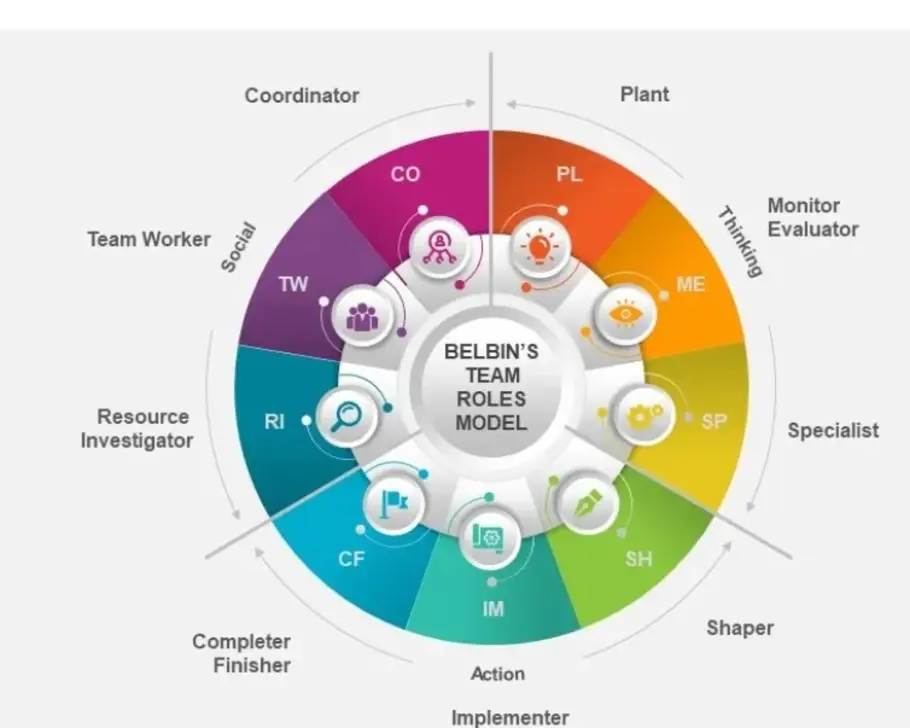
(Source: Gorin, 2024)
2.2. Effect of culture on effective leadership
- >
- i) Global leadership is all about directing and encouraging the people in order to accomplish the desired goals and objectives. Global leadership directly influences the culture of companies by ensuring alignment on purpose, vision and mission, inspiring confidence in face of challenges and leveraging mistakes as a source of learning (Khaliq, Usman and Ahmed, 2021). From the given case study it has been determined that, Andrew River is task oriented within recreation center and he adopts autocratic leadership style for managing all the work and guide team members in effective way. His leadership style is effective and he majorly emphasis on discipline, authority and clear structures. Leadership styles of Andrew River at Recreation Centre is effective because it helps in making effective decisions, accomplishing desired goals and objectives, facilitates clear chain of command and enhances productivity. Along with this, to analyze the leadership style Andrew River also emphasizes on managerial Grid which is developed by Black and Mouton (Jackson, 2024). According to this model, Andrew River is focusing on the effective and operational standards for building satisfaction and engagement among the team members. To inspire and motivate the workers, Rivers need to adopt transformational leadership style. Adoption of this style is beneficial because it helps in providing rewards and recognition to the employees from which they feel valued and encouraged.
- Gender difference and leadership is interconnected with each other. At the time of selecting as a leader gender is not considered by the higher professionals in the Recreation Centre. For the effective leadership it is important to consider their competencies, knowledge and experience instead of gender. Organizations can hire both men and women as a leader to maintain diversity and better decision-making (Nurlina, 2022). For the effective and strong leadership it is important for the companies to maintain the diversity which positively impacts on their overall efficiency and productivity. Instance, if companies are selecting leader on their gender basis then it directly impacts overall management and decision-making.
2.3 Reflective Writing
In the context of management, motivation represents desire, inspiration and willingness in order to satisfy the needs and requirements of the individuals and accomplish desired goals and objectives. Intrinsic and extrinsic are considered as significant types of motivation that are adopt by the companies (Kalogiannidis, 2021). In the context of global company i.e. IKEA, for retaining remote workers it is important for the leaders to increase their motivation from which they feel valued. Being a leader of IKEA, I implemented various theories of motivation such as Maslow needs Hierarchy theory, goal setting theory etc. For increasing motivation of remote workers, I was put all the efforts to satisfy their various needs such as self-actualization, esteem, sense of belonging, safety and physiological needs. Being a leader adoption of this motivation theory was beneficial for me because it helps in increasing the retention rates and employees are encouraged to give their best.
Apart from this, being a leader I also implemented goal setting theory to increase motivation of the remote workers who are situated in the diverse countries. With the help of this theory, I was able to develop the clear and specific goals from which the employees are clarify about their roles and responsibilities which eventually positively influence on their work performance and productivity. On the other hand, for growth and development of chosen organization, it is important to increase motivation of remote workers from which they are influenced to give their best performance (Indeed Editorial team, 2023). For increasing motivation of remote workers, leaders should need to adopt good practices such as set clear expectations, recognizing achievements, provide opportunities for professional growth etc.
If leaders are setting clear expectations of the employees then they feel motivate and encourage to give their best performance and likely to retain with the companies for long duration which eventually positively influence on productivity and efficiency. Recognizing achievements is another effective practice that helps in increase motivation of remote workers. Recognition helps in increase morale, motivation and encouragement of workforces to give their best performance. Additionally, to increase motivation of remote workers leaders will need to provide the opportunities of professional growth by providing training and development.
2.4 Analysis of organizational cultures of Uber and IKEA
Organizational culture refers to a set of beliefs, systems, attitudes, values and rules that impacts the behavior of the employees in the company. Having the positive culture of the companies are beneficial because it helps in increase productivity; enhance employee’s well-being and health, boosting customer satisfaction and higher level of innovation (Akpa, Asikhia and Nneji, 2021). Uber and IKEA are leading companies that are operating their business operation in different countries. In addition, all countries have diverse culture which directly impacts its overall operation and efficiency. According to Schien’s theory, every organization has three level of cultures such as artifacts, espoused values and underlying beliefs. Artifacts are considered as visible sign of the organizational culture and it includes various things such as dress-codes, posters, job titles etc. The companies which have culture of espoused values are working in effective and proper manner. Espoused values culture includes employee’s charters, organizational behavior, mission and vision statements etc.
According to this theory, companies are also having the culture of underlying beliefs which directly impacts their overall operation (Naveed et al, 2022). As per the Schein’s theory, IKEA is having the culture of underlying beliefs because it run its process in various countries and emphasis on team work to gain success\ as compare to Uber. Togetherness is considered as heart of IKEA’s culture because it believes in team working for providing better and high quality of services as well as gaining competitive advantage over competitors. On the other side, Uber is having the espoused value culture because it has effective mission and vision statements as well as positive values and employee’s behavior which ultimately positively impacts on overall operation. Additionally, organizational culture of both companies is playing significant roles in shaping the attitude and behavior of employees. The Underlying belief culture of IKEA emphasis on team work which helps in increase motivation and morale of workforces which develop their positive attitude and behavior. On the other hand, the espoused value culture of Uber helps in clarifying the expectations of the workforces from which feel encourage and valued as well as behaving in ethical manner. Positive attitude and behavior of workforces is advantageous for Uber and IKEA because it helps in creating positive environment, increase productivity level and enhance relationships with customers which ultimately positively impacts on their growth and success.
2.5 Essay
Uber is one of leading technology platform that leverage advanced technology and vast network to enable movement from one place to another. This organization is operating its operation in various countries such as US, Europe, Canada, Asia etc. On the other hand, IKEA is a holding company and it provides solutions, products and services related to home furnishing (IKEA, 2024). This organization is also run the business operation in numerous countries such as Europe, North America and Asia- Pacific like Uber. These organizations are having different practices related to sustainability, employee motivation, conflict management and team working according to their geographical locations. For growth and success, employee motivation is crucial because it aids in increase their morale and feel encourage to give their performance (Azeem et al, 2021) Emphasis on motivation is beneficial for Uber because it helps in increase engagement of employees, increase loyalty, boosted motivation and improves job satisfaction which leads to higher productivity and efficiency.
Uber US is also adopting various business practices in relation to employee motivation to operate the operation successfully and accomplish target goals and objectives. To increase motivation of employees, Uber is focusing on offering flexible scheduling and creating positive work environment as compare to IKEA. Offering flexible scheduling is considered as one of the effective business practice in relation to employee motivation because it helps workforces to manage their personal and professional lives (Al-kharabsheh et al, 2022). This business practices helps in strengthening the relationships of employees with the leaders from which they are likely to retain with the company for long duration. To boost motivation of employees, Uber is also emphasis on creating the positive work environment.
Adoption of this business practice is beneficial for an organization because it helps the workforces to feel valued and good to give their best performance and providing opportunities to develop skills and knowledge. Apart from this, the organizational culture of UK is totally diverse from US so IKEA has different business practices in relation to employee motivation as compare to Uber. For increasing employee motivation, leader of IKEA is providing recognition and rewards as well as adopting Herzberg’s two-factor theory. Recognition and reward is considered as one of the key and effective strategy that helps in increase motivation and morale of workforces (Nickerson, 2023). IKEA is providing rewards in the form of bonus, incentives, perks etc., to its employees from which they are encourage to perform their best and contributes positively. On the other hand, IKEA is also implementing Herzberg two factor theory to boost motivation of its workforces. According to this theory, companies are emphasis on motivational and hygiene factors such as advancement, possibility for growth, responsibility, interpersonal relations, salary etc (Jankelová, Joniaková and Mišún, 2021). Considering these factors are beneficial for IKEA because it helps in increase satisfaction of employees from which they are excited and encourage to give their best in all tasks.
Apart from this, Uber and IKEA both have significant contribution in the sustainability in order to protect the environment and safeguarding the health and well-being of the customers. The sustainability practices of Uber includes reduce carbon emission, achieve net zero emission etc. To protect the environment, in 2020 Uber committed to become zero emission mobility platforms. To reduce pollution, this organization is completing all journeys through public transit and zero emission vehicles. As per the view of Mio, Costantini and Panfilo (2022), in current times making investment in sustainability is beneficial for organizations because it helps in attract wide range of customers and build reputed position in the market. To safeguard the environment from pollution or carbon emission, Uber is also fostering transition to more sustainable packaging solutions. In US, Uber is operating the business proves as zero-emission mobility platform and 100% its restaurants is packaging its foods from recyclable and reusable materials (Uber, 2024) . On the other hand, IKEA is also adopting sustainable practices to protect the environment from pollution and other gases like Uber. The key goal of IKEA is to secure the long-term admittance to eco-friendly raw materials by selecting recycle and renewable resources. To protect the health of people, this organization is committing to take unsustainable consumption, climate change and inequality (NAWANGSARI, SISWANTI and SOELTON, 2023). For saving the climate and nature from pollution IKEA is emphasis on net zero and regenerating resources,. Enhancing bio-diversity and protecting the eco-system. For manufacturing the furniture, this organization is using 100% renewable electricity in its factories (IKEA, 2024).
For improving behavior of employees it is important for the companies to make the teams or groups. Emphasis on team working is beneficial for companies because it facilitates better problem-solving, unlocks potential for innovation, improves personal growth and lower risk of burnout. Uber and IKEA are also emphasis on teamwork in order to accomplish desired goals and objectives. Uber’s business practices in relation to team work include providing training and development and use digital communication system. Providing training and development is considered as one of the effective method of fostering team work in the organization. Adoption of this practice is beneficial for Uber because it helps in improving skills and increasing knowledge of the workforces from which they are likely to work together. For communicating with the team members, the leaders are also using digital communication channels such as social media, email etc. As critically contended by de Oliveira Dias et al, (2023), effective communication in team is crucial because it helps in developing healthy relationships, improves employee engagement, brings innovation and reduce conflicts. On the other hand, for encouraging team work IKEA is adopting Tuckman model of team development. According to this model, forming, norming, storming, adjourning and performing are significant stages that help in developing competencies and maturity of the team members to perform tasks.
Forming is considered as one of the significant stage of this model that helps in developing trust and foundation for effective collaboration and communication (Winardi, Prentice and Weaven, 2022). The storming stage aids in managing conflicts and developing clear roles and accountabilities of team members. Norming stage of this model helps IKEA to develop standards and norms of behavior and developing relationships with the team members on mutual trust and respect. According to WCU, (2024), performing stage of Tuckman model aids in maintaining momentum, celebrating success and continuously enhancing results and processes. Adoption of this model is useful for IKEA because it aids in tracking the progress of group’s performance, increase predictability of team member’s behavior and changes in relationships.
As per the opinion of Bratton (2020), conflict management is defined as set of techniques that are adopt by companies in order to identify and redress the conflicts in the workplace. Generally, arising conflicts in a team is common thing which directly impacts their performance and productivity. For enhancing productivity and improve behavior of employees it is important for the companies to manage their conflicts. Uber and IKEA are also implementing the significant practices to manage conflicts among team members. To manage the conflicts of team members, Uber is emphasis on clarifying goals and objectives Clarification of goals and objective is beneficial for the companies because the team members are clear about their roles and responsibilities which minimizes chances of increasing conflicts among them (Griffin, Phillips and Gully, 2020). This business practice helps in building strong relationships among team members and enhances their behavior which eventually positively influence on their personal and professional growth and development.
Like Uber, IKEA is also implementing Kilman conflict management model which is consist of various dimensions such as accommodating, avoiding, competition, collaboration, compromising and compromising (MTD, 2022). Additionally, competing component of this model includes emphasizing the own agenda at the expense of others and it is considered as useful circumstance requiring safety concerns, quick decisions and enforcing rules (Kalwani and Mahesh, 2020). To solve or manage the conflicts, leader of IKEA is also emphasis on collaborating in which they are finding the solution of the conflict which is beneficial for both parties. To manage the conflict among team members, the leader of IKEA is giving opportunity to everyone who are involve in order to find a middle-ground solutions by compromising. As per the view of Kim et al, (2019) conflict management is important for the organizations because it aids in improving communication and collaboration, problem-solving capabilities, increase productivity and efficiency as well as strengthen relationships and team dynamics. Generally, constructive and healthy practices related to conflict resolution helps in enhancing the perspectives and skills of the team members which ultimately positively influence on their productivity and efficiency. On the critical note it has been argued by Kuknor and Bhattacharya (2021), managing conflict among team members is time-consuming process and increase strain and stress which eventually negatively influence on their productivity as well as working environment.
3.0 CONCLUSION
In the end of portfolio evidence it has been summarize that, emphasis on diverse team is beneficial for the organizations because it helps in generate innovative and unique ideas which drives effective decisions. In addition, generally leaders are select on the basis of their knowledge and competencies instead of gender. To motivate the remote workers, leaders can need to emphasis on recognizing achievements, setting clear expectations etc.
"Understanding organisational behaviour across global companies requires strong analytical skills, knowledge of leadership theories, and the ability to apply complex frameworks to real business scenarios. Many students find it challenging to integrate concepts such as motivation, culture, teamwork, and conflict management into a cohesive academic portfolio. Expert assignment help can make this process easier by providing clear guidance, refining your analysis, and ensuring your work meets academic expectations. With professional support, students can strengthen their arguments, improve structure and clarity, and produce high-quality work that reflects a deep understanding of organisational behaviour in the global business environment."
References
Books and Journals
Akçakanat, T., 2020. The effect of happiness at work on Organizational Citizenship Behavior: The role of intrinsic motivation and resilience. In Handbook of research on positive organizational behavior for improved workplace performance (pp. 179-200). IGI Global.
Akpa, V.O., Asikhia, O.U. and Nneji, N.E., 2021. Organizational culture and organizational performance: A review of literature. International Journal of Advances in Engineering and Management, 3(1), pp.361-372.
Al-kharabsheh, S.A., Attiany, M.S., Alshawabkeh, R.O.K., Hamadneh, S. and Alshurideh, M.T., 2022. The impact of digital HRM on employee performance through employee motivation. International Journal of Data and Network Science, 7(1), pp.275-282.
Ashikali, T., Groeneveld, S. and Kuipers, B., 2021. The role of inclusive leadership in supporting an inclusive climate in diverse public sector teams. Review of Public Personnel Administration, 41(3), pp.497-519.
Azeem, M., Ahmed, M., Haider, S. and Sajjad, M., 2021. Expanding competitive advantage through organizational culture, knowledge sharing and organizational innovation. Technology in Society, 66, p.101635.
Bratton, J., 2020. Work and organizational behaviour. Bloomsbury Publishing.
de Oliveira Dias, M., Lafraia, J., Schmitz, T. and Vieira, P., 2023. Systematic Literature Review on Negotiation & Conflict Management. European Journal of Theoretical and Applied Sciences, 1(3), pp.20-31.
Francis, R.S. and Alagas, E.N., 2020. Hotel employees' psychological empowerment influence on their organizational citizenship behavior towards their job performance. In Organizational behavior challenges in the tourism industry (pp. 284-304). IGI Global.
Griffin, R.W., Phillips, J.M. and Gully, S.M., 2020. Organizational behavior: Managing people and organizations. CENGAGE learning.
Jankelová, N., Joniaková, Z. and Mišún, J., 2021. Innovative work behavior—a key factor in business performance? The role of team cognitive diversity and teamwork climate in this relationship. Journal of Risk and Financial Management, 14(4), p.185.
Kalogiannidis, S., 2021. Impact of employee motivation on organizational performance. A scoping review paper for public sector. The Strategic Journal of Business & Change Management, 8 (3), 984, 996(3).
Kalwani, S. and Mahesh, J., 2020. Trends in organizational behavior: A systematic review and research directions. Journal of business and management, 26(1), pp.40-78.
Khaliq, M., Usman, A. and Ahmed, A., 2021. Effect of leadership style on working culture and employees motivation. The Journal of Educational Paradigms, 3(1), pp.166-170.
Kim, M., Kim, A.C.H., Newman, J.I., Ferris, G.R. and Perrewé, P.L., 2019. The antecedents and consequences of positive organizational behavior: The role of psychological capital for promoting employee well-being in sport organizations. Sport Management Review, 22(1), pp.108-125.
Kuknor, S. and Bhattacharya, S., 2021. Organizational inclusion and leadership in times of global crisis. Australasian Accounting, Business and Finance Journal, 15(1), pp.93-112.
Mio, C., Costantini, A. and Panfilo, S., 2022. Performance measurement tools for sustainable business: A systematic literature review on the sustainability balanced scorecard use. Corporate social responsibility and environmental management, 29(2), pp.367-384.
Naveed, R.T., Alhaidan, H., Al Halbusi, H. and Al-Swidi, A.K., 2022. Do organizations really evolve? The critical link between organizational culture and organizational innovation toward organizational effectiveness: Pivotal role of organizational resistance. Journal of Innovation & Knowledge, 7(2), p.100178.
NAWANGSARI, L.C., SISWANTI, I. and SOELTON, M., 2023, November. Human Resources Management Strategy For Business Sustainability In Msmes. In ICCD (Vol. 5, No. 1, pp. 514-518).
Nurlina, N., 2022. Examining linkage between transactional leadership, organizational culture, commitment and compensation on work satisfaction and performance. Golden Ratio of Human Resource Management, 2(2), pp.108-122.
Stahl, G.K. and Maznevski, M.L., 2021. Unraveling the effects of cultural diversity in teams: A retrospective of research on multicultural work groups and an agenda for future research. Journal of International Business Studies, 52(1), p.4.
Winardi, M.A., Prentice, C. and Weaven, S., 2022. Systematic literature review on emotional intelligence and conflict management. Journal of global scholars of marketing science, 32(3), pp.372-397.
Online
Gorin, M, 2024. The Nine Belbin Team Roles, 2024. Online. Available through ) https://maxim-gorin.medium.com/team-role-distribution-building-high-performance-teams-79d4d742a10f
IKEA, 2024. About us. Online. Available through https://www.ikea.com/in/en/
Indeed Editorial team,2023. Goal setting theory. Accessed through:< https://www.indeed.com/career-advice/career-development/goal-setting-theory>
Jackson, K, 2024. The Black Mouton Grid, 2024. Online. Available through https://www.mindtools.com/ai9k5cb/the-blake-mouton-grid
MTD,2022. Thomas Kilmann Conflict Management Model, 2024. Online. Available through https://www.mtdtraining.com/blog/thomas-kilmann-conflict-management-model.htm
Nickerson, C, 2023. Herzberg’s Two-Factor Theory, 2024. Online. Available through https://www.simplypsychology.org/herzbergs-two-factor-theory.html
Uber,2024. About us. Online. Accessed through:<https://www.uber.com/us/en/about/>
WCU, 2024. Tuckman's Stages of Group Development. Online. Accessed through:< https://www.wcupa.edu/coral/tuckmanStagesGroupDelvelopment.aspx>.
Uber, 2024. Sustainability. Online. Accessed through :< https://www.uber.com/in/en/about/sustainability/>.
IKEA,2024. Sustainability. Online. Accessed through :< https://www.ikea.com/us/en/this-is-ikea/climate-environment/the-ikea-sustainability-strategy-pubfea4c210/ >.
Go Through the Best and FREE Samples Written by Our Academic Experts!
Native Assignment Help. (2026). Retrieved from:
https://www.nativeassignmenthelp.co.uk/gbm5obr-organisational-behaviour-in-global-context-assignment-45916
Native Assignment Help, (2026),
https://www.nativeassignmenthelp.co.uk/gbm5obr-organisational-behaviour-in-global-context-assignment-45916
Native Assignment Help (2026) [Online]. Retrieved from:
https://www.nativeassignmenthelp.co.uk/gbm5obr-organisational-behaviour-in-global-context-assignment-45916
Native Assignment Help. (Native Assignment Help, 2026)
https://www.nativeassignmenthelp.co.uk/gbm5obr-organisational-behaviour-in-global-context-assignment-45916
- FreeDownload - 43 TimesPublic Relations Assignment Sample
INTRODUCTION - Public Relations Task 3: a. Delivery process of the press...View or download
- FreeDownload - 37 TimesLeading Through Digital Disruption Assignment Example
Leading Through Digital Disruption Assignment Introduction Of Leading...View or download
- FreeDownload - 42 TimesGBM5OBR Organisational Behaviour in Global Context Assignment Sample
GBM5OBR Organisational Behaviour in Global Context (Portfolio of Evidence) 1.0...View or download
- FreeDownload - 38 TimesBUS7049: Cross-Cultural Management Assignment Sample
BUS7049: Cross-Cultural Management Assignment Sample Review of Journal...View or download
- FreeDownload - 40 TimesContemporary Management Issues Assignment Sample
Introduction - Contemporary Management Issues...View or download
- FreeDownload - 39 TimesDeveloping Teaching, Learning And Assessment In Education And Training Assignment Sample
INTRODUCTION - Developing Teaching, Learning And Assessment In Education...View or download
-
100% Confidential
Your personal details and order information are kept completely private with our strict confidentiality policy.
-
On-Time Delivery
Receive your assignment exactly within the promised deadline—no delays, ever.
-
Native British Writers
Get your work crafted by highly-skilled native UK writers with strong academic expertise.
-
A+ Quality Assignments
We deliver top-notch, well-researched, and perfectly structured assignments to help you secure the highest grades.