
- Chapter 1. Introduction
- 1.1 Background on Yokose virus, flaviviruses, E protein, immune response
- 1.2 Brief on emerging/re-emerging flaviviruses (Zika, Dengue)
- 1.3 Importance of epitope prediction in immunology
- 1.4 Significance of the E protein in viral entry and immune recognition
- 1.5 Research question + SMART aims, objectives, hypothesis
- Chapter 2. Literature Review
- 2.1 Current understanding of flavivirus E protein structure and function & immunology significance
- 2.2 Known epitopes in related viruses
- 2.3 Overview of computational tool and epitope prediction
- 2.4 Review of recent vaccine design studies using computational approaches
- 2.5 Gaps in literature
Chapter 1. Introduction
This assignment sample explores how immunoinformatics tools can help identify potential B-cell and T-cell epitopes in the Yokose virus E protein for future vaccine research. Native Assignment Help supports students in understanding virology, immune responses and computational vaccine design through clear academic guidance. As a trusted Assignment Helper UK, we help students develop their research, critical analysis and scientific writing skills.
1.1 Background on Yokose virus, flaviviruses, E protein, immune response
The lesser known Yokose virus (YOKV) is a Flaviviridae and it is a family of viruses with a positive single strand Ribo nucleic acid (RNA). In spite of the fact that it was at first identified in isolation with bats in Japan, its pathogenic capacity in human beings is yet to be examined. This genetic relationship is closely related to other better promoted flaviviruses, namely Dengue virus (DENV), Zika virus (ZIKV), West Nile virus (WNV). Besides, Japanese encephalitis virus (JEV) gives great concern to its zoonotic potentials and the ability to transmit in humans despite its currently limited epidemiology presence (Silva et al. 2020). They are viruses with a long history of inter-species transmissions usually with devastating consequences. Yokose virus therefore presents importance in the preparation of vaccines and the global health defense.
Flavivirus envelope (E) protein is the main element of the flavor. It mediates viral attachment and fusion of the host cell membranes. Being the main antigenic determinant on the surface of the virion, the E protein stands in the core of host immune response elicitation. It directly communicates with the two arms of adaptive immunity- humoral and cellular. The B cells detect the epitopes on E protein to generate neutralizing antibodies whereas T cells recognize the processed fragments of the E protein that are presented by the major histocompatibility complex (MHC). According to it, the investigation of the immunogenic characteristics of the E protein is crucial to create the specific vaccinations and immunotherapy.
The antiviral immune response to flaviviruses occurs with a complicated inter-relationship of innate and adaptive immunity. On infection, the dendritic cells and macrophages are the most immediate of responders and cause the antiviral response and provide viral antigens to T and B lymphocytes. It may be the case that a vaccine that activates both wings of the immune system using well-chosen epitopes will provide protective immunity of long-lasting breadth.
1.2 Brief on emerging/re-emerging flaviviruses (Zika, Dengue)
Flaviviruses are simultaneously emerging and re-emerging viral pathogens with some of the fastest rates in the world. Globalization, climate changes, urbanization, and more human activity surrounding the wildlife reservoirs have enhanced their spread. The epidemic of Zika virus in the Americas in 2015 - 2016 manifested how far and fast as well as how serious the results of a flavivirus spreading and changing its composition can be, resulting in congenital malformations (Song et al. 2017). The dengue virus is a long-standing global health concern that endangers over 100 nations, puts millions of infections under the risk annually, and has an overwhelming load on the healthcare systems. Such examples show that flaviviruses may occur unexpectedly, in most cases emerging in novel geographic areas and with novel transmission patterns. The problems demonstrated the necessity of new vaccine approaches, in particular, the approaches that could be developed quickly with the help of computer tools.

Figure 1: Challenges in Vaccinology
1.3 Importance of epitope prediction in immunology
The crucial part of rational vaccine design is epitope prediction. The epitopes are an area of antigens identified by immune system components. B cell epitopes initiate the synthesis of antibodies and T cell epitopes stimulate the killing (cytotoxic) and aiding (helper) T cells by presenting the antigen. Characterization of these epitopes enables the researchers to produce subunit vaccines capable of inducing selective immune responses in the recipient thus no broader exposure to the entire pathogen. Novelty in bio informatics has made it possible to predict in silico epitopes with high accuracy. One can quickly obsolete viral proteins on conserved regions and immunogenic stretches by use of computation tools. These forecasts are time and cost effective when compared to the conventional experimental approach. This is critical especially in designing the vaccines that will be effective world-wide.
1.4 Significance of the E protein in viral entry and immune recognition
Flaviviruses require envelope protein in order to enter into host cells. When the pH changes during endocytosis, it causes conformational changes which allow the fusion of the membrane and release of RNA. The E protein is also the principal target of neutralizing antibodies because it is displayed on the surface of the virion. This dual responsibility makes it susceptible as well as a sleeper target of vaccine production (Janeway et al. 2025). Besides its surface exposed regions, the E has highly conserved regions in flaviviruses. Further the availability of linear and conformational B cell epitopes, the MHC class I and II restricted T cell epitopes augurs well in that a multi-epitope vaccine provides holistic protection based on the E protein. The fact that it can compute and validate these epitopes raises the likelihood of such approaches.
1.5 Research question + SMART aims, objectives, hypothesis
Research question
The main research question here is:
- Will the silico approaches efficiently be able to predict immunogenic B cell and T cell epitopes of the Yokose virus E protein that will be used in the future in the development of vaccines?
Smart Aims
|
SMART Criteria |
Objective |
|
Specific |
Determine the possible epitopes on both B and T cells form the E protein of YOKV. |
|
Measurable |
Determine at least 5 high-affinity epitopes with the help of immunoinformatics and assess them. |
|
Achievable |
Employ freely accessible databases and predicting algorithms within a 2 months span. |
|
Relevant |
Influence the design of flavivirus vaccines and prepare against epidemics. |
|
Time-bound |
Do epitope prediction and analysis in a timeframe of 3 months research. |
Objectives
The primary objectives are:
- To perform a full-scale computational study of the Yokose virus E protein and to find immunodominant epitopes which might become useful candidates in the development of a vaccine.
- To evaluate the conservancy, allergenicity, antigenicity and population coverage of the predicted epitopes.
Hypothesis
The hypothesis used is that computational immunoinformatics will be able to predict and identify conserved and immunogenic epitopes in the E protein of Yokose virus that are appropriate to be used in a future multi-epitope vaccine design.
This study complies with the international health objectives to improve the readiness to zoonotic and viral diseases that can be carried by vectors.
Chapter 2. Literature Review
2.1 Current understanding of flavivirus E protein structure and function & immunology significance
Flaviviruses are the RNA viruses having an enveloped-structured genome. The most functionally and immunologically important structural proteins present in them are the envelope (E) protein. This protein is attached to the viral membrane and plays two important roles- it mediates attaching to the host cell receptors and membrane fusion during the viral entry. It is localized on the virion membrane as homodimers and is structurally rearranged into the form of trimers as part of the fusion process. Such changes in conformation are pH-sensitive, and they are provoked in the acidic conditions of the endosome.
E protein is divided into three different sections DI (central), DII (dimerization and fusion loop), and DIII (immunoglobulin-like domain linked to receptor binding). Particularly, domain III has been proven to induce neutralizing antibodies, therefore, being one of the principal areas of vaccine development (Yang et al. 2019). E protein also has transmembrane components and glycosylation sites that make it immune-odious as well as cause virulence.
Immunologically, E protein is considered to play a critical role in initiating humoral immunity as well as cellular immunity. Viral entry may be prevented by non-neutralizing antibodies (of either isotype IgG or IgM) against the conformational epitopes of the E protein, whereas cytotoxic T lymphocytes will recognize E-derived peptides presented by MHC molecules (José Javier Morales-Núñez et al. 2021). The generation of these immune responses is necessary in the clearance of viruses and long-term protection and this explains the importance of this protein in the development of vaccines.
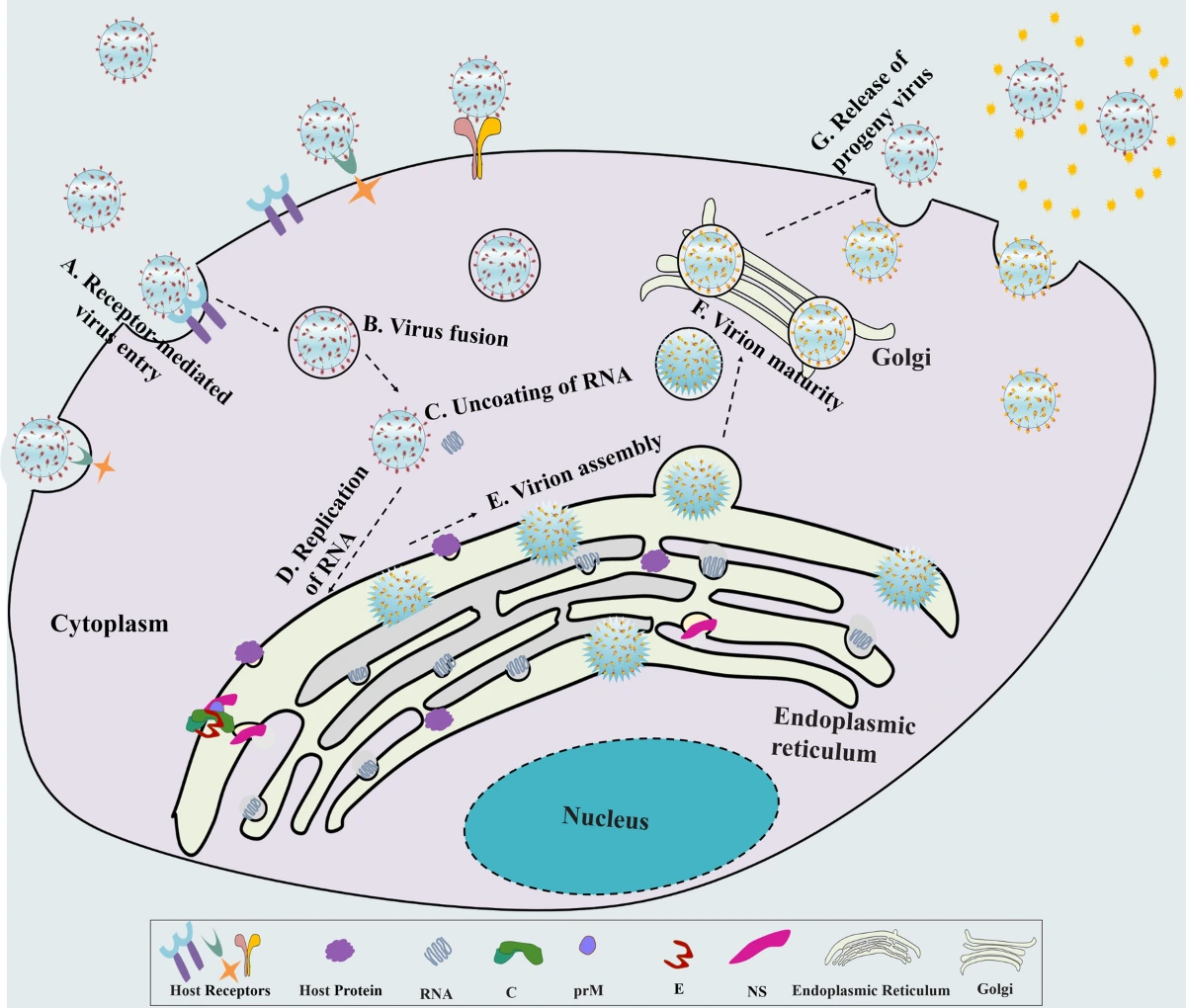
Figure 2: Function of capsid protein in flavivirus infection
2.2 Known epitopes in related viruses
Most of the knowledge we have actually about the flavivirus epitopes has been gotten out of the studies of these well-characterized viruses, among which are Dengue virus (DENV), Zika virus (ZIKV), and West Nile virus (WNV). B cell and T cell epitopes that lie on the E protein in such viruses have been challenged and determined. As an example, in DENV, neutralizing antibodies were found to bind to the lateral ridge of domain III and the fusion loop in domain II (Diani et al. 2023). It is in these regions which monoclonal antibody treatment and epitope vaccine development tends to attack.
Equally, linear and conformational epitopes have been mapped overlaying each other in ZIKV by means of high-throughput peptide assortment and structural misrepresentation. A number of CD8+ T cell epitopes presented by HLA-A02:01 have been seen in the E protein, evidence of some conserved T cell immunity. The problem is, however, that cross-reactivity between the epitopes can be a problem. As an example, antibodies produced in response to DENV E protein have the ability to bind ZIKV antigens, not always in a neutralizing manner, and this process may contribute to the pathology of infection, being antibody-dependent enhancement (ADE) (Dias et al. 2025). Consequently, although the conservative epitopes can present the possibility of pan-vaccines, they should be well chosen, to eliminate pernicious cross-reactive effects.
2.3 Overview of computational tool and epitope prediction
Epitope prediction using immunoinformatics tools has been a game changer in the vaccine design framework, and it has saved time and cost and the dependency on the use of animals as a model. The most popular tools used in the prediction of B cell and T cell epitopes with regards to viral protein sequences include NetCTL, BepiPred, and NetMHCpan. BepiPred specialises in modelling Linear B cell epitopes combining hidden Markov models and propensity scale. It reviews the genomes of amino acids and detects those areas that have high chances of accessibility by the antibodies (Kar et al. 2018). Though it mainly recognizes linear epitopes, newer designs have tried to include more structural information, to improve accuracy in prediction.
In predicting T cell epitopes, NetCTL and NetMHCpan are commonly used. NetCTL forecasts the epitopes of cytotoxic T lymphocytes that is based upon the simulation of three elements. The capacity of MHC class I to bind, the edge of proteasomal clearance, and the efficiency of TAP transport. NetMHCpan, in its turn, utilises artificial neural networks trained on a massive database of previously described MHC-peptide interactions to model the binding affinities of a wide variety of HLA alleles.
These tools are more helpful where experimental data is not available because researchers are able to scan the whole proteome to get the immunologically relevant peptides. However, the predictions have to be verified by lab assays, or additional in silico-cross check to establish biological significance.
2.4 Review of recent vaccine design studies using computational approaches
A number of recent reports indicate that computational epitope prediction has practical application in the study of vaccines. In example, by taking help of analysis tools such as BepiPred, NetMHCpan, and IEDB, researchers developing a multi-epitope vaccine against Zika virus. This is identified conserved, antigenic, and non-allergenic epitopes on structural, and non-structural proteins (Antonelli et al. 2022). The end products had robust antigenic potential and were suggested to undergo further experimental analysis.
In a subsequent DENV study, a pan-serotype vaccine having conserved B cell and T cell epitopes across all four serotypes linked into a single model peptide was built. The vaccine resulted in high immunogenicity and the coverage of the population in silico to show how epitope-based approaches can solve the variation in serotypes.
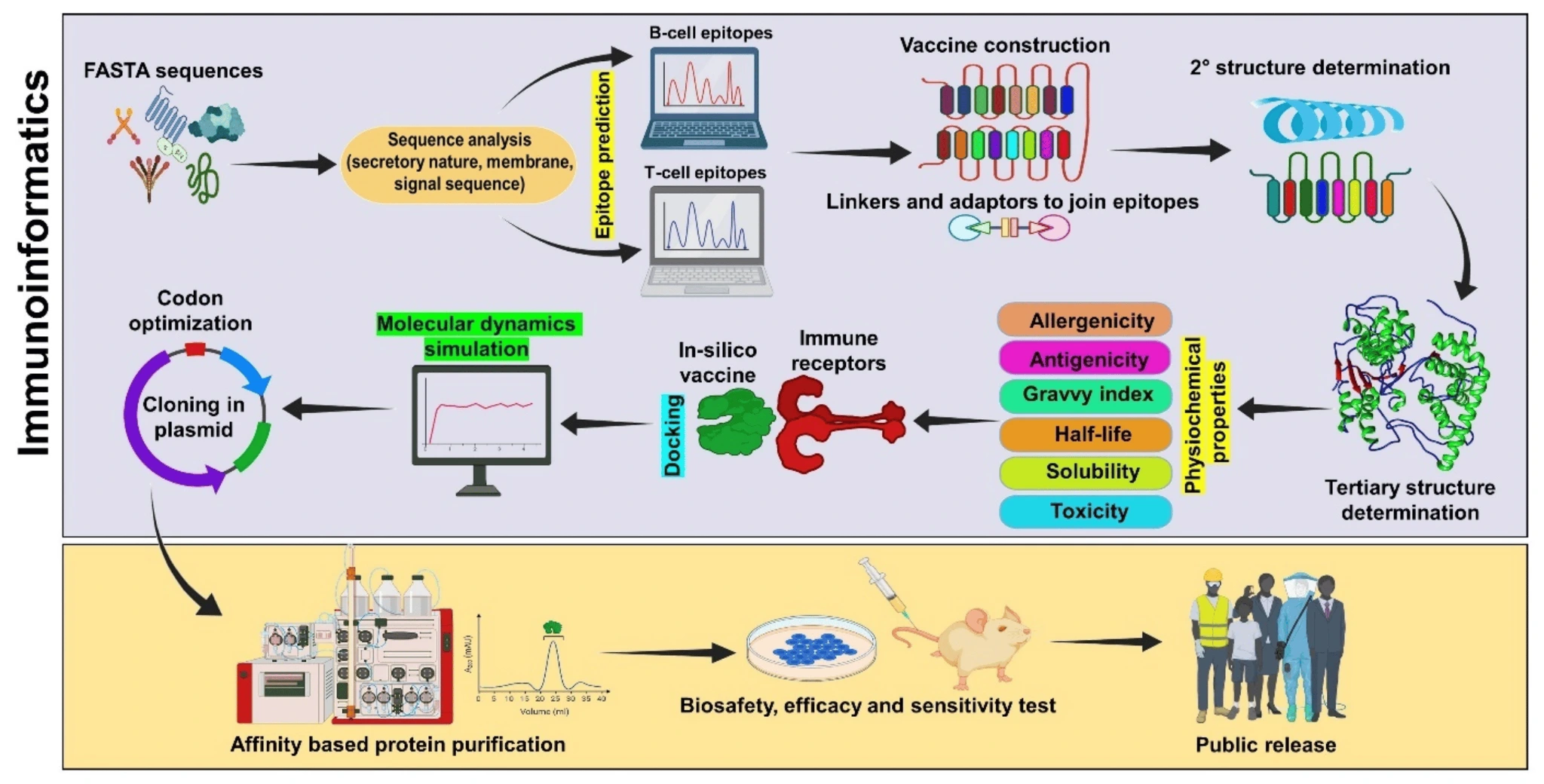
Figure 3: Immunoinformatics Approaches
Apart from that, flaviviruses, the same tactic has been taken in the development of COVID-19 vaccines. Research used NetCTL and VaxiJen to scan SARS-CoV-2 proteins and within a short period, they discovered those parts that are epitope-rich, which can be incorporated in subunit vaccines (Ernawati Arifin Giri-Rachman et al. 2025). These are some of the ways through which computational biology has come to occupy an increasing share in vaccine science. Prediction of epitopes makes it possible to design rationally with a specific product and also very helpful when there is no laboratory counterpart of a pathogen or the emerging ones such as Yokose virus.
2.5 Gaps in literature
Even though the research on epitope-based vaccine of flaviviruses has already been in progress, there exists a considerable lapse in literature on the Yokose virus. Few studies looked at its genome or protein structures. Very limited, unrestricted, experimental statistics on its antigenicity or immunity in people or animal modules are available. E-protein of the Yokose virus has moderate to high sequence homology with other flaviviruses, however, the immunogenic nature of the same is still unexplored.
Furthermore, the epitopes of the Yokose virus E protein on B cell and T cell have not been predicted or supported by any published study. This is an essential lack of knowledge, particularly considering the possibility of zoonotic transmission by bat reservoirs and the example of other flaviviruses (Barbosa et al. 2023). The fact that there is no epitope data also prohibits the possibility of determining cross-reactivity, or the suitability of the vaccine, or the risk of ADE.
It is a lost opportunity on global health preparedness. The early-stage analysis of under-studied pathogens can be perfectly done using computational tools. Using immunoinformatics to define the immunogenic topography of Yokose virus may provide a basis to lead to future surveillance, diagnostics and vaccines early on before the outbreaks happen.
Reference List
Journals
Antonelli, A.C.B., Almeida, V.P., de Castro, F.O.F., Silva, J.M., Pfrimer, I.A.H., Cunha-Neto, E., Maranhão, A.Q., Brígido, M.M., Resende, R.O., Bocca, A.L. and Fonseca, S.G. (2022). In silico construction of a multiepitope Zika virus vaccine using immunoinformatics tools. Scientific Reports, [online] 12(1). Retrieved From: doi: https://doi.org/10.1038/s41598-021-03990-6. [Retrieved On: 15 Jun. 2025].
Barbosa, A.D., Egan, S., Feng, Y., Xiao, L. and Ryan, U. (2023). How significant are bats as potential carriers of zoonotic Cryptosporidium and Giardia? Current Research in Parasitology & Vector-Borne Diseases, [online] 4, p.100155. Retrieved From: doi: https://doi.org/10.1016/j.crpvbd.2023.100155. [Retrieved On: 15 Jun. 2025].
Diani, E., Lagni, A., Lotti, V., Tonon, E., Riccardo Cecchetto & Davide Gibellini (2023). Vector-Transmitted Flaviviruses: An Antiviral Molecules Overview. Microorganisms, [online] 11(10), pp.2427–2427. Retrieved From: doi: https://doi.org/10.3390/microorganisms11102427. [Retrieved On: 15 Jun. 2025].
Dias, A.G., Duarte, E.M., Zambrana, J.V., Cardona-Ospina, J.A., Bos, S., Roy, V., Huffaker, J., Kuan, G., Balmaseda, A., Alter, G. & Harris, E. (2025). Anti-dengue virus antibodies that elicit complement-mediated lysis of Zika virion correlate with protection from severe dengue disease. Cell Reports, [online] 44(5), pp.115613–115613. Retrieved From: doi: https://doi.org/10.1016/j.celrep.2025.115613. [Retrieved On: 15 Jun. 2025].
Ernawati Arifin Giri-Rachman, Mirahma, A., None Rizarullah, Aditya Hanung Setyadi, Artarini, A., Tan, M.I., Riani, C., Dessy Natalia, Reza Aditama and Husna Nugrahapraja (2025). An immunoinformatics approach in designing high-coverage mRNA multi-epitope vaccine against multivariant SARS-CoV-2. Journal of Genetic Engineering and Biotechnology, [online] 23(3), pp.100524–100524. Retrieved From: doi: https://doi.org/10.1016/j.jgeb.2025.100524. [Retrieved On: 15 Jun. 2025].
Kar, P., Ruiz‐Perez, L., Mahreen Arooj & Mancera, R.L. (2018). Current methods for the prediction of T‐cell epitopes. Peptide Science, [online] 110(2). Retrieved From: doi: https://doi.org/10.1002/pep2.24046. [Retrieved On: 15 Jun. 2025].
José Javier Morales-Núñez, José Francisco Muñoz-Valle, Torres-Hernández, P.C. and Hernández-Bello, J. (2021). Overview of Neutralizing Antibodies and Their Potential in COVID-19. Vaccines, [online] 9(12), pp.1376–1376. Retrieved From: doi: https://doi.org/10.3390/vaccines9121376. [Retrieved On: 15 Jun. 2025].
Silva, N.M., Santos, N.C. & Martins, I.C. (2020). Dengue and Zika Viruses: Epidemiological History, Potential Therapies, and Promising Vaccines. Tropical Medicine and Infectious Disease, [online] 5(4), pp.150–150. Retrieved From: doi: https://doi.org/10.3390/tropicalmed5040150. [Retrieved On: 15 Jun. 2025].
Song, B.-H., Yun, S.-I., Woolley, M. & Lee, Y.-M. (2017). Zika virus: History, epidemiology, transmission, and clinical presentation. Journal of Neuroimmunology, [online] 308, pp.50–64. Retrieved From: doi: https://doi.org/10.1016/j.jneuroim.2017.03.001. [Retrieved On: 15 Jun. 2025].
Yang, C., Zeng, F., Gao, X., Zhao, S., Li, X., Liu, S., Li, N., Deng, C., Zhang, B. & Gong, R. (2019). Characterization of two engineered dimeric Zika virus envelope proteins as immunogens for neutralizing antibody selection and vaccine design. Journal of Biological Chemistry, [online] 294(27), pp.10638–10648. Retrieved From: doi: https://doi.org/10.1074/jbc.ra119.007443 [Retrieved On: 15 Jun. 2025].
Website
Janeway, C.A., Travers, P., Walport, M. & Shlomchik, M.J. (2025). B-cell activation by armed helper T cells. [online] Nih.gov. Retrieved From: https://www.ncbi.nlm.nih.gov/books/NBK27142/ [Retrieved On: 25 Jun. 2025].
Go Through the Best and FREE Samples Written by Our Academic Experts!
Native Assignment Help. (2026). Retrieved from:
https://www.nativeassignmenthelp.co.uk/yokose-virus-e-protein-b-cell-and-t-cell-epitopes-assignment-54228
Native Assignment Help, (2026),
https://www.nativeassignmenthelp.co.uk/yokose-virus-e-protein-b-cell-and-t-cell-epitopes-assignment-54228
Native Assignment Help (2026) [Online]. Retrieved from:
https://www.nativeassignmenthelp.co.uk/yokose-virus-e-protein-b-cell-and-t-cell-epitopes-assignment-54228
Native Assignment Help. (Native Assignment Help, 2026)
https://www.nativeassignmenthelp.co.uk/yokose-virus-e-protein-b-cell-and-t-cell-epitopes-assignment-54228
- FreeDownload - 41 TimesMedication Administration Assessment Sample
Medication Administration For Dementia Patient Using Driscoll's...View or download
- FreeDownload - 43 TimesFinancial statement of Marks and Spencer Assignment Sample
Financial statement of Marks and Spencer Assignment Introduction: This report...View or download
- FreeDownload - 38 TimesComparison and Analysis of Two Personality Theories in Human Psychology Assignment Sample
Comparison and Analysis of Two Personality Theories in Human Psychology...View or download
- FreeDownload - 44 TimesDdos Attack Simulation Assignment Sample
Ddos Attack Simulation Assignment Sample Introduction Distributed denial of...View or download
- FreeDownload - 40 TimesBAM4015T2 Business Environment Assignment Sample
Introduction: BAM4015T2 Business Environment Business environment is the...View or download
- FreeDownload - 40 TimesAssessments of education and training assignment example
INTRODUCTION: Assessment Assignment Examples The learning process is...View or download
-
100% Confidential
Your personal details and order information are kept completely private with our strict confidentiality policy.
-
On-Time Delivery
Receive your assignment exactly within the promised deadline—no delays, ever.
-
Native British Writers
Get your work crafted by highly-skilled native UK writers with strong academic expertise.
-
A+ Quality Assignments
We deliver top-notch, well-researched, and perfectly structured assignments to help you secure the highest grades.