
If you’re preparing a business assignment and find topics like SWOT, PESTEL, market structures or sector classifications confusing, you don’t have to struggle alone. With clear guidance, structure, and professionally refined content, your work can stand out and score higher. We can help you simplify complex theories, refine your writing, and tailor your analysis to match your course requirements—making your assignment stronger, clearer and academically accurate. Just tell what you need, and Native Assignment Help will support you step-by-step.
Speaker Notes
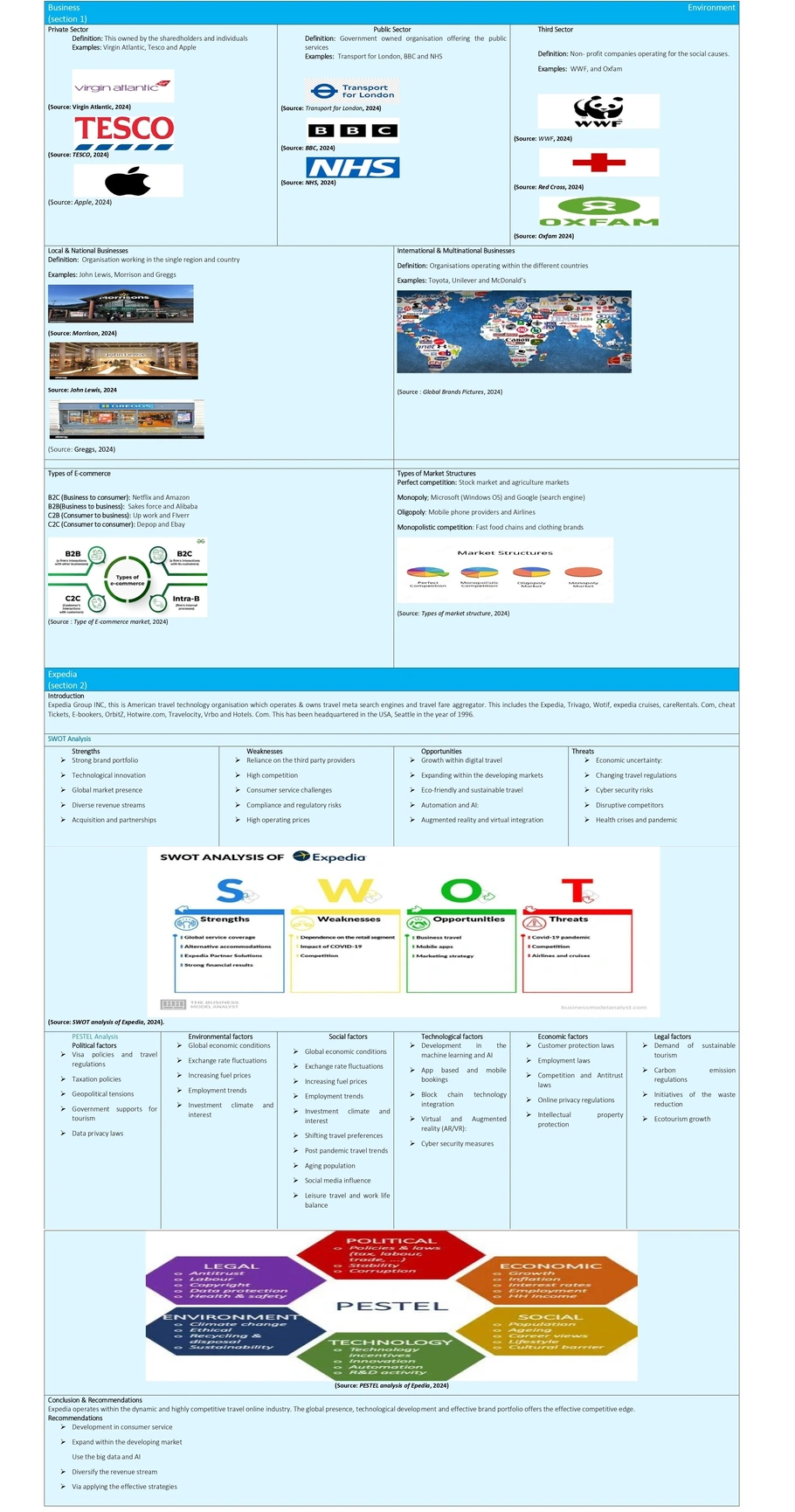
Business Environment- (section 1)
Private Sector
The private sector refers to the organisations and businesses owned by the companies and individuals; this is aiming to make the profit. The private organisations mainly operate individually to compete and government control within the market (Daniels et al, 2019). They might be large MNs, start-ups and small businesses (What are the public, private and third sectors? 2024).
Examples: Apple Inc is one of the international technology organisation which offering the software and electronics. The Tesco is key super market chain within the UK, Virgin Atlatic, this is a private airline offers the international flights.
Public Sector
The sector mainly consists the companies operated and owned via the government, offering the important services to the major public. These effective services involve infrastructure, enforcement, law, education and health care. The public sector’s goal is cannot offer profit but offer the citizens welfares. The organisations of the public sector are particularly funded are accountable and taxation to government.
Examples: The NHS (UK) National hath service offer the free of cost health care to the locals, the BBC, this is mainly the funded publicly broadcaster, the TFL (Transport for london) mainly works in public transport system of the London.
Third Sector
This refers to the voluntary groups, charities and non profit companies which operate independently as the private businesses and government as well. The major objective is to offer support the different social issues (David and Jane, 2019). The companies are mainly dependent on the fundraising, grants and donations to operate.
Example: The Oxfam in UK, this is a international charity emphasised on the alleviation of poverty. The British red cross offers the emergency relief and humanitarian aid, the world wildlife fund (WWF) emphasise on the conservation of environment.
Local & National Businesses
The major local businesses operates in the major area, this includes the offering small base of consumers, city or town. These kinds of businesses are mainly owned independently and involve the service providers, restaurants and small retailers. These particularly contribute within the economic growth and local employment.
Examples: Greggs, this is a chain of bakery with the different outlets within the different cities and towns of UK. Joe& Juice, This is coffee shop which has been introduced as the business locally and now internationally expanded in Denmark. The Brew dog, this is a company of beer which started as the brewery locally (Abu-Rumman, 2021).
International & Multinational Businesses
International and MNCs (Multinational businesses) have the key presence within the different countries; this is working via the franchise, subsidiaries and branches. These mainly operate within the various nations to have the consumer base, resources and different benefits related to the market opportunities.
Example:
McDonald’s (USA): This mainly operates within the restaurants more than hundred countries.
The Unilever (Netherlands/ UK): This is consumer goods manufacturer sold internationally.
The Toyota (Japan): The organisation sells and produced major automobiles within the different types of regions.
Types of E-commerce
The different market of E-commerce focuses on the selling and online buying. The various kinds of E-commerce focus on the consumer interactions and major business models.
Business to consumer (B2C): The E-commerce of B2B includes the businesses offering services and products mainly to customers via the platforms of online.
Examples: The Amazon, this is a online marketplace which is offering the different products. Zara, this is one of the fashion retailers along with the online presence internationally. Netflix, this is service of digital subscription providing the entertainment (Belás et al, 2019).
Business to business (B2B): The transactions of B2B include the abusiveness offering services and products to the different businesses. The platforms mainly emphasise on the industry demand, supply chain management and bulk transactions.
Examples: Alibaba, this mainly connects the international businesses with the suppliers. The sales force, this offers the CRM software based on the cloud to the enterprises (Type of E-commerce market, 2024). The Intel, this sells the hardware and processes to the manufacturers of computer.
Consumer to consumer (C2C): The platform permits the individual to sell and buy the products mainly between themselves via the marketplaces of online.
Examples: eBay, this is selling the platform and auction for the individuals. The Depop, this is mainly a resale fashion marketplace. The Facebook marketplace, this permits locals to selling and buying (Radovic Markovic et al, 2019).
Consumer to business (B2B): this permit the individual to sell the services and products to the businesses.
Examples: Fiver, this is providing the services to the different companies. The shutter stock, this is photographers and freelancers who are offering the pictures to the businesses. Up work, this is mainly connecting the businesses with the freelancers.
Types of Market Structures
The market structure mainly refers to the competitive environment within that the companies operate. There are 4 kinds such as monopoly, oligopoly, monopolistic competition and perfect competition.
Perfect competition: This mainly features the different firm’s small offering the identical products, along with the zero single organisations controlling the overall market place. The major costs are dictated via the demand, supply and the barriers of entry are low.
Example: The Agriculture markets, the different farmers offering the coffee, corn and wheat as well. The stock market, this offers the traded with the different sellers and buyers. The foreign exchange market, the different traders who influencing the values of currency.
Monopolistic competition: This kind of market carriers the different rivals who are selling the same products but these are differentiated as well (Bentley-Goode et al, 2019). The different businesses compete via the pricing, quality and branding.
Example: The fast food industry, Burger kind, KFC and McDonald’s providing the distinct yet same products. The clothing brands, puma, Adidas and Nike sell the unique branding with the sportswear. Costemetic industry: Mybelline, MAC and L’Oreal offer the different makeup products.
Oligopoly: This refers to the fewer dominants companies which are controlling the major market place. The different firms mainly influence the competition and process is sometimes strategic (Types of market structure, 2024).
Examples:
Airline industry: the Emirates, Lufthansa and British Airways dominate the travel of Air. The mobile phone market, it is including Huawei, Samsung and Apple lead to the innovation (Gursoy et al, 2020). The supermarket chain, Aada, Sainsbury and Tesco dominate the retail sector within the UK.
Monopoly: This exists at the time of one organisation dominant the overall market, this because o the exclusive resources control, high barriers of entry and legal protection.
Example: Google (search engine): This is mainly dominates queries of the global search. The Microsoft (windows OS): This is one of the leading the provider of the operating systems. London underground, this is a sole provider related to the rail underground transport within the London.
Expedia-
Introduction
Expedia Group INC, this is American travel technology organisation which operates and owns travel metasearch engines and travel fare agrregator. This includes the Expedia, Trivago, Wotif, expedia cruises, careRentals. Com, cheat Tickets, E-bookers, OrbitZ, Hotwire.com, Travelocity, Vrbo and Hotels. Com. This has been headquartered in the USA, Seattle in the year 1996. The organisation uses the developed technology, big data analytics, AI driven personalisation. This can optimise the strategies of pricing and consumer experience (Expedia, 2024). On the other hand, the overall travel industry is mainly rivalry, along with the different competition like as Google Travel. Airbnb and Booking.com are posing the major challenges. The organisation faces the threats and as well opportunities within developing travel industry, this is mainly influenced via the external macroeconomic factors, shifts in consumer behaviour and technological development. The poster will delve into the SWOT and PESTEL analysis to assess the macro and micro environmental aspects affecting the operations.
SWOT Analysis-
Strengths
Ø Strong brand portfolio: The organisation operates different travel brands which are well known, developing the consumer trust and market reach. The brands such as Trivago, Vrbo and Hotels.com cater to various requirements of travel, developing the competitive position. Over the years, the organisation has enhanced the loyalty and brand name among the consumers via the effective and exceptional services.
Ø Technological innovation: The Expedia uses the big data analytics, machine learning and AI to optimise the strategies of pricing, boost recommendations and customise consumer experience.
Ø Global market presence: Along with the different operations within the more than 60% countries, the organisation advantages from the revenue stream and consumer base within the different regions (SWOT analysis of Expedia, 2024).
Ø Diverse revenue streams: The organisation mainly generates the revenue via decreasing dependency on the one income source, affiliate marketing, advertising and booking commissions.
Ø Acquisition and partnerships: The organisation has developed strategic alignment with the providers of travel services, hotels and airlines (Akpan et al, 2021). This is mainly expanding and developing the offering of services and boosting the competitive benefit. The organisation has been majorly too active within terms of mergers and acquisition, this is including the Home Away and acquiring Travelocity, this has permitted them to offer the best and effective travel experience to the major buyers.
Weaknesses
Ø Reliance on the third party providers: The organisation depends on the car rental companies, hotels and airlines for the inventory, this is creating the vulnerable to the changes in costs, disruption in supply chain and commission reduction.
Ø High competition: The travel online industry is mainly drenched, along with the well known rivals such as Google Travel, Airbnb and Booking. Com, these are posing the major threats to the share within the market.
Ø Consumer service challenges: Few users have been report the major issues along with the consumer support of the Expedia (Amankwah-Amoah et al, 2021). Mainly within managing refunds and cancellations, this might put impact on the consumer loyalty and brand reputation.
Ø Compliance and regulatory risks: Operating within different countries exposes the organisation to travel regulations, taxation policies and divers legal framework. These are developing the risks and costs of compliance.
Ø High operating prices: Managing the partnership, technology investment and marketing expenses affecting the profitability and need major financial resources. Providing too many services might be create the platform majorly confusing for the customers which are focusing on the only one service.
Opportunities
Ø Growth within digital travel: The developing utilisation of the online platforms and mobile apps for the bookings of travel showcases the Expedia’s to boost the user engagement and digital presence.
Ø Expanding within the developing markets: Boosting the regions such as Africa and latin America provides the major growth potential as the demand of travel is increasing and internet penetration.
Ø Eco-friendly and sustainable travel: The customers are developing preferences for the options related to the sustainable travel. The organisation might capitalise on the emerging trends view offering the transportation options and sustainable accommodations.
Ø Automation and AI: The regularly investing within consumer service chat bots and booking management automated might boost the consumer satisfaction and effectiveness (Beatty et al, 2022).
Ø Augmented reality and virtual integration: Using the AR and VR technology might boost the experience of user via offering interactive guides of tour and virtual hotel tours.
Threats
Ø Economic uncertainty: The currency fluctuation, inflation and recession might put impact on the behaviour of consumer spending and travel demand.
Ø Changing travel regulations: The major government mainly imposed the health regulations, visa policies and travel restrictions might disrupt the overall operations and also put impact on the revenue.
Ø Cyber security risks: As this is online platform managing the sensitive information of the consumers, the expedia mainly face the different risks based on the fraudulent activities, cyber attacks and data breaches.
Ø Disruptive competitors: The disruptive business model and new entrants, like as threaten the traditional business model of expedia, travel search integration with the Google and airline bookings.
Ø Health crises and pandemic: The pandemic of Covid -19 focused on the how crises of health might have the different impact on the overall travel industry, putting impact on the stability of business based on the long term and decreasing the demand.
The major strengths of the expedia within global presence, brand portfolio and technology showcase the position within the major player with the overall industry of travel. On the other hand, weaknesses like as challenges of consumer service and providers of the third party require development. The different opportunities within the sustainable travel, emerging market and digital innovation might boost the future growth. The threats from the cyber security risks, regulatory change and economic fluctuations need the effective risk management.
PESTEL Analysis-
Political factors
Ø Visa policies and travel regulations: The government policies which impacting the tourism regulations, border controls, travel visa might influence operations of Expedia.
Ø Taxation policies: The various countries which impose the different structures of the taxation on the businesses online, putting impact on the profitability of the Expedia.
Ø Geopolitical tensions: The conflicts (china tensions, brexit), trade restrictions and political instability might create the expansion strategies and disrupt the demand of travel.
Ø Government support for tourism: The different policies which promote the tourism, this includes the marketing campaigns and travel subsidies, might offer advantages to the business of expedia (Wirtz, 2020).
Ø Data privacy laws: The regulations like as CCPA (California) and GDPR (Europe) need expedia to boost the compliance prices, protecting the measures.
Environmental factors
Ø Global economic conditions: the disposable income levels, inflation and recession mainly put impact on the consumer booking behaviour and travel spending.
Ø Exchange rate fluctuations: Epedia is multinational organisation; this is affected via the rates of currency exchange and affecting the revenue and pricing strategies.
Ø Increasing fuel prices: Developed prices of airline ticket because of the prices of fuel might put impact on the demand of travel, putting impact on the bookings of expedia.
Ø Employment trends: The shifts within the hybrid work models and remote work policies influence the demand of travel, needing the organisation to adapt the offerings.
Ø Investment climate and interest rates: The higher rates of interest might decrease the spending of consumers on the travel while affecting the capability of expedia to protect the funding.
Social factors
Ø Shifting travel preferences: The GenZ and millennial focuses on the eco-friendly tourism, digital convenience and experiential travel, shaping the offerings of consumers.
Ø Post pandemic travel trends: Developed needs for the wellness tourism, travel insurance flexible bookings showcase the novel business opportunities (PESTEL analysis of Expedia, 2024).
Ø Aging population: The increasing the elderly population boost the needs for senior friendly services of travel and accessible.
Ø Social media influence: The platforms such as Tik Tok, You Tube and Instagram shape the decision of travel, needing the Expedia to boost the strategies of digital marketing.
Ø Leisure travel and work life balance: The increase in remote work influences the travel patterns based on the long term.
Technological factors
Ø Development in the machine learning and AI: The dynamic pricing, predictive analytics and chat bots AI driven boost the revenue management and consumer service of the expedia.
Ø App based and mobile bookings: Developing usage of smart phone creates the platforms of mobile friendly important for the business growth of the Expedia (Hock-Doepgen et al, 2021).
Ø Block chain technology integration: The block chain might streamline the payment procedures, decrease fraud and boost the transaction security.
Ø Virtual and Augmented reality (AR/VR): The destination preview and virtual hotel boost the experience of user.
Ø Cyber security measures: Along with the developing threats of cyber, the Expedia needs to invest within the prevention of fraud technologies and data security.
Economic factors
Ø Demand of sustainable tourism: Developing the awareness of environmental motivates the Expedia to encourage carbon neutral and eco-friendly travel options.
Ø Carbon emission regulations: The travel and airlines companies are mainly within the pressure to decrease the carbon footprint, putting impact on the partnership of the Expedia.
Ø Initiatives of the waste reduction: The systems related to the digital booking offers help in developing the sustainability efforts and decrease the paper waste (Akpan et al, 2021).
Ø Ecotourism growth: The need for the tourism experiences based on the booking systems offers the opportunities for the novel market.
Expedia needs to navigate the different challenges externally while using the developing opportunities within the shifting behaviours of consumers, digital innovation and sustainable travel. Effectively adapting the technological, economic and political change would be important for managing the market leadership.
Legal factors
Ø Customer protection laws: The regulations making sure about the transparent impact on the business model of Expedia, refund policies and fair pricing.
Ø Employment laws: As the international organisation, Expedia needs to align with the laws of labour within the different countries related to the workplace conditions and employee rights.
Ø Competition and Antitrust laws: The scrutiny related to the regulatory over practices of monopolistic within the overall industry of travel might put impact on the acquisitions and mergers of Expedia.
Ø Online privacy regulations: Other privacy laws and GDPR with the compliance within travel industry might affect the acquisitions and mergers of Expedia.
Ø Intellectual property protection: The branding and technology of the Expedia needs the infringement against the safeguards.
Conclusion & Recommendations (Expedia)
Expedia operates within the dynamic and highly competitive travel online industry. The global presence, technological development and effective brand portfolio offers the effective competitive edge. On the other hand, challenges like as regulatory risks, issues of consumer service and third party providers pose the major threats within the growth. The PESTEL analysis, influence the sustainability trends, developing travel regulations and economic uncertainty on the operations of Expedia.
In order to sustain the leadership in market, Expedia recommended:
Ø Invest within the effective refund policies and support driven by AI to boost the consumer satisfaction.
Ø Expand within the developing market: boost the presence within the Latin America, Africa and Asia to tap within the developing demand of travel.
Ø Use the big data and AI: Boost the fraud prevention, customisation of the pricing strategies.
Ø Diversify the revenue stream: Explore the novel business models like as travel services based n the subscription.
Ø Via applying the effective strategies, Expedia might boost the long term growth and competitive position.
References list:
Books and journals
Daniels, J.D., Radebaugh, L.H. and Sullivan, D.P., 2019. International business: Environments and operations. Pearson.
David, N. and Jane, B., 2019. Business in Context: An Introduction to Business an its Environment. Cengage Learning, Inc.
Abu-Rumman, A., 2021. Transformational leadership and human capital within the disruptive business environment of academia. World Journal on Educational Technology: Current Issues, 13(2), pp.178-187.
Belás, J., Belás, Ľ., Čepel, M. and Rozsa, Z., 2019. The impact of the public sector on the quality of the business environment in the SME segment. Administratie si Management Public.
Radovic Markovic, M., Salamzadeh, A. and Vujičić, S., 2019. Selection of organization models and creation of competences of the employed people for the sake of competitiveness growth in global business environment. International Review, pp.1-2.
Bentley-Goode, K.A., Omer, T.C. and Twedt, B.J., 2019. Does business strategy impact a firm’s information environment?. Journal of accounting, auditing & finance, 34(4), pp.563-587.
Gursoy, D. and Chi, C.G., 2020. Effects of COVID-19 pandemic on hospitality industry: review of the current situations and a research agenda. Journal of Hospitality Marketing & Management, 29(5), pp.527-529.
Akpan, I.J., Soopramanien, D. and Kwak, D.H., 2021. Cutting-edge technologies for small business and innovation in the era of COVID-19 global health pandemic. Journal of Small Business & Entrepreneurship, 33(6), pp.607-617.
Amankwah-Amoah, J., Khan, Z. and Wood, G., 2021. COVID-19 and business failures: The paradoxes of experience, scale, and scope for theory and practice. European Management Journal, 39(2), pp.179-184.
Beatty, J.F., Samuelson, S.S. and Abril, P.S., 2022. Business law and the legal environment: Standard edition. Cengage.
Wirtz, B.W., 2020. Business model management: design-process-instruments. Springer Nature.
Hock-Doepgen, M., Clauss, T., Kraus, S. and Cheng, C.F., 2021. Knowledge management capabilities and organizational risk-taking for business model innovation in SMEs. Journal of business research, 130, pp.683-697.
Online
Apple, 2024. Online. Available through https://www.apple.com/in/store?afid=p238%7Cs8Vs8GkTq-dc_mtid_187079nc38483_pcrid_719882393263_pgrid_112258962467_pntwk_g_pchan__pexid__ptid_kwd-10778630_&cid=aos-IN-kwgo-brand--slid---product-
BBC, 2024. Online. Available through < https://www.bbc.com/ >
Expedia, 2024, online. Available through https://www.expedia.co.in/
Global Brands Pictures, 2024. Online. Available through https://www.istockphoto.com/photos/global-brands
Greggs, 2024. Online. Available through <https://www.greggs.co.uk/
John Lewis, 2024. Online. Available through <https://www.johnlewis.com/
Morrison, 2024. Online. Available through <https://groceries.morrisons.com/?srsltid=AfmBOoqW2lvz-LQSm4DAQBe41cm5MmkNBdPYg-Sd3TpUgrdd2Nh3iCtV
NHS, 2024. Online. Available through <https://www.kingsfund.org.uk/leadership-development/courses/nhs-explained-course?gad_source=1&gclid=EAIaIQobChMIxYCvvr-piwMV66RmAh2XLzPpEAAYASAAEgJzbvD_BwE
Oxfam 2024. Online. Available through <https://www.oxfam.org/en
PESTEL analysis of Expedia, 2024, online. Available through https://www.247caseanalysis.com/essay/Expedia-12992-Pestel-Analysis
Red Cross, 2024. Online. Available through <https://www.redcross.org.uk/
SWOT analysis of Expedia, 2024. Online. Available through https://www.mbaskool.com/swot-analysis/it-technology/13201-expedia.html#google_vignette
TESCO, 2024. Online. Available through https://www.tesco.com/?srsltid=AfmBOoq45qrFYQusZ5TnqqZiCxDw1D9T9WlWnCorBYirsTitI9CDJ18U
Transport for London, 2024. Online. Available through https://tfl.gov.uk/
Type of E-commerce market, 2024. online. Available through https://www.indiafilings.com/learn/types-of-e-commerce/#:~:text=Business%2Dto%2DBusiness%20(B2B,%2Dto%2DBusiness%20(C2B)
Types of market structure, 2024 online. Available through https://corporatefinanceinstitute.com/resources/economics/market-structure/
Virgin Atlantic, 2024. Online. Available through https://www.virginatlantic.com/en-IN?cm_mmc=10.15.00.17.12.00.142&gad_source=1&gclid=EAIaIQobChMIh6y46r6piwMVLmBIAB3QyQJyEAAYASAAEgKOnPD_BwE&gclclass="lazy" data-src=aw.ds
What are the public, private and third sectors? 2024. online. Available through http://teeviit.ee/youth-info/en/what-are-the-public-private-and-third-sectors/
WWF, 2024. Online. Available through <https://www.bornfree.org.uk/news/guardians-of-dja/?gad_source=1
Go Through the Best and FREE Samples Written by Our Academic Experts!
Native Assignment Help. (2026). Retrieved from:
https://www.nativeassignmenthelp.co.uk/btm4bue-business-environment-poster-example-45919
Native Assignment Help, (2026),
https://www.nativeassignmenthelp.co.uk/btm4bue-business-environment-poster-example-45919
Native Assignment Help (2026) [Online]. Retrieved from:
https://www.nativeassignmenthelp.co.uk/btm4bue-business-environment-poster-example-45919
Native Assignment Help. (Native Assignment Help, 2026)
https://www.nativeassignmenthelp.co.uk/btm4bue-business-environment-poster-example-45919
- FreeDownload - 37 TimesSHN5023 Personalised Care and Social Prescribing Assignment
SHN:5023 Personalised Care and Social Prescribing INTRODUCTION Social...View or download
- FreeDownload - 43 TimesProject Management For Civil Engineers Assignment Example
Project Management For Civil Engineers 1.0 Ensuring Health & Safety...View or download
- FreeDownload - 39 TimesQualitative data analysis and research assignment sample
Introduction: Qualitative data analysis and research assignment Research...View or download
- FreeDownload - 42 TimesPublic Health Midwifery Essay Assignment Example
Introduction - Public Health Midwifery Essay This study is based on where...View or download
- FreeDownload - 40 TimesMultiagency Working (CYP5005) - Simulated Case Conference Report
Defining Multiagency Working Multiagency working is defined as the involvement...View or download
- FreeDownload - 41 TimesA8120 Conveyor Automated Component Removal System Assignment Sample
Introduction A8120 conveyor system is a conveyor belt system that belongs to...View or download
-
100% Confidential
Your personal details and order information are kept completely private with our strict confidentiality policy.
-
On-Time Delivery
Receive your assignment exactly within the promised deadline—no delays, ever.
-
Native British Writers
Get your work crafted by highly-skilled native UK writers with strong academic expertise.
-
A+ Quality Assignments
We deliver top-notch, well-researched, and perfectly structured assignments to help you secure the highest grades.