Introduction: Control And Integration Of Renewable Energy Sources
This report seeks to examine the synergism between average solar PV and wind power systems in respect to aspects such as the power electronic converter like DC-DC boost converter and DC-AC inverter converter. It also focuses to evaluate the effects of DGs on the overall system performance and stability of the existing grid system with reference to energy conservation, with due consideration to renewable energy for efficient electricity generation.
Task 1.0
Investigation of the current energy demand especially solar and wind power.
At present, the sub-Saharan region has a demand for energy because the majority of the region remains without electricity supply and those that are supplied with electricity are experiencing increased demand. Modern renewable electricity by definition can be described as electricity from renewable sources which has gone through minor conversion or no conversion at all; this can be achieved through means such as solar photovoltaic and wind power and can go hand in hand with methods of decarbonization (Sterl, S., 2021). Nevertheless the effects of the power generation on the environment stay high, since natural gas and other types of the fossil fuel are used for the production of carbon dioxide. Non-conventional sources of electricity generation, especially the variable renewable electricity (VRE), has the flexibility of reducing the dependency on the conventional source of electricity generation that is based on fossil energy sources but their generation is flexible in time and space and hence require improved flexibility in grid through generation-driven flexibility, storage-driven and demanded driven flexibility.
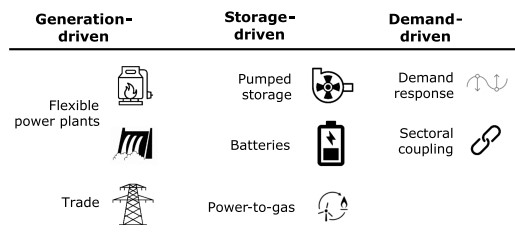
Figure 1: Variable renewable electricity (VRE) sources on the grid
(Source: Sterl, S., 2021)
Exploration of the benefits and contributions of renewable energy sources
Solar power, wind power, tidal and geothermal power; the renewable sources of energy that have triggered drastic change in the global electricity generation. Currently, China, Japan, and the United States top the list of solar power generating countries, and the installations have grown by 4,300 percent over the past decade. The source of wind energy is the most actively developed in China, the USA, and Germany with the help of British and German offshore projects (Nunez, C., 2024). Tidal energy whereby projects such as the Scotland’s saltire prize pull energy from ocean currents. Geothermal energy which can be used for electricity generation, heating and cooling services ensures reliability. While these renewables help decrease the emission of greenhouse gases and create jobs and enhance the security of energy supply, they help to shift towards green energy.
Figure 2: Various renewable energy sources can be used to produce energy
(Source: Osman, AI, et al. 2022)
Evaluation of the production costs of renewable energy technologies
Some of the other drawbacks include the following: The production costs of renewable energy have reduced over the past years, thus making them sustainable in the longer run. The cost of utility-scale solar photovoltaic energy fell from $0.417/kWh in the year 2010 to $0.048/kWh in the year 2021 while cost of onshore wind, offshore wind and CSP at a discount of 68%, 60% and 68% respectively (Osman, AI, et al. 2022). These are a result of improvements in the energy storage systems, integration of power grid systems, efficiency, and many others. Nonetheless, climate change barriers such as weather, water, and sea level play a role to some extent, particularly to wind, biomass, and hydro. Though, it is possible to decarbonize 90 percent of electricity through the use of renewable sources in 2050 for ensuring a safe and clean energy future.
Figure 3: Renewable energy from an economic point of view
(Source: Osman, AI, et al. 2022)
Assessment of the global impact of all energy sources on rising energy demand
As for the energy consumption in the world, it is supplied from renewable and non-renewable sources which have various effects on society. Despite this, it is worth mentioning that fossil fuels emit more than 75 percent of greenhouse gases that play a role in climate change. On the other hand, the sources of renewable energy such as solar, wind energy, hydropower, and bioenergy are increasing and hybrid systems are more reliable and efficient (Farghali, M, et al. 2023). Through the continued development and implementation of renewable energy, it has been predicted that by the year 2050, the sources may be able to supply about 4.18 million jobs and also cut back on carbon emissions. Also, through the use of machines such as photovoltaic systems with wind and battery storage reduce the cost of desalination by 69%. Nevertheless, the use of renewable resources in the power system comes with issues of intermittency, storage and infrastructure that have to be addressed in order to pave the way to a sustainable, reliable and low carbon economy.
Figure 4: Worldwide renewable energy sources' generating capacity from 2010 to 2020
(Source: Farghali, M, et al. 2023)
Exploration of the viability and constraints of prominent renewable energy sources
However, every type of renewable energy is useful in meeting the global energy demand, each of them has its limitations. Solar power with the global average cost of $0.048/kWh (2021) has minimal change sensitivity to climate change, but it occupies extensive territories. Wind power has relatively reduced costs, onshore by 68% and offshore by 60% (2010–2021) but it is variable and requires a lot of land. Hydropower is one of the most electricity-generating sources comprising 16% globally and remains at risk of drought (Holechek, JL, et al. 2022). Biomass, with a 14% cost reduction affects the land as well as the food market. Geothermal energy sources are more reliable with steady output whereas they are limited by geographical locations. Therefore, scaling of renewable energy sources requires scaling up its capacity by 6 to 8 times. In addition, there should be better energy storage for reliability.
Critical assessment of the performance of renewable energy systems and technologies in improving energy efficiency
Renewable energy systems have shown an opportunity for improvement of energy demands alongside the reduction of fossil energy dependency. Waste heat recovery in fact enhances the direct conversion of mechanical energy into power and the fuel cells also increase the efficiency of the conversion of chemical energy to useful work without having adverse effects on the environment. The new generation power sources namely wind, solar, biomass, and ocean energy have grown bigger to support mega scale electricity production. Including better energy conversion devices in these systems makes them even more sustainable (Sayed, E, et al. 2023). Renewable energy from nature reduces global warming and climate change initiatives and thus is the best way of reducing reliance on fossil fuels but improving the conservation of energy for sustainable use.
Figure 5: The largest renewable energy projects of different technologies around the world
(Source: Sayed, E, et al. 2023)
This explains why it has taken quite a long time to advance hybrid renewable energy systems thanks to the technological, financial, environmental and socio-political constraints. In the case of solar and wind energy, fluctuations in voltage and frequency and the variation of characteristics of output make it difficult to integrate while the intermittent nature of these sources pose a problem for the stability of the grid. First of all, barriers to adoption include high start-up costs as well as complicated financing structures which are even more challenging for the developing countries. Thus, threats to the environment are habitat loss and pollution caused by extraction of raw materials (Chowdhuri, M.Y., et al. 2023). Energy majors control the policies, and hence give the renewables an unfair disadvantage regarding regulation.
Task 2.0
Discussion of the current measures for the enhancement of the energy efficiency and the factors influencing energy use in buildings
To enhance the conversion efficiency, a power inverter is incorporated in a multi-string system. Every DC-DC boost converter is connected with an inverter, and for amplifying the power conversion, numerous PV panel sets are connected in parallel (Kebbati, Y and Baghli, L 2022). The configuration of the system is very ordered, with arrays being parallel as well as series connection to optimize output and also minimize the area covered by the panels. Procedures are also adopted in the placement of panels in an optimal manner in order to avoid shading and ensure more energy is collected. Inverters, boost converters and panel arrays are introduced into the system one after the other so as to have the best operating angle that will enable the yield power while at the same time allowing continuous generation of power.
There is a structure which has been adopted in the development of the wind energy system to improve their efficiency as well as integration of the power system. The wind turbines are arranged in a manner that would capture as much kinetic energy as possible, and at the same time avoiding areas that may cause a lot of turbulence according to set spacing standards. This makes the system have several sets to ensure there is efficient energy capture and storage. Wind generators are trailed to medium voltage level for which it requires a step up transformer to match the voltage for getting connected to the grid system. Even though employing a wider range of wind speed, it is designed to improve the grid status and effectiveness by reducing the rate of power outages during peak load demand.
Exploration of the sustainable transport technologies and the growing energy demands in the transport sector
It has been highlighted that the utilisation of advanced technology of energy conversion and management in hybrid renewable energy systems (HRES) will be advantageous to electric vehicles (EVs). The advantage of using DC-to-DC converters is that it provides a more efficient on/off-board power transfer hence reducing losses. The High Gain Boost converter plays the role of voltage amplification to utilise the Photovoltaic energy efficiently and bidirectional power control helps in exchange between the batteries of the electric vehicle and the grid which stabilises. Also, due to MVVSC control of both active and reactive power, the DFIG-based wind system increases the overall power generation and efficiency and also increases intensity of the grid. This structural approach for charging also reduces the pressure in the grid and allows for effective charging of EVs while optimizing the use of renewables. Therefore, integrating hybrid renewable energy systems (HRES) into transport systems promotes the use of EVs through providing efficient and sustainable charging networks. Efficient conversion leads to low utilization of fossil energy whereas two–way flow helps in maintaining balance of electricity in the grid.
Modelling and simulation of the energy management in residential buildings or electric vehicles
A combination of a Solar PV System and Wind energy system incorporate the features as follows: The DC-DC Boost converters, the DC-AC three phase inverters, the RL filters, and other advanced wind energy including DFIG, wind turbine controller, PSO-PI controller. In the solar PV subsystem, the DC-DC boost convertor raises the low level voltage from the PV panels to an adequate level of feed voltage for efficient power flow. The output of this inverter, the DC-AC three-phase inverter, is desired in fulfilling electrical loads, as well as being shaped to ensure it can be grid-connected. In detail, an RL filter works to decrease harmonic distortions, thus, bring stability to voltage and reduce electromagnetic interference.
Figure 6: Hybrid Solar PV and Wind power system
(Source: Self-created in MATLAB Simulink)
Concerning the wind energy subsystem, a Doubly Fed Induction Generator (DFIG) is used for power conversion, it affords the possibility of independent control of active and reactive power. A wind turbine controller will control the speed of the turbine as well as the angle of the blade for the purpose of optimizing the capturing of power from wind in the different conditions of the wind. A dynamic voltage and frequency management is achieved by using a PSO-tuned PI controller which enhances the system dynamic response. This type of structure results in higher insensitivity to factors coming from the accompanying environment and a fine control of both the solar and the wind part of the PSO-PI controller. This has greatly enhanced efficiency in power delivery, reliability of the grid, and optimized utilization of energy and hence makes hybrid renewable system more suitability to the 21st century energy demands.
Figure 7: Design of the PV module
(Source: Self-created in MATLAB Simulink)
Photocurrent:
Saturation current:
Reverse saturation current:
Current output:
The photogenerated current, diode saturation current, reverse saturation current and short circuit current is represented by Ip, I0, IRS and ISC respectively. Similar to the previous sections, ki, T, Tn, q, and G represent the current coefficient, temperature, nominal temperature, electron charge, and irradiation respectively. The definitions of the semiconductor band gap energy and Boltzmann’s constant are Eg0 and K respectively while Ns refers to number of series cells, Rs as the equivalent series resistance and Rp as the equivalent parallel resistance.
Figure 8: Design of the wind turbine
(Source: Self-created in MATLAB Simulink)
Air density and air pressure thereby affect the capture of power by a wind turbine or generator. The power coefficient that can be modeled using the parameters of blade design and the pitch angle β optimizes energy capture. influencing the swept area and, therefore, the power output directly by means of a blade radius (R). Another aspect is λ depending on the wind speed (V) and the rotor or rotational speed (Ωt) which has an influence on Cp. Such comprehensive Bewertungen of interdependent parameters are useful for predicting and optimizing the design of turbines for the sets of those conditions and power outputs.
Figure 9: Design of the RL filter
(Source: Self-created in MATLAB Simulink)
It has the ability of shifting voltage from the inverter to the amount that is suitable for the grid because it retains the difference in voltage amplitude and phase (Stanelytė, D. and Radziukynas, V., 2022). It facilitates the correct transfer of power towards the grid and also helps in supporting the difference in voltage. Besides, at ICs, generated heat is minimized, and the filter also cuts on harmonics created by the other elements of the system.
Real and reactive powers are drawn and compared to the reference values P* and Q*. Since the aimed-for reactive power generation is zero, it means that Q*=0, which means that the voltage and current shall be in phase level hence operating at a unity power factor. P*, on the other hand, it depends on the output that is generated by the PV generator.
The PSO-PI controller corrects any error in the system and helps to control, make corrections in order to give the desired output of the reference d-q inverter voltages namely Vd* and Vq*.
Figure 10: Design of the DFIG
(Source: Self-created in MATLAB Simulink)
In the case of vector control implementation, the DFIG model employs the use of the Park transformation (Achar, A., et al. 2024). A simplification involves assuming constant values of inductances and cumulative fluxes in the case of an inductor. The inductances of rotor and stator windings are sinusoidal function of electrical angle (θe) as depends on the axes position. The above equations give the stator and rotor voltages in terms of this Park frame of reference.
Evaluation of the selection of technologies for enhancement of the energy efficiency
There is a considerable possibility for improving energy efficiency in the residential building incorporated with Hybrid solar PV and wind power systems with the technologies like DC-DC boost converters, DC-AC inverters, RL filters, and the latest DFIG-based wind turbine charging controllers for electric vehicles (Ansari, A.A. and Dyanamina, G., 2022). The boost converter improves the power conversion efficiency and on the other side there is an inverter to meet the grid requirements. It can accomplish its main goal of reducing harmonic distortions thus enhancing the power quality. Moreover, the PSO-PI controller optimises dynamic responses further to the system and make the response more stable and optimum. These technologies offer a very effective and demonstrable system with a large potential for further development regarding storage technologies, interface, and control for various energy demands.
Analysis of the dynamic performance of power electronic converters for solar and wind power
Control elements of power electronics circuits, including DC-DC boost converters, DC-AC inverters, and control of power systems like PSO-PI are useful for improving the dynamic performances and efficiency of solar and wind power hybrid systems. A solar PV system has a DC-DC boost converter that increases the low voltage to a steady voltage level and the DC-AC inverter whose job is to turn the voltage to AC for GRID compliance. Active and reactive power can be controlled independently with the help of the DFIG wind system. The wind turbine controllers and PSO-PI are useful in modulating the response of control systems so as to provide proper voltage and regulating frequencies and therefore enhancing the efficiency of renewable systems.
However, in comparing hybrid systems of solar and wind energy to conventional systems such as natural energy, and gas or coal, it is worthy to point out that the cost of the system includes costs of installation and running into the long term.
|
Cost Category |
Hybrid Solar-Wind System |
Conventional Power Sources (e.g., Natural Gas) |
|
Initial Installation Costs |
£1,500,000 (for a 1MW system) |
£1,200,000 (for a 1MW gas plant) |
|
Annual Operational & Maintenance Costs |
£30,000 |
£50,000 |
|
Energy Generated (per year) |
2,500 MWh |
2,200 MWh |
|
Cost of Energy (per MWh) |
£60 |
£120 |
|
Fuel Costs (annual) |
£0 |
£200,000 |
|
Total Annual Savings |
£300,000 |
- |
|
Payback Period |
~5 years |
N/A |
A solar-wind system with the generation of 2,500 MW per annum costs £150, 000 less expensive than conventional sources that generate only 2200 MW per unit of £120 MW. The fuel costs are only zero; therefore, they contribute to a yearly saving of £200,000 On the operational and maintenance aspect, the system is much cheaper. The total cost of establishing and developing the system, which costs £1,500,000 initially, will prove to be a wise investment for the long-term as its continuous use more than covers up the cost in approximately five years.
Engineering assignments involving renewable energy systems and power electronics demand strong technical understanding, accurate simulations, and structured analysis. Professional assignment help ensures clarity, correct modelling, strong academic referencing, and alignment with grading criteria—helping students achieve high-quality, distinction-level submissions with confidence.
Task 3.0
Analysis of the power electronics applications in solar and wind power utilization
In terminal hybrid PV and wind power systems the DC-DC boost converter performs the function of converting the variable voltage of the solar panel and the wind turbine to a regulated voltage using PWM and the DC-AC three phase inverter is used in converting the direct current to an alternating current using full wave rectification. The main function of the DC-DC boost converter is for conversion of the low voltage of magnitude acquired from the solar PV panels into a higher output voltage that can efficiently transfer power through MPPT. The DC-AC inverter then transforms the boosted DC voltage which is in the form of 3-phase AC suitable for the grid or consumption at the PCC site (Quang, L.N. and Nguyen, P.T., 2022). This improves the general system performance by eliminating the need to treat different systems separately, which plays an important role especially when it comes to energy conversion, voltage control and other important parameters in hybrid systems of energy conversion.
Determination of the industrial applications of power electronic converters
AC to AC, AC to DC, DC to AC, and DC to DC converters have suddenly become an indispensable tool in most industries owing to their effectiveness. AC-AC converters are applied in motor control circuits, and in voltage regulation circuits. AC-DC converters are used in charging systems and power supplies (Teja, R 2024). DC-AC converters are mandatory components of RESs namely solar and wind for integration into the grid. They are used in electric and hybrid vehicles, charging stations, power supplies, and renewable energy depots. These converters have been rapidly applied for enhancing energy effectiveness, incorporating renewable power systems, decreasing operational expenses, and controlling operation in sectors.
Analysis of the power electronic converter topologies
Other AC-AC converters like cycloconverters and matrix converters are used for motor control, power quality enhancement and variable speed drive applications (Monolithic Power Systems, Inc 2025). Its working concept mainly contributes that input and output AC signals phase can be controlled. Several types of converters exist including the buck, boost, and buck-boost converters that are widely used in power electronics applications such as PV systems and electric vehicles applications to adjust DC voltage ranges. DC-DC converters are best suited for specific applications and the AC-AC converters are suited for high power AC applications. DC-DC converters are well suited to convert higher voltage to lower voltage for supplying loads that are DC based while AC-AC is well suited for loads that are AC based.
Simulation of the power converter for the renewable energy system
Figure 11: DC-DC Boost converter
(Source: Self-created in MATLAB Simulink)
It is well-known that the DC boost converter provides high efficiency and strong robustness to filter the fluctuating DC output voltage from a practical PV array to a fixed higher DC voltage. The duty cycle also referred to as “a” is derived from Maximum Power Point Tracking (MPPT) approach and produces a pulse width modulation (PWM) signal. This particular signal enables the management of the operation of the switch, and the switch is denoted as K2 in the circuit.
Figure 12: DC-AC Three Phase inverter
(Source: Self-created in MATLAB Simulink)
where k, S and R represent the phase of the inverter.
There are three fundamental reference frames in controlling the three-phase inverters namely; the stationary reference frame which is the α-β frame, the synchronous rotating frame that is d-qframe and the natural frame that is the a-b-c frame. In the d-q frame control, Park’s transformation is used to convert a three-phase voltage and current in the stationary frame into the d-q reference frame which is perpendicular to the grid voltage. It can be used to convert the three-phase variable into direct current quantities The block shown in the above figure interconnects the three-phase delta connected upstream transformers so as to form a delta connected upstream transformers. As the control variables are now formed with DC, some common filtering techniques can be used for better facility. Moreover, a new adaptive controller, called PSO-PI is designed to improve the control quality in the given d-q reference frame and will be described later on.
In which k is the phase of the inverter, S is the state of the higher switches and R illustrates the series of the filter. L and Vn stand to the filter inductance and the voltage from neutral point of the grid to negative Vdc. In each phase of the inverter, there are two perfect switches which work at the same time.
Evaluation of the dynamic performance of integrating renewable energy sources into the smart grid
Figure 13: Irradiance on the PV modules
(Source: Self-created in MATLAB Simulink)
As for January, which is characterized by low ambient temperatures, the solar module is exposed to a high level of irradiation. The low radiation is prevalent on the first day and the last day of January as extraterrestrial radiation flux varies due to the orientation of the Earth with reference to the sun. The charges in irradiation levels, however, are much lower in August. This is true because a low level of irradiation compounded with high temperatures leads to low PV output during this period.
Figure 14: PV sting power output
(Source: Self-created in MATLAB Simulink)
The most important factors affecting the power output of a PV system include irradiation levels, temperature and efficiency of the system. In general, as the irradiation level rises, the power produced is also higher, and the temperature level tends to make it more efficient. High temperatures and low irradiation as observed in the month of August for this study leads to low efficiency in the conversion of the source of energy by the PV.
Figure 15: Wind speed variation at Hub height
(Source: Self-created in MATLAB Simulink)
Wind speed at the hub height is thus dependent on the factors such as geographical location of the wind farm, time of the day, and seasons. The wind speed usually increases as the altitude increases since there is minimal friction throughout the surface of the planet. Nevertheless, the violations in wind speed are a daily and annual occurrences due to fluctuations in the seasons where turbines are not as efficient as per their standard.
Task 4.0
Investigation of the safety aspects of smart power systems
Smart power systems help to increase the level of safety due to constant monitoring, fault detection, and protection actions. It is achieved through the utilization of power electronics since it allows for a fast switch, voltage control and protects the circuits from short circuits and overloads (Ahmad, T., et al., 2022). In general, worldwide these technologies enhance reliability, reduce failures and help integrate with renewable energy systems making the energy infrastructure safer and more reliable.
Exploration of the operations of standalone and grid-connected renewable energy systems
Remote stand-alone photovoltaic systems use solar, wind or wind/solar hybrid systems along with battery storage to provide reliability for loads in a single mode. Off-grid systems are connected to the main electricity network to enable export and support of the grid. Although off grid systems provide energy autonomy, on grid configurations bring about stability and effectiveness because of supply and demand reversal and optimum utilization of resources (Jain, S. and Sawle, Y., 2021).
Smart grid features and the role of power electronics
Smart grids apply advanced power electronics in their design to increase the performance, security, and eco-friendliness. The major elements are the smart meters, automated controlling, and bidirectional flow capability that enhances the distribution of power (Ballestín-Fuertes, J., et al. 2021). It includes Voltage regulation, Utilisation of distribution network and renewable energy integration. In more efficient energy storage systems, demand and supply are aligned to minimize waste and to facilitate intelligent energy supply for a sustainable smart grid.
Role of the integration of the power electronics renewable energy sources in smart grids and their associated challenges
Application of power electronics in smart grid ensures integrity of energy conversion as well as supporting stability of the grids and renewable energy interface. They help to moderate voltage, direct power and also improve the control of energy in storage (Tang, Z., et al, 2021). But it is crucial to indicate that there are some drawbacks which the integration of renewable sources of energy poses, including; grid synchronization, fluctuations in the voltage, presence of harmonics, and the intermittent behavior of renewable sources of energy. The above challenges call for more sophisticated control solutions and reliable ESSs for integration.
Figure 16: Output from the DC-DC boost converter
(Source: Self-created in MATLAB Simulink)
The graph depicts how the DC-DC boost converter fixes and increases the voltage which would be supplied by the PV system by drawing at the improved arrangement of the curves of the boosted DC output voltage (Vdc). It stabilizes a higher voltage for the inverter that enhances energy transfer in compliance with what the converter provides. It has been disclosed that fluctuations in irradiance affect the levels of Vdc; however, the control algorithms ensure stability.
Analysis of the role of power electronic converters in smart grids
AC-DC and DC-DC converters are important components in smart grids since they are used for energy conversion and also incorporation of renewable sources. New development increases the stability of the grid, controls the flow of power, and advances the technology of energy storage. These technologies look at problems of interfacing between the solar and the wind energy and make the power conversion and other related factors to ensure reliability which is an important aspect of systems in this work.
Evaluate issues related to integrating renewable energy sources into smart grids
The incorporation of renewable energy systems in smart grids requires formulating issues such as; voltage fluctuation, irregular power supplies, and energy storage problems. These issues affect the stability of the grid, depend on the predictive models and complicate the quest for reliable energy supply. Power electronics as well as smart grid technology aids in managing the following challenges as they assist in managing the flow of power and its distribution, the reliability and flexibility for grid operation.
Critical analysis of the impact of solar and wind renewable energy sources when integrated into the grid
Performing the studies by MATLAB/Simulink or similar software on the integration of solar and wind renewable energy sources is useful to monitor the power flow in the grid and the stability of the overall system. They allow modeling of different conditions, such as; production variation, interconnection with the grid, and storage system control. The contribution of industrial software in hybrid systems includes adequate modeling, analysis, and optimization at real time. It enables assessing the reliability and productivity of the grid and the feasibility of including the renewable resources, which are essential in the decision making process in energy system administration and energy policy.
Figure 17: Reactive power (W) in this wind system
(Source: Self-created in MATLAB Simulink)
Reactive power (W) is important in wind systems as it is useful for voltage control, and lightning correction. In most cases it is created or dissipated in the wind turbine’s generator. Through the vicinity of the grid, wind turbines, especially with the DFIG, are capable of active and reactive power control to achieve system stability as well as system optimization.The reactive power (W) in a wind system is essential for maintaining voltage stability and power factor correction. It is typically generated or absorbed by the wind turbine’s generator. Wind turbines, especially with a Doubly Fed Induction Generator (DFIG), can independently control active and reactive power to ensure grid stability and optimize overall system performance.
Figure 18: Reactive power (W) output from the PV generator
(Source: Self-created in MATLAB Simulink)
The graph shows the fluctuation of the reactive power of the output current in the PV generator in watts. This implies that as the inverter seeks to particularly control reactive power it also stabilises the voltage and assists the-grid by either absorbing the reactive power or supplying it. This control also enables the PV system not only to add active power but also to help to improve the power factor and interface the utility. The information depicted in the graph explains different inverter settings and their effect on reactive power in relation to different conditions.
Figure 19: Total Reactive power (Q) output of the system (W)
(Source: Self-created in MATLAB Simulink)
The plot of the graph indicates the total power which is clearly shown by the curves with W and the variation of the active and reactive power zone. This indicates the effect of total PV and the wind subsystems that enhance the total output. The total power generated outputs the efficiency of the system depending on the levels of solar insolation and wind velocity and other parameters which can be set by the system.
Figure 20: Total active power (P) output
(Source: Self-created in MATLAB Simulink)
The given figure also represents the total power of the system named P_total charting active and reactive power at various time instances. This is because it incorporates both PV and wind energy systems, based on changing levels of irradiation and wind velocity. The efficiency of the system, therefore, depends on these factors of the operating environment as well as the performance of power gadgets such as converters as well as controllers.
Figure 21: Total active power (P) output January
(Source: Self-created in MATLAB Simulink)
Varied values of solar irradiance and wind speed depending on the days of the month are the reasons for fluctuations in the total active power (P) in January. It is worthwhile to point out that even when environmental conditions are generally cold, high irradiation increases the amount of energy generated by the PV systems in terms of power output to the grid. Wind energy is an ideal partner of PV output in that it helps to buffer supply fluctuations in the month.
Figure 22: Total active power (P) output August
(Source: Self-created in MATLAB Simulink)
The graph of Total Active Power (P) of August demonstrates lower performance due to high temperature and low irradiation. Another advantage of wind energy is that in system strength and distribution it provides the capability needed to hold off other changes in PV output level. The hybrid system is relevant since it is capable of submitting its operation to constant change in the environmental conditions during the various seasons of the year with little compromise to the efficiency of the power that is being generated.
Figure 23: Power share supplied by the hybrid system (%)
(Source: Self-created in MATLAB Simulink)
Hybrid system’s power share (%) is presented in the following graph to show the trend of PV and wind energy. Seasonal changes affect the output where photovoltaic output is more dominant during the time of the day with high solar intensity and supplemented with wind energy during lower intensity. In the same way, the system also maintains the power supply in a proper manner to increase efficiency.
Figure 24: Power output (W) of the hybrid system and a central power plant
(Source: Self-created in MATLAB Simulink)
The power output or the energy produced by the hybrid system and the central power plant has been shown in the graph and some fluctuations are depicted here. The hybrid system allows power generation from the renewable source to be flexible since wind and solar power are variable. While on the other hand the central power plant generates constant but conventional electricity energy from fossil fuels. The application of the hybrid system contributes to the creation of sustainability and cutting with reliance on the standard power supply system.
Conclusion
In conclusion, the use of hybrid solar PV and wind power systems with sophisticated power electronics converters is a potential factor in improving the power quality and energy efficiency of the existing power grid. Thus, according to the analysis of the subject, such systems are in high demand to minimize the usage of traditional energy resources and rely more on cleaner methods and technologies in coping with climate change issues.
Reference List
Journals
Achar, A., Djeriri, Y., Benbouhenni, H., Bouddou, R. and Elbarbary, Z.M.S., 2024. Modified vector-controlled DFIG wind energy system using robust model predictive rotor current control. Arabian Journal for Science and Engineering, pp.1-25.
Ahmad, T., Madonski, R., Zhang, D., Huang, C. and Mujeeb, A., 2022. Data-driven probabilistic machine learning in sustainable smart energy/smart energy systems: Key developments, challenges, and future research opportunities in the context of smart grid paradigm. Renewable and Sustainable Energy Reviews, 160, p.112128.
Ansari, A.A. and Dyanamina, G., 2022. Fault ride-through operation analysis of doubly fed induction generator-based wind energy conversion systems: a comparative review. Energies, 15(21), p.8026.
Ballestín-Fuertes, J., Muñoz-Cruzado-Alba, J., Sanz-Osorio, J.F. and Laporta-Puyal, E., 2021. Role of wide bandgap materials in power electronics for smart grids applications. Electronics, 10(6), p.677.
Chowdhuri, M.Y., Khatun, E., Hossain, M.M. and Halim, M.A. 2023. Current Challenges And Future Prospects Of Renewable Energy: A Case Study In Bangladesh 2023, [Online] URL: https://ijisrt.com/assets/upload/files/IJISRT23APR301.pdf.
Farghali, M, Osman, AI, Chen, Z, Abdelhaleem, A, Ihara, I, Mohamed, IMA, Yap, P-S and Rooney, DW 2023, Social, environmental, and economic consequences of integrating renewable energies in the electricity sector: a review, Environmental Chemistry Letters, 21(3):1381–1418, [Online] URL: https://link.springer.com/article/10.1007/s10311-023-01587-1
Holechek, JL, Geli, HME, Sawalhah, MN and Valdez, R 2022, A global assessment: Can renewable energy replace fossil fuels by 2050?, Sustainability, 14(8):4792, [Online] URL: https://www.mdpi.com/2071-1050/14/8/4792
Jain, S. and Sawle, Y., 2021. Optimization and comparative economic analysis of standalone and grid-connected hybrid renewable energy system for remote location. Frontiers in Energy Research, 9, p.724162.
Kebbati, Y and Baghli, L 2022, Design, modeling and control of a hybrid grid-connected photovoltaic-wind system for the region of Adrar, Algeria, International Journal of Environmental Science and Technology, 20(6):6531–6558, [Online] URL: https://link.springer.com/article/10.1007/s13762-022-04426-y
Monolithic Power Systems, Inc 2025. Advanced topics in AC/AC Converters, [Online] URL: https://www.monolithicpower.com/en/learning/mpscholar/power-electronics/ac-ac-converters/advanced-topics-in-ac-ac-converters?srsltid=AfmBOoq7G1HWMoU-kWlIVaTSSEM5wUfEzeUwdCFw2q1RbkgE8lhvTJWt.
Nunez, C., 2024. Renewable Energy explained, [Online] URL: https://education.nationalgeographic.org/resource/renewable-energy-explained/
Osman, AI, Chen, L, Yang, M, Msigwa, G, Farghali, M, Fawzy, S, Rooney, DW and Yap, P-S 2022, Cost, environmental impact, and resilience of renewable energy under a changing climate: a review, Environmental Chemistry Letters, 21(2):741–764, [Online] URL: https://link.springer.com/article/10.1007/s10311-022-01532-8
Quang, L.N. and Nguyen, P.T., 2022. Design and Simulation of High-Power DC-AC 3-Phase Inverter for Island’s Power System Using Solar Energy. Journal of Technical Education Science, 17(4), pp.8-17.
Sayed, E, Olabi, A, Alami, A, Radwan, A, Mdallal, A, Rezk, A and Abdelkareem, M 2023, Renewable energy and energy storage systems, Energies, 16(3):1415, [Online] URL: https://www.mdpi.com/1996-1073/16/3/1415
Stanelytė, D. and Radziukynas, V., 2022. Analysis of voltage and reactive power algorithms in low voltage networks. Energies, 15(5), p.1843.
Sterl, S., 2021. A grid for all seasons: enhancing the integration of variable solar and wind power in electricity systems across Africa. Current Sustainable/Renewable Energy Reports, 8(4), pp.274-281.
Tang, Z., Yang, Y. and Blaabjerg, F., 2021. Power electronics: The enabling technology for renewable energy integration. CSEE Journal of Power and Energy Systems, 8(1), pp.39-52.
Teja, R 2024, Power Converters (AC-DC, DC-AC, DC-DC & AC-AC), [Online] URL: https://www.electronicshub.org/4-different-power-electronic-converters/
Go Through the Best and FREE Samples Written by Our Academic Experts!
Native Assignment Help. (2026). Retrieved from:
https://www.nativeassignmenthelp.co.uk/control-and-integration-of-renewable-energy-sources-45978
Native Assignment Help, (2026),
https://www.nativeassignmenthelp.co.uk/control-and-integration-of-renewable-energy-sources-45978
Native Assignment Help (2026) [Online]. Retrieved from:
https://www.nativeassignmenthelp.co.uk/control-and-integration-of-renewable-energy-sources-45978
Native Assignment Help. (Native Assignment Help, 2026)
https://www.nativeassignmenthelp.co.uk/control-and-integration-of-renewable-energy-sources-45978
- FreeDownload - 42 TimesTheories, Principles and Models in Education and Training Assignment Sample
Theories, Principles and Models in Education and Training...View or download
- FreeDownload - 43 TimesNUR4031 What is Nursing? - Essay Example
Title: The fundamental elements of a nurse’s role by exploring the four...View or download
- FreeDownload - 36 TimesFinancial Evaluation and Risk Analysis of Project Bold Assignment Sample
1.Introduction 1.1 Purpose and Scope DGG plc manufactures progressed...View or download
- FreeDownload - 41 TimesTeam Leadership in Adult Care Assignment Sample
1. Understand team leadership in adult care A multidisciplinary team in an...View or download
- FreeDownload - 42 TimesIntroduction to Research Skills Assignment Example
Introduction to Research Skills Assignment {{TEXT2}} Introduction to...View or download
- FreeDownload - 40 TimesCSR and market value a case study of Starbucks
CSR and market value, a case study of Starbucks 1. Research Proposal 1.1...View or download
-
100% Confidential
Your personal details and order information are kept completely private with our strict confidentiality policy.
-
On-Time Delivery
Receive your assignment exactly within the promised deadline—no delays, ever.
-
Native British Writers
Get your work crafted by highly-skilled native UK writers with strong academic expertise.
-
A+ Quality Assignments
We deliver top-notch, well-researched, and perfectly structured assignments to help you secure the highest grades.