
Part 1 Boiler Feedwater Preheater
System Description
A boiler feedwater preheater is among the effective ways of raising power plant or industrial boiler efficiencies. Its main use is the heating of cold feed water entering the boiler, which has been done using exhaust gases formed during combustion processes. This preheating process will help to reduce the fuel needed to heat up the feed water to its required temperature before it produces the steam. Typically, a number of devices from the preheate most commonly, a shell-and-tube or a plate heat exchanger, in which the circulation of the hot flue gas occurs through one channel of the heat exchanger, and the circulation of the cold feed water takes place through another channel, thereby permitting heat exchange between the two (Wang and Song 2023). Preheating the feed water minimizes the load on the boiler since less energy is required to heat the feed water to the desired temperature, conserving fuel and improving power usage efficiency. This also helps prevent thermal shock in the boiler, which often occurs when cold water is allowed to directly enter the hot boiler, creating stress on some component and possibly leading to failure. In addition, the preheater improves feedwater flow in the correct temperature, thus improving the quality of steam produced and the stability of the boiler (Pan et al 2020). Further, the use of waste heat from exhaust gases makes the plant one of the cleanest in the world since the consumption of fuel is reduced, thus reducing carbon emissions. It increases thermal efficiency in the boiler it saves economic costs and it becomes more efficient in energy production.
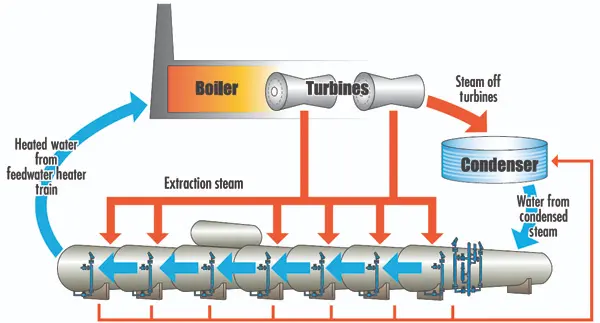
Figure 1: Boiler Feedwater Preheater
Functions of the Heat Exchanger
Heat Recovery and Efficiency Improvement: The most important role of a boiler feedwater preheater's heat exchanger is the recovery of heat from flue gases. This waste heat, otherwise lost to the environment, is used to preheat feed water before it enters the boiler. By heating the feedwater beforehand, less fuel is burned to the appropriate steam temperature, which improves the thermal efficiency of the entire power plant or industrial system (Witte et al 2022). This lowers the use of fuels, causing a cost-effective measure and increasing the sustainability factor.
Energy Conservation: Feedwater preheaters help save energy because they make sure that the boiler consumes less energy to warm up the water. This reduces the load on the boiler because of the heat exchanger's ability to utilize excess heat from the flue gases. Thus, it saves more energy for the plants and helps in reducing carbon footprint and making the most out of available resources.
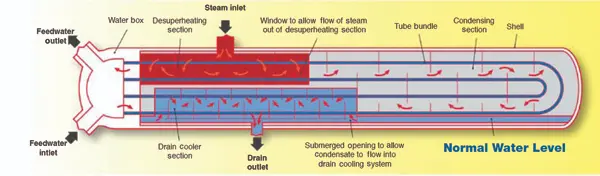
Figure 2: Feedwater Preheater three sections
Preventing Thermal Shock to the Boiler: The introduction of cold water to the boiler leads to a condition known as thermal shock, which damages internal components in the boiler. This problem is especially observed in the high-pressure and high-temperature systems where the fast change of temperature may weaken materials and then cause failure. In this manner, the preheater counters this problem by ensuring that the feedwater entering the boiler is already at a rather higher and stable temperature (Maleki et al. 2020). This smooth transition in temperature also prolongs the life of a boiler and minimizes the need for maintenance that is attributed to thermal stresses.
Reduction in Boiler Fuel Consumption: As discussed earlier, the feedwater preheater is mainly designed to minimize the fuel required for heating the water to boiling point. When cold water is fed into the boiler, it increases the workload on the boiler to heat the water. More fuel is used because of this increased workload (Chen et al. 2022). If a preheater is provided, the water would already be partially heated. Thus, the workload on the boiler would be minimized and the fuel consumption decreased. This results in great energy cost savings and further aids in optimizing the overall plant operational efficiency.
Improvement in Steam Quality: In this manner, by preheating feed water and feeding it to the boiler at a closer and more consistent temperature, the preheater improves steam quality. Steam quality plays a critical role in turbines' and other downstream system operations (White et al. 2021). Uniform feedwater temperatures minimize pressure and temperature steam pulses, which degrade the performance and reliability of turbines.
Environmental Benefits: The reduced fuel consumption due to the efficient feedwater preheater operation also results in lower emissions. Plants can reduce their fossil fuel dependence by recovering and reusing waste heat, which leads to lower CO2 emissions and less environmental pollution (Mondal and Kumar 2024). This is because power plants around the world are focusing on minimizing their carbon footprint and adhering to stricter environmental regulations.
Enhanced Plant Reliability and Safety: The heat exchanger's contribution to maintaining a consistent temperature for feedwater leads to a stable overall system. A constant temperature gradient over the length of the entire system reduces shock shifts in heat, which can impact boiler operation. The preheater ensures the right thermal conditions and gives the plant a more reliable and safe performance.
Selection of Heat Exchanger Type
The shell-and-tube heat exchanger is generally considered to be the most effective and versatile boiler feedwater preheater designs. Its widespread use in industrial applications can be traced back to its strong design, flexibility to changing conditions of operation, and adaptability to a wide range of materials. All these have enabled it to be used in very high-pressure and high-temperature conditions without losing its integrity and efficiency for long. This design is well-suited for boiler feedwater preheating where the conditions are mainly thermal stress and flow rates, yet consistent and reliable performance (Dogbe 2020). A basic construction of shell-and-tube heat exchanger incorporates a bundle of tubes placed inside a cylindrical shell. Generally, one of the fluids flows through tubes (tube side), whereas the other flows around those tubes in the shell (shell side). In this mode, the two fluids can exchange significant amounts of heat with physical separation between them. It depends upon the requirements of the application by the tubes and shell such as corrosion resistance or having higher thermal conductivity (Geete 2022). Common material selection for the same could be stainless steel, carbon steel, and copper due to chemical composition of fluid being used and operating condition in general. One of the main advantages of the shell-and-tube design is that it can accommodate a large number of different configurations. For example, the tubes within the shell may be aligned in such a way to maximize heat transfer and flow characteristics (Yin et al. 2022). The tubes can be aligned in triangular, square, or rotated square configurations, each providing specific advantages depending on the application. Triangular layouts take the highest number of tubes within a given shell diameter, allowing for greater efficiency of heat transfer, while the square layouts make cleaning more accessible. Furthermore, some baffle arrangements are mounted within the shell to introduce fluid flow across the tubes which increases the turbulence and boosts the rate of heat transfer.
Another important advantage of the shell-and-tube heat exchanger is its capability of handling high-pressure applications. Because the design places the more demanding fluid on the tube side, it minimizes the demand for a thick and expensive shell that would otherwise be used and, therefore, will decrease the overall cost without a trade-off in safety or performance (Zhao et al. 2022). The design also handles high-temperature operations there are some configurations that can work above 600°C. This is a reason why a shell-and-tube heat exchanger is very useful as boiler feedwater preheaters; usually, the exhaust gases of combustion processes possess great thermal energy. Another important feature of shell-and-tube design is fouling and scaling. Such issues are common problems encountered in industrial heat exchangers. The smooth surfaces of tubes and high fluid velocities promote low deposit buildup, as the design also allows for easy cleaning and maintenance. For example, fouling-prone fluids are often allocated to the tube side, where cleaning is more manageable (Babaei and Kardgar 2020). Apart from that, other design improvements, like finned tubes or spiral grooves, may be added to promote further enhancement of heat transfer efficiencies and reduce fouling. Its scalability lies in its ability to handle scaling. Depending upon the need for the heat transfer area, it can be designed to include any number of tubes, with any length of the tube. This ensures that it may be adapted to virtually all flow rates and thermal loads. Modular construction can easily be expanded or modified, which makes the shell-and-tube design suitable for use in systems where future upgrading may be needed (Witte et al. 2022). A sum-up, the robustness of the construction, flexible working operations, and the ability of it to work under extreme conditions makes it an essential equipment for boiler feedwater preheaters. Its design serves towards better thermal efficiency but gives a sense of reliability in durability also in harsh industrial requirements. Taking up the advantages of this type of heat exchanger in boilers, energy efficiencies with significant reductions in fuel can be obtained, and that directly affects the cost of working while promoting sustainable and efficient electricity.
Structure Configuration and Working Conditions
The overall heat transfer coefficient (UU) is the critical parameter by which a heat exchanger operates to determine its ability to transfer heat between two fluids. This coefficient depends on the thermal conductivity of the materials of the heat exchanger, the convective heat transfer properties of the fluids, and fouling resistance, which accounts for deposits that build up on heat transfer surfaces. High UU indicates effective heat transfer. An efficient heat transfer is the boiler feedwater preheater's main duty, as flue gases serve as hot fluids while transferring their heat to the cold feedwater (Sadeghi et al. 2021). Capturing and using waste heat would dramatically increase the system's overall efficiency. Hot flue gas enters at 150°C temperature and is passed through the shell side of the heat exchanger. The feedwater enters at a much lower temperature, around 30°C, on the tube side. In this way, a counter-current or crossflow configuration maximizes the temperature gradient between the fluids for effective heat transfer. The flue gas now releases heat and is reduced to 100°C. This temperature decrease allows the feedwater to absorb this heat, and it leaves at a temperature of 70°C. Such temperature changes are reflective of the efficiency of the system and ensure that the feedwater entering the boiler has less energy content for further heating, thus saving on the fuel used. Baffles inside the shell are very critical in attaining the optimization of heat transfer. They guide the hot fluid across the tube bundle. The turbulence created helps to increase the convective heat transfer coefficient. Mixing is improved since there will not be stagnant zones created for heat transfer, thus inefficient. For one, baffles counter the vibrations due to the flow of fluids, which otherwise cause mechanical stress and erosion on the tube surfaces. Baffles maintain uniform fluid flow distribution and minimize structural stress, thereby ensuring that the heat exchanger is reliable and stable over a long period.
An important measure of the performance of a heat exchanger is its Log Mean Temperature Difference, LMTD. It yields an average temperature gradient driving the heat transfer across the exchanger. LMTD is calculated as the logarithmic average of the temperature difference of the fluids at the inlet and outlet. For the conditions of the problem, the LMTD would accurately account for the thermal driving force as the temperature difference varies along the length of the exchanger. The higher the LMTD, the better the heat exchanger is at making use of the available temperature gradients to transfer energy from one fluid to the other. The heat transfer area, for example, measured at 50 m², is one of the critical design parameters determining the ability of an exchanger to handle the stipulated flow rates and thermal loads (Zhang et al. 2020). This area should be adequate to provide the needed energy transfer but still be of manageable pressure drops across the system. Higher pressure drops will increase the pumping power needlessly, hence reducing the efficiency of the system. The selected dimensions ensure the striking balance between enough hydraulic resistance and efficient energy transfer. These working conditions ensure not only thermal efficiency but also mechanical stability. All materials used in construction have to keep up with the stresses created by high temperatures, along with corrosive properties of flue gases, without losing their structural integrity when working under pressure. The best choice of durable and heat transfer performance-enhancing materials such as stainless steel or copper alloys ensures durability.
Part II: Exergy Analysis and Performance Optimization
Exergy Analysis
Exergy analysis is the thermodynamic approach to calculate performance and efficiency of a thermal system. While energy analysis includes only energy, which is conserved, exergy analysis focuses attention on the system's ability to perform useful work as well as on its irreversibilities: what actually reduce the system's performance. Exergy analysis is necessary to determine the efficiency in heat transfer in a boiler feedwater preheater and what point in improvement exists with energy transfer between hot flue gases and feedwater. For the hot flue gas, exergy is lost as it is transferred to feedwater, in this case, mainly to account for temperature differences as well as irreversibility of heat transfer. Again, the feedwater gains its exergy as it absorbs some heat and thus increases its ability to perform work in the boiler. This work assumes that mass flow rates of the hot and cold fluids are 2 kg/s, with enthalpy and entropy, obtained from known thermodynamic tables or software tools. The ambient temperature is at T0 = 298 K. The T0 = 298 KT_0 = 298 K value is taken for standard ambient conditions. Based on these values, the exergy destruction in the heat exchanger is calculated by quantifying the difference between exergy input from the hot fluid and exergy output to the cold fluid (Uddin 2020). Destruction of exergy occurs primarily from such irreversibilities such as heat losses to the surroundings, non-ideal flow configurations, and fouling at heat transfer surfaces. The exergy efficiency of greater values implies that the heat exchanger is more efficiently utilizing the accessible thermal potential of the hot fluid. The calculated efficiency for this set of parameters is, thus, compared to its benchmark or ideal value to derive a performance measure for this system. The results show that the heat exchanger has succeeded in preheating feedwater to desired levels, but much can still be done with respect to diminishing irreversibilities. Improved heat transfer coefficient, decreased fouling, and better flow distribution will lead to an improvement in exergy destruction. This again supports exergy analysis as an application for pointing out deficiencies in a system and to achieve optimization of the same.
Performance Optimization
Performance optimization is defined as the improvement of both the design and operational parameters of the heat exchanger. Its aim is to maximize performance efficiency and minimize energy losses. These may be achieved by systematically varying variables such as the area of heat transfer, the fluid flow rates, and inlet temperatures in a parametric study to observe their individual effects on performance metrics (Li et al. 2022). In this analysis, the optimization is done taking the heat transfer area as a variable of interest. By increasing the heat transfer area, the heat transfer rate increases, reducing the temperature difference between the fluids and minimizing irreversibilities. This is at a cost of increased material and installation costs, so there needs to be a balance for this trade-off. The heat transfer area is optimized for application using optimization techniques, scipy.optimize, in Python. The parametric study also extends the line of inquiry to explore the impact of flow rates and inlet temperatures on the system’s efficiency (Fichera et al. 2022). For example, the mass flow rate of the hot fluid can be used to increase the heat transfer rate, but a consequence is the pressure drop that is expensive in terms of pumping costs. Equally, if the inlet temperature of feedwater increases the temperature difference, then the rate of heat transfer is also low. The current evidence shows how different design variables are related and, thus, proves the need for an organized procedure to optimize them. The engineers in this case may utilize computational tools, sensitivity analyses and select design configurations which provide the right performance, at reasonable cost and operating reliability in as much as to attain the right specifications set out for the heat exchanger.
Discussion of Results
Studies from exergy analysis and optimization work point to significant signs of predictability in the case of preheater for boiler feedwater. Exergy destruction analysis indicates that while efficient a reasonable amount of waste heat is well utilized by the heat exchanger, some significant losses include, Temperature gradients, Fouling and non-ideal flow pattern. These irreversibilities may be improved in that the surface material can be made fouling resistant or minimum while the flow paths can be further designed to best provide the heat transfer distributions (Baloda et al. 2023). The optimization study proves that the correct decision of the heat transfer area is critical. In this case, increasing the area improves both thermal performance and exergy efficiency, but beyond a certain point, marginal gains decrease as costs increase sharply. The identification of an optimal area highlights the requirement to balance efficiency improvements with economic considerations. These trade-offs are particularly relevant for industrial applications, where both operational costs and capital expenses must be minimized. It determines the robustness of the working of the system to aspects like flow rates and inlet temperatures (Wang et al. 2023). Higher flow rates enhance the heat transfer rate but possibly at a high cost of pressure drop implying large pumps and high energy utilization.
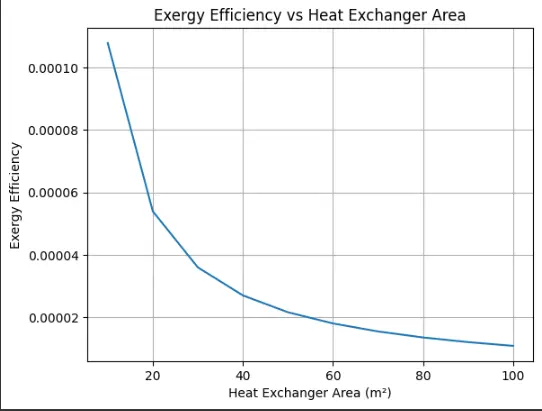
Figure 3: Exergy Efficiency vs Heat Exchanger Area
Minimizing inlet temperatures results in minimum irreversibilities but must be done in harmony with other operations preceding and following it. In particular, the thesis confirms that exergy analysis and optimization are suitable for providing key insight into the efficiency of thermal systems. Using critical appraisal of ineffectiveness and probable consequences of design variables, the engineer can act rationally for improving system dependability, sustainableness, and economy (Purseth et al. 2021). The results therefore create and legitimatize the current design but, in doing so, simultaneously create a foundation for future improvements so that the optimal performance is achieved for a set of other conditions.
Conclusion
As the example of the process, the analysis of the boiler feedwater preheater method can serve as a successful example of integrated work of both the thermal and the exergy analysis to enhance the effectiveness of the existing industrial systems. The system uses flue gases to recover waste heat, thus reducing fuel consumption that would have contributed to operational cost, and environmental degradation. It enhances thermal efficiency for the boiler by reducing carbon emissions during energy generation, in accordance with sustainable global development. This study shows it is essential to pay strict attention to design parameters when it comes to the heat transfer area, flow rates, and temperature gradients during the optimization of the heat exchanger. The integration of exergy analysis gives deeper insights into energy utilizations and irreversibility, thus targeted improvements make the system more efficient. The optimization process proves that the balance between performance improvements and cost considerations is critical, thus ensuring effectiveness and economical viability of the system. The study further emphasizes the relevance of advanced engineering principles as applied to practical applications for producing systems that are efficient as well as reliable and sustainable. Such approaches will allow the industries to use energy resources with better efficiency, reduce environmental impact, and ensure long-term stability of operational performance, thus serving as a benchmark for future innovations in energy systems.
If you are struggling to understand complex engineering concepts like heat exchangers and exergy analysis, professional Assignment Help can make a real difference. At Native Assignment Help, expert writers provide clear, well-structured solutions tailored to your academic needs. Get reliable guidance to improve your understanding and achieve higher grades with ease.
Reference List
Journals
Maleki, A., Haghighi, A., Assad, M.E.H., Mahariq, I. and Nazari, M.A., 2020. A review on the approaches employed for cooling PV cells. Solar Energy, 209, pp.170-185.
Chen, M., Pang, D., Chen, X., Yan, H. and Yang, Y., 2022. Passive daytime radiative cooling: Fundamentals, material designs, and applications. EcoMat, 4(1), p.e12153.
White, M.T., Bianchi, G., Chai, L., Tassou, S.A. and Sayma, A.I., 2021. Review of supercritical CO2 technologies and systems for power generation. Applied Thermal Engineering, 185, p.116447.
Mondal, S. and Kumar, R., 2024. Energy and exergy analysis of a thermal power plant. Water and Energy International, 66(12), pp.53-58.
Dogbe, E.S., 2020. Exergy, techno-economic and exergoeconomic analyses for improving energy efficiency of a typical sugar mill and designing integrated biorefineries (Doctoral dissertation, Stellenbosch: Stellenbosch University.).
Geete, A., 2022. Performance analyses of coal-fired thermal power plant using parabolic solar collectors for feed water heaters. Australian Journal of Mechanical Engineering, 20(2), pp.332-343.
Yin, H., Jin, Y., Li, L. and Lv, W., 2022. Numerical Investigation on the Impact of Exergy Analysis and Structural Improvement in Power Plant Boiler through Co-Simulation. Energies, 15(21), p.8133.
Zhao, Y.J., Zhang, Y.K., Cui, Y., Duan, Y.Y., Huang, Y., Wei, G.Q., Mohamed, U., Shi, L.J., Yi, Q. and Nimmo, W., 2022. Pinch combined with exergy analysis for heat exchange network and techno-economic evaluation of coal chemical looping combustion power plant with CO2 capture. Energy, 238, p.121720.
Babaei Jamnani, M. and Kardgar, A., 2020. Energy‐exergy performance assessment with optimization guidance for the components of the 396‐MW combined‐cycle power plant. Energy Science & Engineering, 8(10), pp.3561-3574.
Witte, F., Hofmann, M., Meier, J., Tuschy, I. and Tsatsaronis, G., 2022. Generic and Open-Source Exergy Analysis—Extending the Simulation Framework TESPy. Energies, 15(11), p.4087.
Sadeghi, S., Ghandehariun, S. and Rezaie, B., 2021. Energy and exergy analyses of a solar-based multi-generation energy plant integrated with heat recovery and thermal energy storage systems. Applied Thermal Engineering, 188, p.116629.
Zhang, H., Liu, Y., Liu, X. and Duan, C., 2020. Energy and exergy analysis of a new cogeneration system based on an organic Rankine cycle and absorption heat pump in the coal-fired power plant. Energy Conversion and Management, 223, p.113293.
Uddin, M.M., 2020. Energy and exergy analysis of a combined cycle power plant.
Li, S., He, S., Huang, C., Song, W. and Feng, Z., 2022. Performance Analysis and Optimization of Heat Pump Steam Generator System Based on Exergy Analysis. YAN Jinyue. Energy proceedings, Bochum: ICAE, 2022, pp.1-10.
Fichera, A., Samanta, S. and Volpe, R., 2022. Exergetic analysis of a natural gas combined-cycle power plant with a molten carbonate fuel cell for carbon capture. Sustainability, 14(1), p.533.
Baloda, S., Soni, M.K. and Sharma, N., 2023. Exergoeconomic and environmental performance assessment of the solar-assisted thermal power plant. International Journal of Ambient Energy, 44(1), pp.542-554.
Wang, Y., Chen, H., Li, T., Pan, P., Zhai, R., Xu, G., Dong, Y. and Zhou, Z., 2023. Thermo-economic analysis of a waste-to-energy assisted carbon capture system for a coal-fired power plant. Applied Thermal Engineering, 229, p.120594.
Purseth, S., Dansena, J. and Desai, M.S., 2021. PERFORMANCE ANALYSIS AND EFFICIENCY IMPROVEMENT OF BOILER-A REVIEW. International Journal of Engineering Applied Sciences and Technology, 5(12), pp.326-331.
Wang, C. and Song, J., 2023. Performance assessment of the novel coal-fired combined heat and power plant integrating with flexibility renovations. Energy, 263, p.125886.
Pan, P., Zhang, M., Xu, G., Chen, H., Song, X. and Liu, T., 2020. Thermodynamic and economic analyses of a new waste-to-energy system incorporated with a biomass-fired power plant. Energies, 13(17), p.4345.
Witte, F., Hofmann, M., Meier, J., Tuschy, I. and Tsatsaronis, G., 2022. Generic and Open-Source Exergy Analysis—Extending the Simulation Framework TESPy. Energies 2022, 15, 4087 [online]
Go Through the Best and FREE Samples Written by Our Academic Experts!
Native Assignment Help. (2026). Retrieved from:
https://www.nativeassignmenthelp.co.uk/ems623u-energy-analysis-assignment-sample-43356
Native Assignment Help, (2026),
https://www.nativeassignmenthelp.co.uk/ems623u-energy-analysis-assignment-sample-43356
Native Assignment Help (2026) [Online]. Retrieved from:
https://www.nativeassignmenthelp.co.uk/ems623u-energy-analysis-assignment-sample-43356
Native Assignment Help. (Native Assignment Help, 2026)
https://www.nativeassignmenthelp.co.uk/ems623u-energy-analysis-assignment-sample-43356
- FreeDownload - 39 TimesBusiness Research Methods Assignment Sample
Business Research Methods Assignment Looking for top-notch assignment services...View or download
- FreeDownload - 40 TimesBMP6003 International HRM Assignment Sample
Introduction - BMP6003 International HRM Organisations achieve a...View or download
- FreeDownload - 35 TimesBiomass Gasification for Sustainable Power Generation - Assignment Sample
Biomass Gasification For Sustainable Power Generation: Memorandum Of...View or download
- FreeDownload - 41 TimesEvolution of Management Accounting Assignment
Management Accounting Assignment Sample Task 1: Development of Management...View or download
- FreeDownload - 45 TimesBMHP5023 - Introduction to Physiology
Introduction to Physiology Assignment INTRODUCTION The study of physiology is...View or download
- FreeDownload - 44 TimesMK11104 Global Marketing Assignment Sample
Global Marketing (MK11104) – Assessment 1 Task INTRODUCTION Global...View or download
-
100% Confidential
Your personal details and order information are kept completely private with our strict confidentiality policy.
-
On-Time Delivery
Receive your assignment exactly within the promised deadline—no delays, ever.
-
Native British Writers
Get your work crafted by highly-skilled native UK writers with strong academic expertise.
-
A+ Quality Assignments
We deliver top-notch, well-researched, and perfectly structured assignments to help you secure the highest grades.