
Introduction
This file contains the details of architectural design of jewellery shop layout at the site 49 Copper Street/101 Allen Street Sheffield UK. The functional features consist of jewellery storage; display zones; a kitchen; a toilet; and an exterior region The building environment addresses a single level. The look of store emphasises on a balance between beauty, functionality and sustainability where widely used materials are steel, glass and FSC certified timber. The supports of the project consist of the design brief, site evaluation, AutoCAD layout, evaluation of natural light, design principles of ergonomics, and location in the urban environment. The intention is to design a contemporary warm store atmosphere that is sustainable at a similar level as RETAIL design.
Dedicated academic support and assignment samples are provided by Native Assignment Help, offering clear, well-structured, and plagiarism-free content to enhance understanding and ensure effective assignment completion.
Materials Used
The shop design will apply features that can be useful in the functional, sustainability, and visual sense of the term. The key materials include:
Structural Elements: The structure will use reinforced concrete and steel because of their strength and ability to accommodate expansive areas particularly in display. The ability to work the steel in ways that will allow for stronger structures but greater flexibility with design, does fit into the current architectural paradigm.
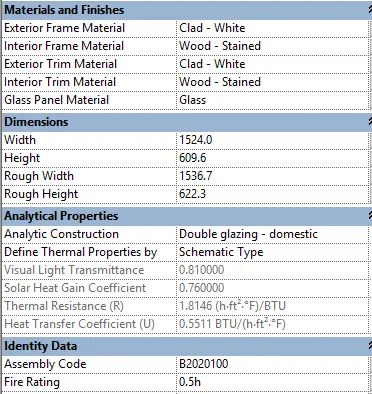 Exterior Finishes: The façade will be glazed and it is proposed to use mainly glass overlooking the sustainable wood and metal structures. High iron security grills and large glass windows ensure that natural light is brought in to illuminate displays while at the same time display cases are visible to the outside world (Weijs et al. 2020). Wood makes the interior more warm and welcoming, metal is more contemporary and very popular in interior design.
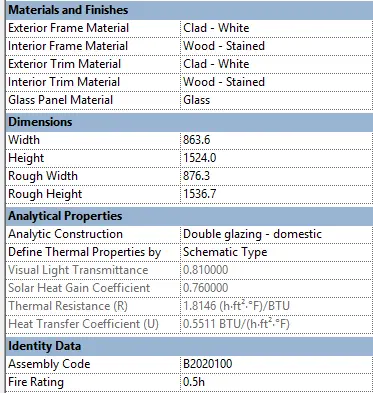
Figure 2: Window Type 2
Interior Materials:
Flooring: Polished concrete or selective timber from renewable sources in the interest of easy maintenance and durability.
Walls: With a textured wood or stone look for accent walls on painted gypsum board further luxurious sophistication is achieved.
Display Units: Some of the components of the structure to be made of glass and brushed metal, so as to achieve an essentially glamorous look and feel.
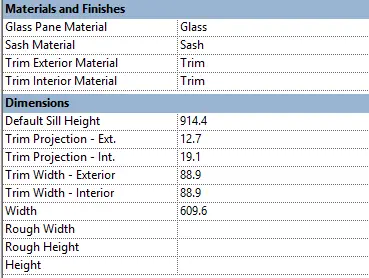
Figure 3: Window Type 3
Lighting: Energy saving LED fixtures are chosen for lighting to save costs and also to properly highlight jewelries.
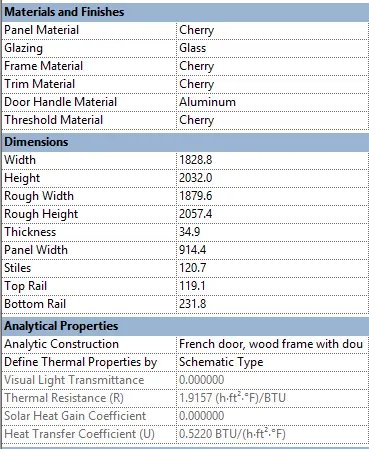
Figure 4: Door Type 1
Sustainability: It is expected that recyclable or low carbon content products will only be used in order to be equitable with current environmental trends.
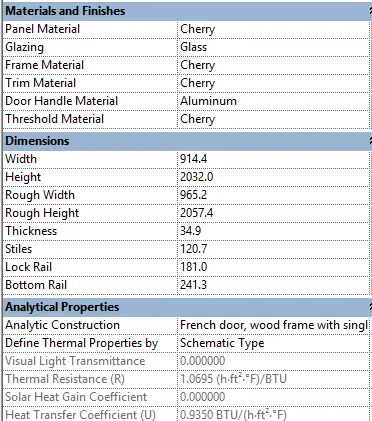
Figure 5: Door Type 2
This choice of materials provides a certain level of visual attractiveness, practicality, and sustainability, and, therefore, would create comfortable noble and accurate space characterised by jewellery-making.
Contribution of materials in the performance of the space
The chosen materials improve the experience and functionality of the jewellery store in many aspects including thermal comfort, daylighting, acoustics and sustainability.
Thermal Performance: With insulated glass windows every room has control of heating during winter andcooling during summer while the wooden finishing is made from sourced, renewable material. The use of reinforced concrete and steel along with insulate it drastically reduce the heat transfer from the outside to the inside of the building.
Daylighting: Floor to ceiling glazing allows plenty of daylight thus diminishing the need to use artificial light indoors in the course of the day. This ensures that there is sufficient lighting and warm as it giúp to complement the jewellery (Ceylan et al. 2021). However, shading devices or low energy or low ‘E’ glass coatings can minimise glazing and overheating resulting from direct sunlight.
Acoustic Qualities: Ceilings or walls fitted with textured wood, and/or acoustic panels incorporated within the interior avoid echoes within the open-idea showcase area. This guarantees that there is a harmonious nature of the place which is appropriate for luxury retail business.
Sustainability: The use of recycled or low-carbon materials for construction include wood from well-managed forests (FSC) and paint that releases low volatile organic compounds (VOCs). Light emitting diode lighting and efficient glazing additionally improve the green performance of the building in terms of decreasing energy consumption.
These materials all up enhance the practicality, comfort and look of the room and the design spearheads luxury and sustainability in line with the core values of the company; perfectionism and accuracy.
Contribution of materials to the surroundings
The selected materials create a pleasing contrast with the industrial background of the site and reflect the orientation on the 21st century in the sphere of jewellery sales.
Connection to Heritage: The represented materials, metal and exposed concrete, refer to industrial history of the area, ly its metal working and craftsmanship background. These materials honour the history of ‘Little Mester’ workshops as well as reflect on modern architectural ideas.
Contemporary Appeal: Glass and metal are used judiciously in the store, something that gives the place a modern look that sets the pace in the area that is changing to being associated with art and business. This minimalist appearance has a synergy with Sheffield’s emergent position as a hub of innovation and design.
Engaging the Community: Big glass display can inspire people to interact with the store through the power of sight them as a part of the exhibit on the street. The material choice of wood and textured surface gives warmth that gives a positive vibe making the building feel more homey given the many times the urban environment feels quite cold (Alhusban et al. 2021).
Integration with Surroundings: The thorough use of sustainable materials and the natural colours make the building easily fit the general environment of the urban scenery yet stand out as a very remarkable work of architecture. Such a sensitive material selection ensures that the store rightly fits its environment and hence contributes towards place making.
Working process in the jewellery store
Since the jewellery store is a workplace, the working process is based on the structural, formal, functional requirements, as well as customer relations to design the specific space.
Storage and Security: Personal belongings, including jewellery, are kept in a separate storage area, which has heavily built shelves and doors with locks too. This place is convenient to staff members and at the same time obscure to customers and competitors for the purpose of secrecy.
Display and Engagement: The first and the most important selling area include using glass cases with lights included on it that brings out the sparkle of the jewelries. The design helps to provide free traffic flow while making customers and visitors want to browse through the collections without feeling like they are intruding on cluttered space that belongs to upper-class clientele.
Making and Maintenance: There’s also consideration for a separate small area for minor modifications/adjustments, or even repair which contains all the necessary tools and the area is well ventilated (Leijon et al. 2024). This space allows provision on-site services which augment the value delivered to customers.
Client Comfort: Clients are also able to view the pieces and discuss them in detail when seated in a comfortable area opposite the display. The kitchen and the next break area meet the staff’s requirements in order to provide reliable operation.
External Space: It can be used for showing additional collections, sales or for meeting with clients which allows the expansion of the store’s activities.
This design enables flexibility and congruency of operations and customer interfaces, reflecting the creativity fundamental to jewelries business.
Jewellery store plan
Creating the jewellery store’s plan in AutoCAD requires a rational approach that entails location and arrangement of equipment, ergonomics, and spatial features that enhance the appearance of the store.
Layout and Zoning: The first step is to divide the area into functional ones: jewellery display area, storage area, work area, kitchen area, toilet, and the outer space. It is necessary to plan circulation paths, for the constant movement of customers and staff with consideration of ergonomics.
Display Area: It is advised to place glass display cases appropriate to ensure free and easy access and view other items. Multi-pathway access control should accommodate the specified width of not less than 1.2 metres to allow adequate manoeuvrability (Milovanović et al. 2020).
Storage Room: Assign proper functional area for staking jewellery and position secure cabinets and ergonomically inclined shelves. This should help make sure that they work or communicate from the specific places they perform their functions by being closer to the area where they work in the organisation.
Ergonomic Detailing: For the workspace, standard countertop heights are between 850 – 900 mm and enough space for tools and equipment. Think casually about chairs and feet, walking space, and where to stand when doing minor fixings.
Spatial Proportions: Apply formal measurement and spatial relationship in AutoCAD as a tool for measurement and planning. There should be good separation between the indoors and the outdoors, with at least 60 m² of total floor area.
Material Integration: Add marginal notes for materials and lighting in the layout of AutoCAD and provides the aspects of the store.
This process also helps in providing the necessary commercial, commercial-technical, ergonomics and aesthetic aspects that are necessary for the general layout of the store.
Elevation & section of the Jewellery store
AutoCAD knowledge is required to create plan and sectional elevation of the jewellery store including the site topography, changes in ground level and heights of the other four buildings so that these factors are integrated harmoniously within the design.
Site Topography: The site chosen is on the corner of Copper Street and Allen Street and there is a gradual slope on this site which has a 1:20 gradient over a distance of 20 metres giving a height difference of one metre (Palliwoda & Priess, 2021). This gradient implies that there should be a stepped or a ramped access to create transitional suability while observing some degree of accessibility.
Surrounding Buildings: Houses in this area are commercial/institutional buildings normally not exceeding 10-12m in height which is equivalent to a three or four storey buildings. These externals are primarily made of brickwork as a testimony to the industrial vintage of the Furnace Hill neighbourhood (Spence, 2020). These height references shape the design, and it in proportion relates to the setting of urban development.
Plan Drawing: All compartments within the store are designed with specific measurements: jewellery showcase occupies 30 m², storage 10 m² and extra amenities include toilet, kitchen and a breakout area. Circulation paths are drawn as 1.2 metres wide for accessibility.
Sectional Elevation: Mezze detail an internal height of 3.5 metres to give enough daylight in the section. Modifications at pedestrian level are done through ramps and stairs in the external area while keeping continuity intact.
Jewellery store model
Creating a 1:100 drawing appearance of the current site and its environment model during design development is imperative in the jewellery store. This model has several different uses in how the building will perform in terms of light and solar access once it is complete.
The model will therefore make it easy to see site gradient information such as the 1m height difference in 20 metres along the site. The above shall assist in determining positions of ramps and steps for access for people in wheel chairs among others more in improving movement between levels. The adjacent buildings that are between 10 and 12 metres in height are also important in determining how they will impact the integration of the store within regard to natural light and shading (Peters & Halleran, 2021). These structures exist in the proximity of the proposed store and the model will elucidate the shadowing potential on the store and its immediate environment in relation to the form and massing of these neighbouring structures.
Also, the model will enable penetration analysis of sunlight into the store during the day and throughout the year. Some of the details of the model will show where light enters through large glasses and the size and orientation of the store will show how energy efficient or lacking it is (Higuera et al. 2021). This analysis enables the design of the store to capture as much daylight as possible without causing overheating and glare to the customers.
Site analysis
The site analysis plan diagram is a crucial document in perceiving the broad environmental factors concerning the jewellery store location, especially in relation to the amount of sunlight and shadowing as well as orientation of the site (Iwuanyanwu et al. 2024). This plan’s path, or trajectory, of the sun is one of the most important aspects in its daylight performance and more importantly, the comfort levels of the users.
This diagram shall depict the movement of the sun in relation to our hemisphere all year round and pull emphasis towards the solstice and equinox (Maturana et al. 2021). This will assist in to establish the area of the site that is exposed to light during the different hours of the day and different weather seasons.
Literally plotting the movement of the sun, one can determine how light will fall on the large glass fronts of the jewellery store. For instance, the south facing façade will experience the most direct light during the day, which may cause glazing or overheating depending on the measure put in place (Martel et al. 2021). On the other hand, the northern elevation of the building will have moderate, consistent and diffused light, which is suitable for display.
Furthermore, this diagram also favours in finding the correct location of shading devices or overhangs to block the direct sun’s rays which just as well helps tap natural light to boost the store’s feel and look. This analysis helps maintain energy-efficient comfort as well as natural light exposure into the building during the day.
Conclusion
Overall, the concepts of the proposed design solution for the jewellery store are as follows: the proposed design meets the requirements of functionality and aesthetic appearance of the space, where the author emphasises an understanding of craftsmanship as a unique processing method and refusal from the usual forms of rooms, including the reception and sale of jewellery products. With specific choice of materials, rational and spatial organisation of the interior and the site sensitivity, the store will bring a positive effect to the urban environment of Furnace Hill, Sheffield. Incorporation of natural light, thermal comfort and acoustic control contributes to the development of a comfortable as well as sustainable climate. What this report shows is a holistic design process through the use of Auto CAD modelling system for accurate modelling with an intension of designing a modern elegant and operationally efficient environment for customers and workers.
References
- Alhusban, A.A., Alhusban, S.A. and Alhusban, M.A., 2021. How the COVID 19 pandemic would change the future of architectural design. Journal of Engineering, Design and Technology, 20(1), pp.339-357.
- Ceylan, S., Şahin, P., Seçmen, S., Somer, M.E. and Süher, K.H., 2021. An evaluation of online architectural design studios during COVID-19 outbreak. Archnet-IJAR: International Journal of Architectural Research, 15(1), pp.203-218.
- Higuera-Trujillo, J.L., Llinares, C. and Macagno, E., 2021. The cognitive-emotional design and study of architectural space: A scoping review of neuroarchitecture and its precursor approaches. Sensors, 21(6), p.2193.
- Iwuanyanwu, O., Gil-Ozoudeh, I., Okwandu, A.C. and Ike, C.S., 2024. Cultural and social dimensions of green architecture: Designing for sustainability and community well-being. International Journal of Applied Research in Social Sciences, 6(8), pp.1951-1968.
- Leijon, M., Nordmo, I., Tieva, Å. and Troelsen, R., 2024. Formal learning spaces in Higher Education–a systematic review. Teaching in Higher Education, 29(6), pp.1460-1481.
- Martel, A., Day, K., Jackson, M.A. and Kaushik, S., 2021. Beyond the pandemic: the role of the built environment in supporting people with disabilities work life. Archnet-IJAR: International Journal of Architectural Research, 15(1), pp.98-112.
- Maturana, B., Salama, A.M. and McInneny, A., 2021. Architecture, urbanism and health in a post-pandemic virtual world. Archnet-IJAR: International Journal of Architectural Research, 15(1), pp.1-9.
- Milovanović, A., Kostić, M., Zorić, A., Đorđević, A., Pešić, M., Bugarski, J., Todorović, D., Sokolović, N. and Josifovski, A., 2020. Transferring COVID-19 challenges into learning potentials: Online workshops in architectural education. Sustainability, 12(17), p.7024.
- Palliwoda, J. and Priess, J.A., 2021. What do people value in urban green? Linking characteristics of urban green spaces to users’ perceptions of nature benefits, disturbances, and disservices. Ecology and Society, 26(1), p.28.
- Peters, T. and Halleran, A., 2021. How our homes impact our health: using a COVID-19 informed approach to examine urban apartment housing. Archnet-IJAR: International journal of architectural research, 15(1), pp.10-27.
- Spence, C., 2020. Senses of place: architectural design for the multisensory mind. Cognitive research: principles and implications, 5(1), p.46.
- Weijs-Perrée, M., Dane, G. and van den Berg, P., 2020. Analyzing the relationships between citizens’ emotions and their momentary satisfaction in urban public spaces. Sustainability, 12(19), p.7921.
Go Through the Best and FREE Samples Written by Our Academic Experts!
Native Assignment Help. (2026). Retrieved from:
https://www.nativeassignmenthelp.co.uk/environmental-architecture-design-assignment-sample-43293
Native Assignment Help, (2026),
https://www.nativeassignmenthelp.co.uk/environmental-architecture-design-assignment-sample-43293
Native Assignment Help (2026) [Online]. Retrieved from:
https://www.nativeassignmenthelp.co.uk/environmental-architecture-design-assignment-sample-43293
Native Assignment Help. (Native Assignment Help, 2026)
https://www.nativeassignmenthelp.co.uk/environmental-architecture-design-assignment-sample-43293
- FreeDownload - 40 TimesIntroduction to Psychology Assignment
Introduction to Psychology Assignment {{TEXT2}} Introduction to...View or download
- FreeDownload - 43 TimesHuman Resources Management Assignment Example
Part 1: Human Resources Management Assignment Introduction - Human...View or download
- FreeDownload - 46 TimesBanking and Finance Assignment Sample
Banking and Finance Assignment Sample A. Explain and justify the stage...View or download
- FreeDownload - 44 TimesCW2 Critical Reflection Of Ethical Issues Assignment Example
CW2 Critical Reflection Of Ethical Issues Assignment Sample I. Aim and...View or download
- FreeDownload - 40 TimesReflective Study of Leadership Diary Assignment Sample
Reflective Study of Leadership Diary If you want to be successful in your...View or download
- FreeDownload - 40 TimesLc666 Global Health Society Assignment Sample
Introduction - Lc666 Global Health Society The concerned report is a...View or download
-
100% Confidential
Your personal details and order information are kept completely private with our strict confidentiality policy.
-
On-Time Delivery
Receive your assignment exactly within the promised deadline—no delays, ever.
-
Native British Writers
Get your work crafted by highly-skilled native UK writers with strong academic expertise.
-
A+ Quality Assignments
We deliver top-notch, well-researched, and perfectly structured assignments to help you secure the highest grades.