
Introduction
A8120 conveyor system is a conveyor belt system that belongs to the medium to heavy duty conveyor type mostly used in automated manufacturing lines due to its versatility and strength as well as performance. In a large manufacturing plant in London, the A8120 has an important function of moving parts to the packing and dispatch department in the manufacturing process. For this, the Quality Department found the requirement of removing components after it reaches 20 in number.
This project seeks to build an entirely automated component removal system based entirely on the A8120 conveyor system. This mechanism will incorporate the most updated mechanical and electronic technologies. This includes a Robotics Arm holding a Two-Finger Mechanical Gripper, a photoelectric sensor to detect components, and a PLC or Programmable Logic Controller to allow well-timed synchronization.
The numerous benefits consist of greater operational efficiency, minimum human interference, and less danger to the operators. Because of a lack of human intervention in the removal process, the system is poised to display high rates of accuracy, reliability, and compliance with operational safety standards developed globally such as the ISO 12100. It is also proven that this kind of modular structure will be easy to maintain and can be possibly upgraded in future so it will work in the long term.
Key features of the system are: The control of the number of components and their identification, position control, the ability to grip and place elements with high-speed coincidence with the speed of the conveyor and protection measures. All these characteristics will guarantee the design meets the requirements of stakeholders in terms of accuracy, dependability, and standards.
The study outlines the design of the automated removal system where detailed descriptions of design specifications, working mechanisms, evaluations, and safety features of the removal system are described and the enhancement of quality control and overall operational efficiency is also discussed.
Design Specification
Functional Requirements
The automated removal system is to take out one component after every 20 components off the A8120 conveyor while not interrupting operations (Gebler, 2020). It has to work with parts with a precise measurement of 200mm in length, 50mm in height and 125mm in width for efficiency and uninterrupted performance.
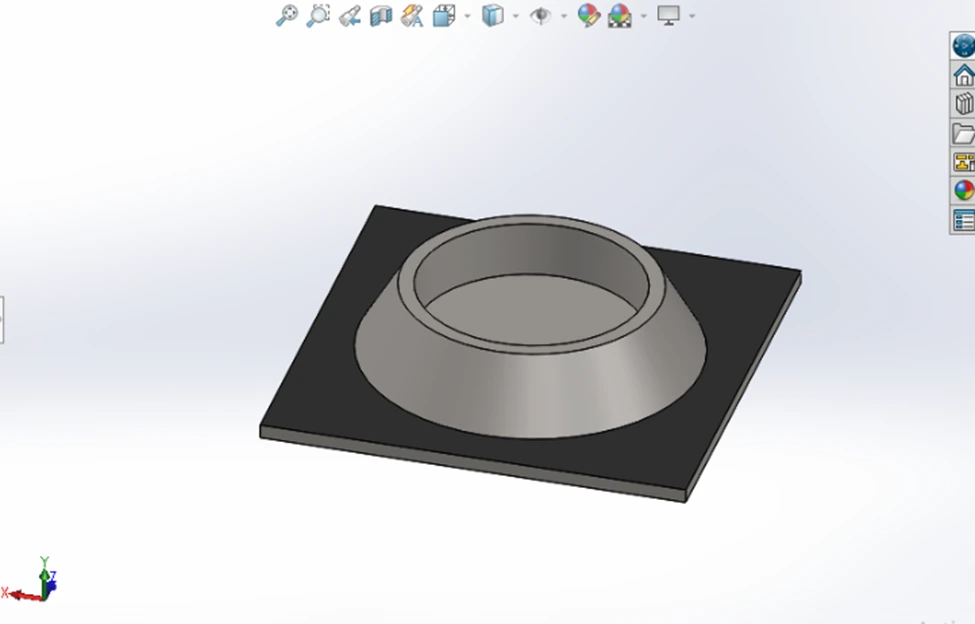
Figure 1: base
The system has to be seamlessly integrated into the existing conveyor, noting the specifications such as the belt width, guides, and motorized control.
Besides automation, the system needs to be synchronized with the conveyor speed and throughput. It should be ensured that the removal mechanism can cope with the high-speed nature of the production line without losing any precision and efficiency. Also, compatibility with the modular design of the conveyor is very important for easy installation and future upgrades.
Mechanical Design
The mechanical parts of the system are durable, precise, and flexible.
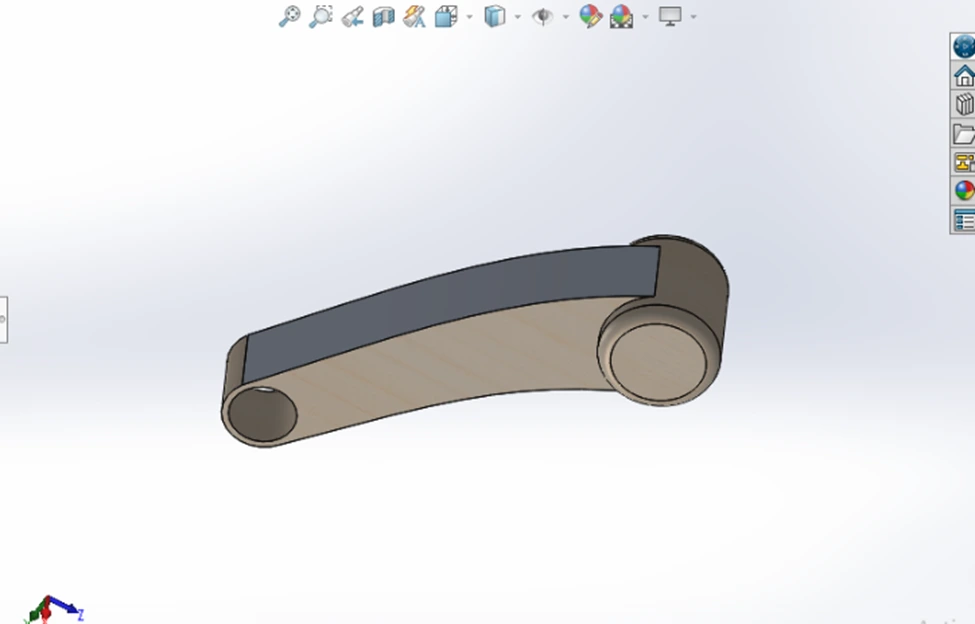
Figure 2: base 2-arm
The aluminum and steel construction of the robotic arm provides for solid performance in industrial settings where throughput is high (Leong and Ahmad, 2024). The use of aluminum lightens the overall weight of the system, while steel parts make it stronger and more robust, especially for moving parts.
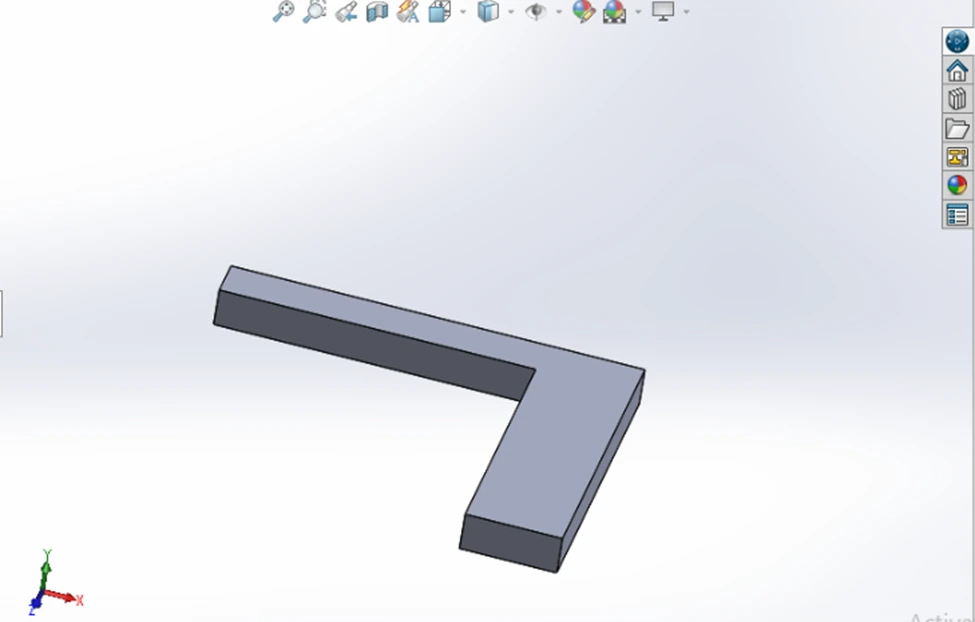
Figure 3: Two-finger mechanical Gripper Handle
The gripper mechanism used at the end of the robotic arm is a Two-Finger Mechanical Gripper. These are specifically designed to clamp components without damaging them and are fitted with two opposing "fingers" whose controlled force will hold the component in place during the removal process.
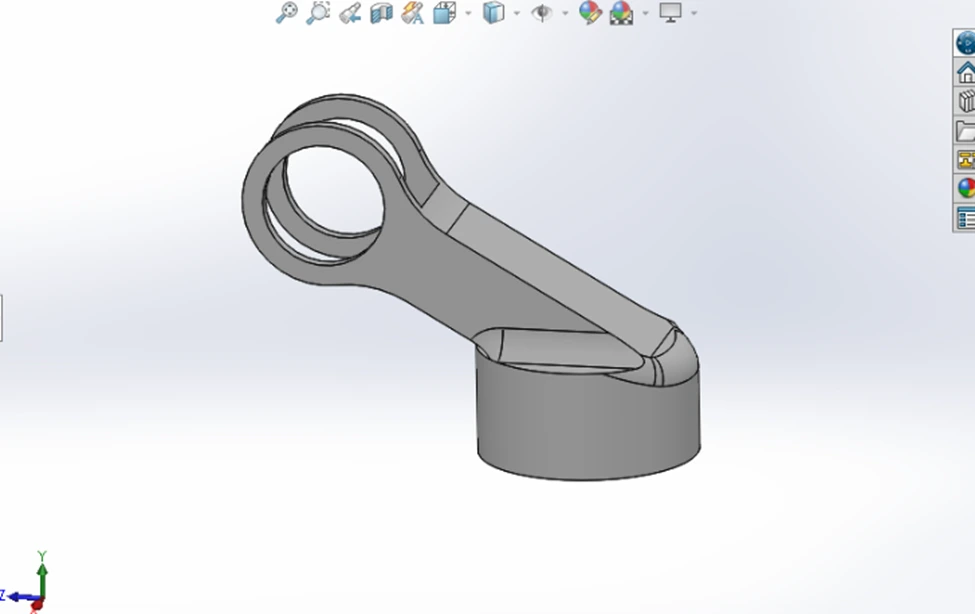
Figure 4: Arm holder
They also contain a modular mounting base in the system that helps in tension and alignment release during mounting. This modularity guarantees the robotic arm’s flexibility in terms of mobility or reconfiguration in response to adaptations in conveyor setup or part sizes.
Electronic Components
To accomplish the detection and identification of the elements on the conveyor, photoelectric sensors are installed into the system (Feng et al. 2023). The sensors are also optimal for measuring and initiating the removal process after 20 of the components. The application of optical technology will help provide high-speed accuracy in the operation of the device.
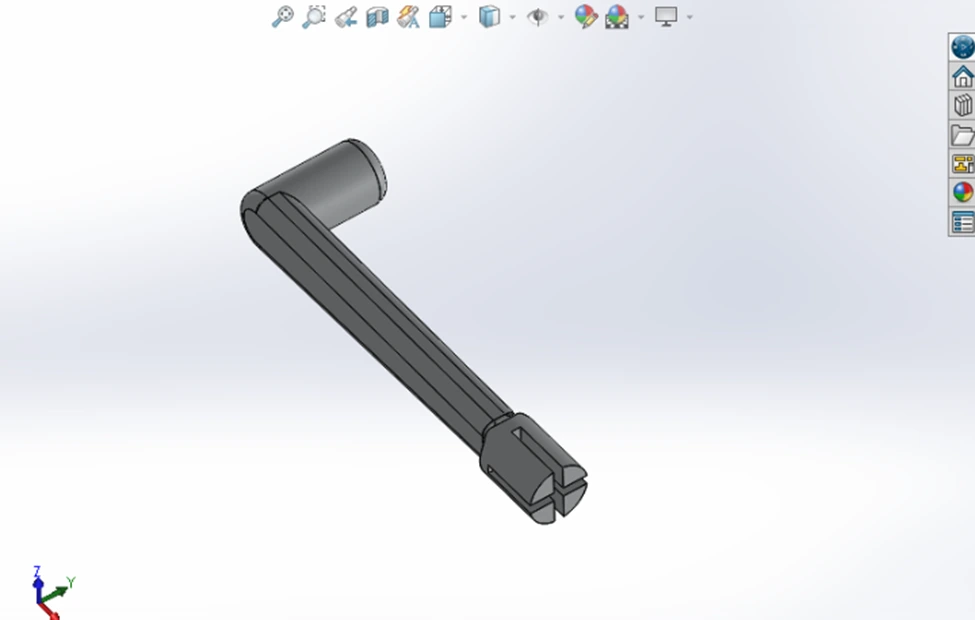
Figure 5: handle keeper holder
In this case, the Programmable Logic Controller (PLC) serves the function of the central controller in managing sensor inputs and robot arm movement. The PLC sets a coordinated relationship between the conveyors with the robot to ensure precise removal actions and hence does not change the production sequence. This central control facility also allows for easy reprogramming in case new process changes are needed.
Control and Safety Features
Safety is very much a concern, but the system has been built following ISO 12100 safety standards.
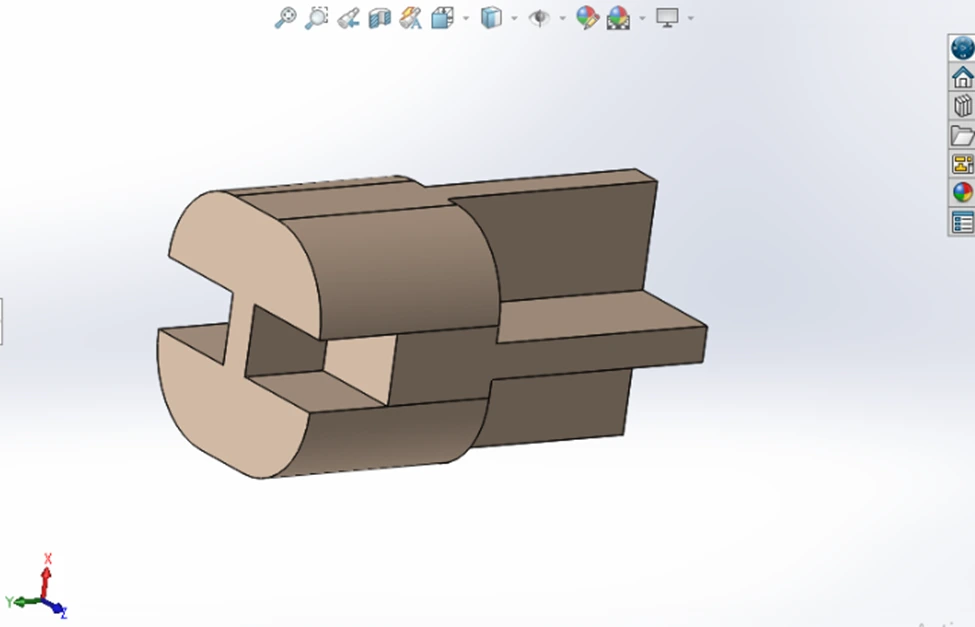
Figure 6: Handle keeper
Emergency stop buttons are incorporated and placed strategically to let operators stop the system instantaneously in case of an event (Harahap and Handayani, 2023). Interlocks are included so that the robotic arm operates only under safe conditions and minimizes risks associated with operators and equipment.
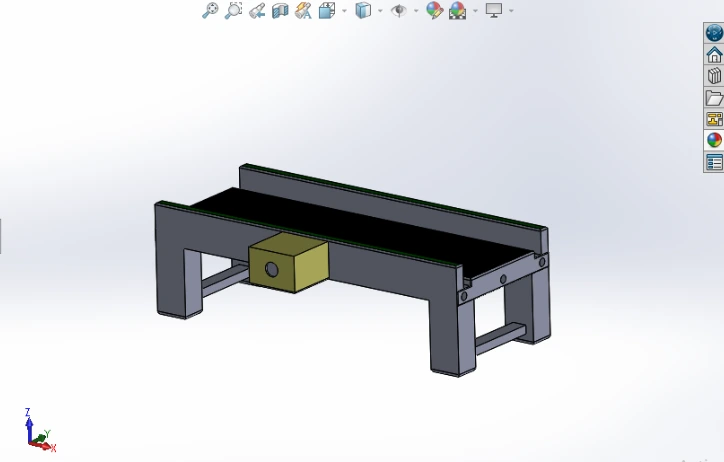
Figure 7: Conveyor belt
These safety features protect the operators and improve the reliability of the system by reducing the possibility of operational errors or accidents.
Maintenance and Reliability
The system is modular for easy maintenance, to avoid interrupted production. Easy change or replacement of modules, such as the gripper and base, would take little time without extensive downtimes. High-quality materials and robust mechanical and electronic components minimize wear and tear, thus contributing to a long life for the system.
This design emphasizes maintenance and reliability, guaranteeing that the system can operate in high-throughput manufacturing environments, and providing a solution to dependable quality control processes (Widstrand and Andersson, 2020).
Design Solutions Considered
Concepts Evaluated
In developing the automated component removal system, there were three main design solutions evaluated for their feasibility, precision, and maintenance:
Magnetic Arm:
This solution utilizes a magnetic arm to lift components from the conveyor. While useful for metallic components, it is not suitable for non-magnetic materials. It also mandates precise alignment to avoid accidentally lifting adjacent components.
Challenges: Material dependency and limited application in environments with various component types.
Pneumatic Ejector:
This design uses a pneumatic system to push every component off after a count of 20 from the conveyor line (Selvam, 2022). It's fast, reliable, and minimizes direct contact with the components, thereby wearing out less.
Challenges: Requires precise timing and adds additional air compression infrastructure to the setup, increasing its costs.
Sensor-Driven Gate:
A sensor detects the 20th component and sets off a gate to divert it into a single chute. Although compact this system has problems with a high-speed conveyor line system as timing and misalignment affect its performance.
Problems: Lack of synchronization leads to a stoppage on the conveyor line.
Comparison and Justification
Based on comparisons of these designs, this final design is the robotic arm using a Two-Finger Mechanical Gripper. This particular design provides:
Accuracy: The gripper holds components with zero risk of misalignment or damage (Cheng et al. 2022).
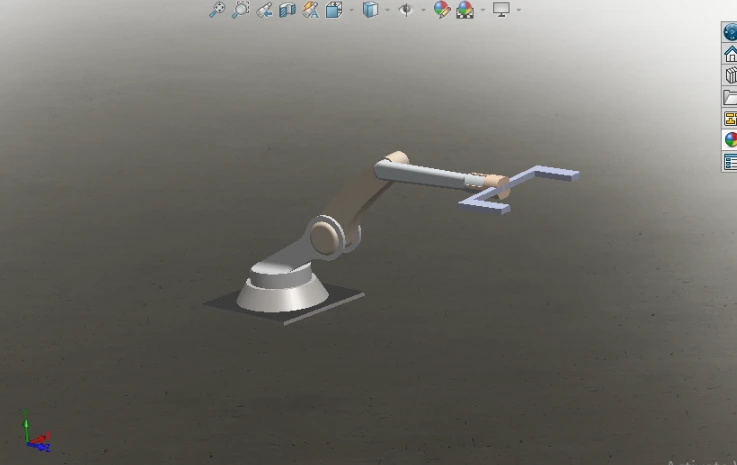
Figure 8: Robotic Arm
Flexibility: It can handle different types of components in various shapes and materials without depending on specific properties such as magnetism.
Ease of Maintenance: The modular design makes quick repairs and adjustments possible with minimal downtime.
Reliability: Because the robotic arm is programmable, good synchronization between the arm and the conveyor system is easily achieved to reduce any delay.
Whereas all the other concepts fail to meet one or the other of the requirements, or only partially fulfil them, the robotic arm with the Two-Finger Mechanical Gripper fits all functional and stakeholder requirements and thus constitutes the best and most suitable solution.
Working on the Design
Detection and Counting
The operation of the automated component removal system is triggered by a photoelectric sensor placed adjacent to the conveyor belt (Eriyadi et al. 2020). This sensor can detect each of the components that are within the field and measure the component by running through the long belt of the assembly line. Due to the light-based detection, the sensor provides a high accuracy and does not yield from high-speed conveyors.
For any component it identifies, the sensor transmits an electrical signal to the Programmable Logic Controller (PLC). The PLC which is programmed to count the number of components will send a removal signal once the counting reaches 20. Thus, it will not overlook some mistakes made in the process of erasing the component.
Gripping and Placement
As soon as the PLC counts up to the 20th component, it initiates the Two-Finger Mechanical Gripper of the robotic arm (Mohammadi et al. 2024). The fingers of the gripper are located above the conveyor and its purpose is to clamp on the component tightly. The gripping pressure will be applied to retain the component securely and yet the component will not be deformed by the force because of its described dimensions of 200mm x 50mm x 125mm.
Another thing involves to identify the component’s location for further handling or disposal and transporting it to a different area using the robotic arm, for instance, a bin or chute for sorting. It also guarantees that in the removal process, the motion is precise and well-controlled such that the conveyor flow and other components near it are not affected. The existing placement area envisioned in the plan’s preparation should be chosen to optimize the removal process.
Synchronization
The PLC is the key equipment that coordinates the operations of a robotic arm, with the functional mode of the conveyor (Rothong et al. 2023). It includes signal processing of the photoelectric sensor to synchronise the movement of the gripper with the timing of the conveyor speed to avoid any delays or discrepancies even during high-speed production.
The PLC also regulates the position of the robotic arm, and it only intervenes when a particular part can be identified. It can even self-regulate itself dynamically depending on changes in the rate of the conveyors for effective operation. This sort of synchronism is a determining factor in the ability to function efficiently and reliably under these demanding throughput conditions for this production line.
Through the use of a detection system which is accurate, the robotic arm and the gripping system that is safe and efficient, and the fact that the motion is synchronized, the automated component removal system effectively pulls out one component after every twenty manufactured without interrupting the production process. However the design of the system and the ability to ensure dependable control makes it possible to achieve stable performance and prepare for future adjustments.
Safety and Compliance
The safety aspect of the automated component removal system is therefore an important consideration. The design ensured that it complies with international standards in terms of the safety of machines and the operators, as dictated by ISO 12100 (Kozłowski et al. 2023). This means it has to identify and address potential risks of machine operation.
The system has designed several safety interlocks to protect the operators and equipment. Emergency stop buttons are placed throughout to immediately stop operations if something goes wrong. The robotic arm only moves if the system is in a safe state, thanks to interlocks that prevent unwanted movement if there are objects that may block its path or during scheduled maintenance.
These safety measures reduce the risk of accidents, so the workplace environment is safer for operators. The production efficiency will also be increased due to the prevention of downtime related to accidents or system breakdowns. A safety system designed well will give operators confidence, letting them work efficiently with automated machinery.
The system’s adherence to ISO 12100 and inclusion of robust safety features not only ensure a secure operating environment but also support consistent and efficient production processes (Giudice et al. 2024).
Evaluation and Limitations
Evaluation
The multiple benefits of an automated component removal system include its precision design. Here, the photoelectric sensor coupled with PLC ensures the removal after the 20th component without any malfunction. The two-finger Mechanical Gripper gives a tight grip without damaging the components and is versatile and reliable. The modular design of the system makes it easy to maintain and hence saves much downtime and increases productivity.
The gripper is simple and can be adjusted, which gives it an edge over other options such as magnetic arms, which only function with certain materials or pneumatic ejectors that also require other equipment as well (Ghodki et al. 2020). Because of the technological advancement in robotic arm, it is also designed to fit into the conveyor line making it strong and versatile.
Limitations
However, the system has some drawbacks although there are these advantages brought about by the system. At greater speeds, the aligning of the components can prove to be a problem because the gripper becomes less efficient. However, the system is fixed within specifications for the length, width, height and thickness of its components and may require radical readjustment when dealing with components of different sizes or shapes. With time, the gripper and the robotic arm will wear out, requiring frequent maintenance or replacement of parts.
Future Upgrades
The above limitations can be addressed by future upgrades as follows:
Vision Sensors: Increase the system's capability to detect and align misaligned parts.
Adaptive Gripper: Upgrade the Two-Finger Mechanical Gripper to an adaptive version that can accommodate different sizes and shapes of components (Yan et al. 2022).
These enhancements would make the system even more reliable and versatile, thus making it more applicable to a wider scope of applications.
Project Schedule
Critical Path Analysis and Dependencies
The critical path consists of activities that are dependent on one another and directly impact the project timeline. For example:
Research and Specification Development needs to be done before any concept design and sketching. Evaluation of Concepts relies upon the completion of initial sketches.
CAD Modeling and Simulations cannot start until the final design is selected. Integration with the Conveyor System relies upon a finalized CAD model.
It involves recognizing as well as controlling risks that give chances to complete a project on time and effectively and fulfil the needs of the stakeholders.
Conclusion
The design of conveyor A8120 shows that it has an automated component removal system, and here, go with the process to take one component after 20 components. With the help of integrating technologies into the conveyor configuration of this project, it is possible to validate the reliability, accuracy and security.
The key subsystems consist of a photoelectric sensor that enables efficient counting of the parts, a programmable logic controller that ensures proper control of the system and the necessary synchronization between the several components, and a two-finger mechanical gripper, which ensures safe gripping of the components. These factors aggregate to improve the functionality of the conveyor through the minimization of the manual intervention of the process without the corresponding diminution of efficiency. Such features have also incorporated emergency stops and interlocks that have enhanced its safety features to meet ISO 12100 compliance, a safe operating environment for the operators.
The design caters for the production line because the dimensions and the way it shall operate are specified in the stakeholder brief. The design is flexible and adaptable which means both the current scale of the manufacturing facility as well as any possible future changes can be easily integrated into the framework plan which makes it a long-term solution.
This automatic process is therefore a significant advancement in the quality control process. It increases production productivity and guarantees high product quality within the manufacturing compound with regard to the set objectives. This new design introduces the issue of automation within industrial processes, which creates potential for improvement in productivity, and reliability.
If you’re a student struggling with engineering or manufacturing assignments, Native Assignment Help offers expert Assignment Help tailored to your academic needs. Our team provides detailed, plagiarism-free solutions that simplify complex topics, including automated systems like the A8120 conveyor. With professional guidance, achieving top grades becomes easier and more manageable.
Reference List
Journals
Cheng, L.W., Liu, S.W. and Chang, J.Y., 2022. Design of an eye-in-hand smart gripper for visual and mechanical adaptation in grasping. Applied Sciences, 12(10), p.5024.
Del Giudice, M.E., Sharafkhani, M., Di Nardo, M., Murino, T. and Leva, M.C., 2024. Exploring Safety of Machineries and Training: An Overview of Current Literature Applied to Manufacturing Environments. Processes, 12(4), p.684.
Eriyadi, M., Mulia, S.B. and Purnomo, I.R., 2020, May. Automatic metal sorting conveyor machine based on Programmable Logic Controller. In IOP Conference Series: Materials Science and Engineering (Vol. 850, No. 1, p. 012032). IOP Publishing.
Feng, Q., Li, J. and He, Q., 2023. Photoelectric Measurement and Sensing: New Technology and Applications. Sensors, 23(20), p.8584.
Gebler, O.C.F., 2020. An Unsupervised Method for Characterising the Operation of Bulk Handling Conveyor Belt Systems In-Service (Doctoral dissertation, University of Bristol).
Ghodki, M.K., Swarup, A. and Pal, Y., 2020. A novel solar‐powered master‐slave electric motor‐based energy‐saving and cooling approach for the motors of conveyor system. International Transactions on Electrical Energy Systems, 30(10), p.e12563.
Harahap, A.A. and Handayani, N.P.H., 2023. SLIP HANDLING ON CONVEYORS TO EXTEND THE LIFE OF CONVEYORS AT THE DEPARTURES TERMINAL. Journal of Airport Engineering Technology (JAET), 3(2), pp.82-88.
Kozłowski, A., Smyła, J., Bembenek, M., Wojtas, P. and Kasprzyczak, L., 2023. The role and importance of risk assessment in machinery design and control systems on the example of a model research line designed for the production of low-emission composite fuel. Journal of KONBiN, 53(1), pp.25-46.
Leong, P.Y. and Ahmad, N.S., 2024. Exploring Autonomous Load-Carrying Mobile Robots in Indoor Settings: A Comprehensive Review. IEEE Access.
Mohammadi, V., Shahbad, R., Hosseini, M., Gholampour, M.H., Shiry Ghidary, S., Najafi, F. and Behboodi, A., 2024. Development of a two-finger haptic robotic hand with novel stiffness detection and impedance control. Sensors, 24(8), p.2585.
Rothong, N., Chinakunwiphat, P., Chainoi, S. and Butsanlee, B., 2023, August. Design of PLC-Integrated Object Detection for Categorizing Conveyor. In 2023 Research, Invention, and Innovation Congress: Innovative Electricals and Electronics (RI2C) (pp. 130-134). IEEE.
Selvam, C., 2022. Design & Fabrication of Electro-Pneumatic Gantry Type Sorting Robot.
Widstrand, M. and Andersson, S., 2020. Assessing required safety measures for belt conveyors: Designing a safety assessment tool regarding standard 620+ A1: 2010.
Yan, Y., Guo, S., Lyu, C., Zhao, D. and Lin, Z., 2022. Sea-based humanoid finger-functional parallel gripper with two actuators: Pg2 gripper. IEEE Transactions on Instrumentation and Measurement, 72, pp.1-13.
Go Through the Best and FREE Samples Written by Our Academic Experts!
Native Assignment Help. (2026). Retrieved from:
https://www.nativeassignmenthelp.co.uk/a8120-conveyor-automated-component-removal-system-assignment-sample-42543
Native Assignment Help, (2026),
https://www.nativeassignmenthelp.co.uk/a8120-conveyor-automated-component-removal-system-assignment-sample-42543
Native Assignment Help (2026) [Online]. Retrieved from:
https://www.nativeassignmenthelp.co.uk/a8120-conveyor-automated-component-removal-system-assignment-sample-42543
Native Assignment Help. (Native Assignment Help, 2026)
https://www.nativeassignmenthelp.co.uk/a8120-conveyor-automated-component-removal-system-assignment-sample-42543
- FreeDownload - 42 TimesG2000923 Effective Communication in Health and Social Work 1 Assignment Sample
1.1 Importance of effective communication in health and social...View or download
- FreeDownload - 47 TimesLegal System and Skills Assignment
BL1101 Legal System and Skills Assignment Sample Part A To what extent does...View or download
- FreeDownload - 39 TimesImpacts Of Facilities Management Assignment Sample
Impacts Of Facilities Management 1. Introduction: Impacts Of Facilities...View or download
- FreeDownload - 40 TimesCHCLEG001 Work Legally and Ethically Assignment Sample
CHCLEG001 Work Legally and Ethically Assignment Task 1 Part 1 > Please...View or download
- FreeDownload - 43 TimesTourist Typologies and Destination Choices: London and Bali
Introduction Tourism refers to the act and procedure of spending time far from...View or download
- FreeDownload - 39 TimesOperations Management Assignment Sample
Introduction Operations management refers to the procedure of prioritising,...View or download
-
100% Confidential
Your personal details and order information are kept completely private with our strict confidentiality policy.
-
On-Time Delivery
Receive your assignment exactly within the promised deadline—no delays, ever.
-
Native British Writers
Get your work crafted by highly-skilled native UK writers with strong academic expertise.
-
A+ Quality Assignments
We deliver top-notch, well-researched, and perfectly structured assignments to help you secure the highest grades.